Korva is a scroll of the internet’s best ideas.
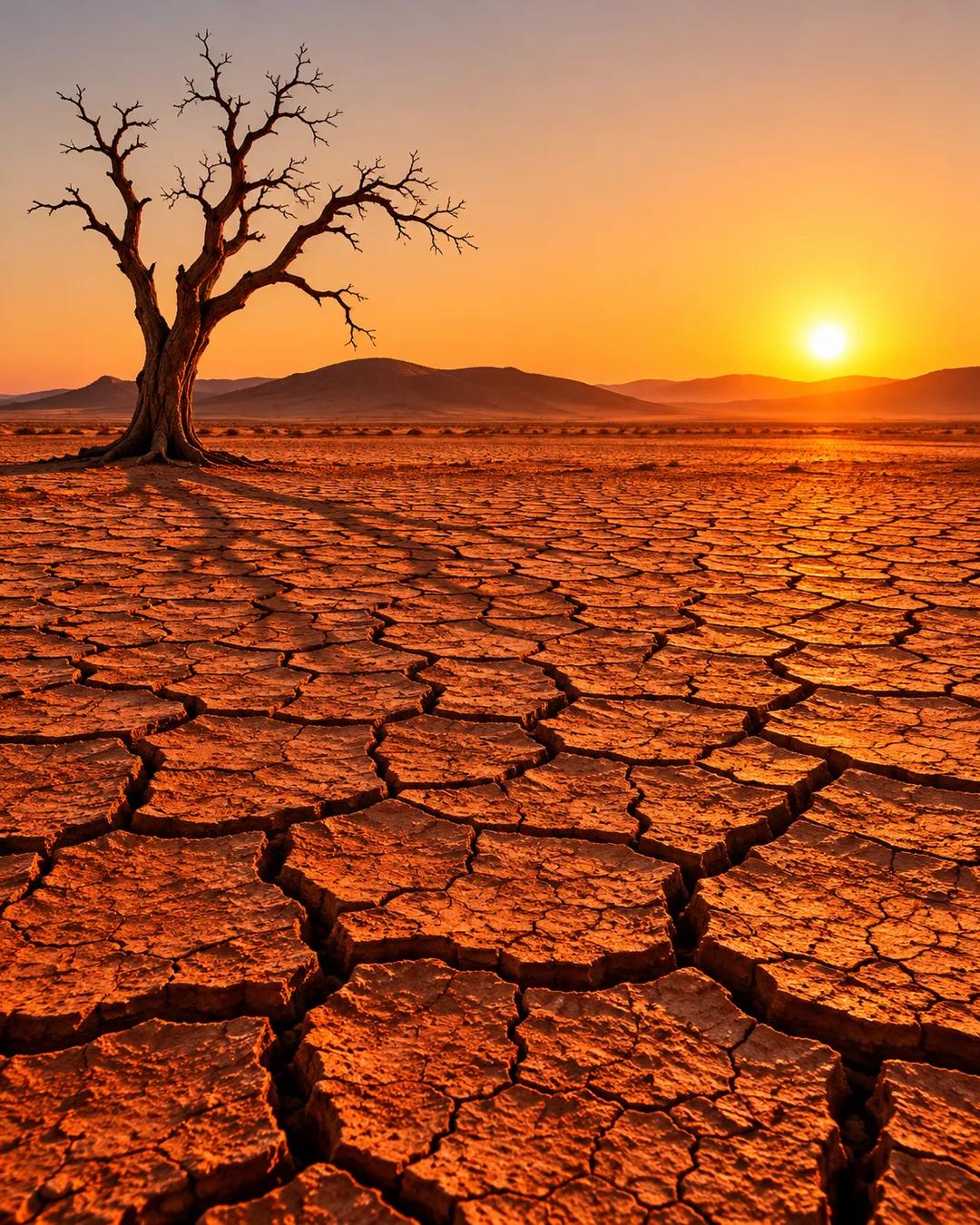
The driest inhabited continent

Currents and Ranges
In the west, cold ocean currents from the Southern Ocean, near Antarctica, leave too little heat for the evaporation that forms rain clouds. In the east, the Great Dividing Range, the continent's largest and longest chain of mountains, stops rainclouds coming from the Pacific. Rain falls on the narrow band between the range and the coast, and the interior sits in a rain shadow.
Australia's mountains are low. Mount Kosciuszko, the highest point on the mainland, rises only 2,228 meters, and the highest point of every other inhabited continent is more than double that. Australia has the lowest average elevation of any continent, so few peaks force air upward to cool into rain.
Heat and El Nino
The air is also very hot. The continent straddles the Tropic of Capricorn, with much of the north inside the tropics and nearly everything else in the subtropics, where a high pressure belt around the globe warms and dries the air.
During an El Nino event, which can last for years, slower than usual westerly winds deliver less moisture to the eastern and northern parts of the continent, and drought gets worse. Many of the worst bushfires in Australia's history happened during El Nino events.
How does a rain shadow work?
Air forced up the windward side of a mountain cools, and its moisture condenses and falls as rain or snow. By the time the air crosses the crest, it has lost most of its water. As it descends the far side, it compresses and warms, so clouds dissolve rather than build. The Patagonian steppe lies in the rain shadow of the Andes.
Why do cold ocean currents suppress rain?
Cold water chills the air sitting above it, which makes that air stable and reluctant to rise. Cold water also gives up far less vapor through evaporation than warm water does. With little moisture and no lift, clouds rarely form over the coast. The Namib Desert runs along the cold Benguela Current off southwest Africa.
Why does subtropical air stay so dry?
Air rises at the equator, drops its moisture as tropical rain, and flows toward the poles high in the atmosphere. Around 30 degrees latitude it cools and sinks, and sinking air compresses and warms, which dissolves clouds. This circulation is called the Hadley cell. The English meteorologist George Hadley proposed it in 1735 to explain the trade winds.
How does El Nino shift rain away from Australia?
In normal years, warm surface water pools in the western Pacific near Indonesia and northern Australia, feeding clouds and rain. During El Nino, that warm water drifts east toward South America, and rainfall follows it across the Pacific. Australia's east and north then dry out. Australia's Bureau of Meteorology says El Nino events recur roughly every two to seven years.
More from RealLifeLore