Korva is a scroll of the internet’s best ideas.
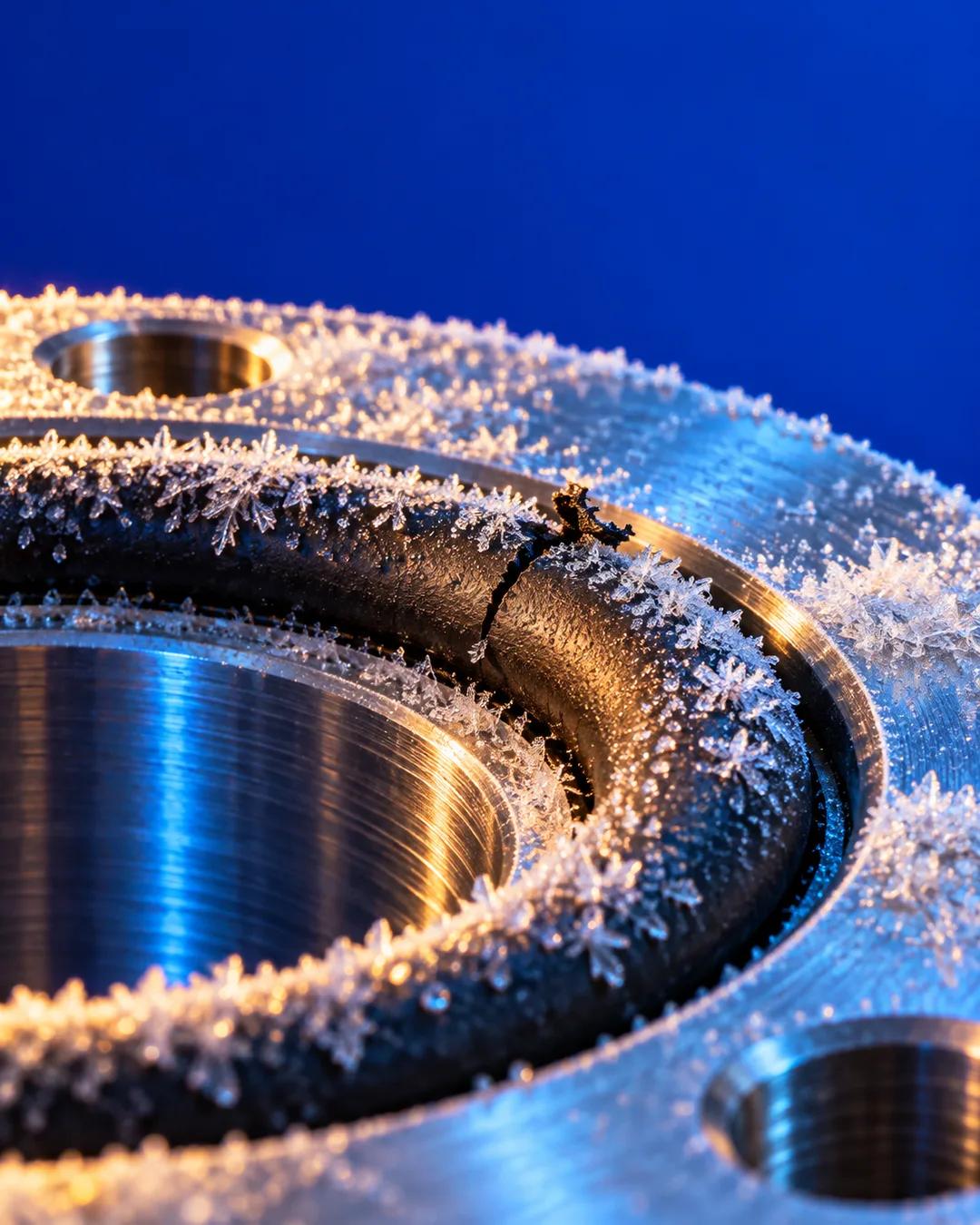
The engineer who warned about O-rings

Boisjoly's Warning
In July 1985, Roger Boisjoly, a mechanical engineer at the shuttle subcontractor Morton Thiokol, wrote a memo about a potential catastrophic failure. He had studied a solid rocket booster from an earlier flight, where two tiny rubber O-rings meant to seal the joint between two booster sections had both been hit: one failed completely and the other was damaged. If that second ring had failed, the result would have been an explosion. His analysis suggested that cold weather hardened the rubber and made damage and failure more likely. The memo was largely ignored, and later attempts to raise the issue ran into bureaucratic walls.
The Final Teleconference
On the evening of January 27th, 1986, NASA convened a teleconference to collect the final sign-off from each subcontractor. The temperature was forecast to fall below freezing overnight. Boisjoly laid out his data and the mechanical risk in vivid detail, and Thiokol's vice president, Joe Kilminster, recommended a no-go because of the temperature and the O-ring risk.
NASA leadership pushed back, arguing that the launch had already been delayed five times and that there was no definitive proof of a failure risk. Under pressure, the Thiokol team reconsidered and gave the go-ahead.
Launch Morning
The next morning at 11:38, with the temperature at a record low 36 degrees Fahrenheit, Challenger lifted off from Kennedy Space Center while millions watched live. Seventy-three seconds into the flight, it exploded and disintegrated, killing all seven crew. The O-rings had burned to ash, leaving a weak seal in the joint that set off a catastrophic chain reaction.
Why does cold weather make O-rings fail?
Rubber stiffens as it cools, and a stiff O-ring is slower to push into a gap. At ignition, the pressure inside a booster makes the joint flex slightly, and the seal has to follow the opening within a fraction of a second. At the Rogers Commission hearings in February 1986, physicist Richard Feynman clamped a piece of the rubber, dropped it in ice water, and showed that it kept its squeezed shape instead of springing back. The commission's report found that the cold had reduced the O-rings' ability to seal.
Why were the boosters built with joints at all?
The solid rocket boosters were too large to ship in one piece, so Morton Thiokol built them in segments at its plant in Utah. The segments traveled by rail to Kennedy Space Center in Florida and were stacked there. Each joint between segments was sealed by two O-rings, one backing up the other. After the disaster, the joint was redesigned with a third O-ring and a capture feature that kept the seal from opening under pressure.
How cold was it compared with earlier launches?
Before Challenger, the coldest shuttle launch had been in January 1985, when the temperature at liftoff was about 53 degrees Fahrenheit. That flight, designated 51-C, showed the worst O-ring damage seen up to that point, according to the Rogers Commission report. Challenger lifted off at 36 degrees, well below the temperature of any earlier shuttle launch.
How did investigators find the cause?
President Ronald Reagan appointed a commission led by former Secretary of State William Rogers, whose members included Neil Armstrong and Richard Feynman. It reported in June 1986 that the accident was caused by a failure of the seal in the joint of the right solid rocket booster. The report also criticized the decision-making process at NASA and Morton Thiokol that led up to the launch.
More from Curiosity Chronicle