Korva is a scroll of the internet’s best ideas.
The fake judge's wrong sash

The borrowed bench
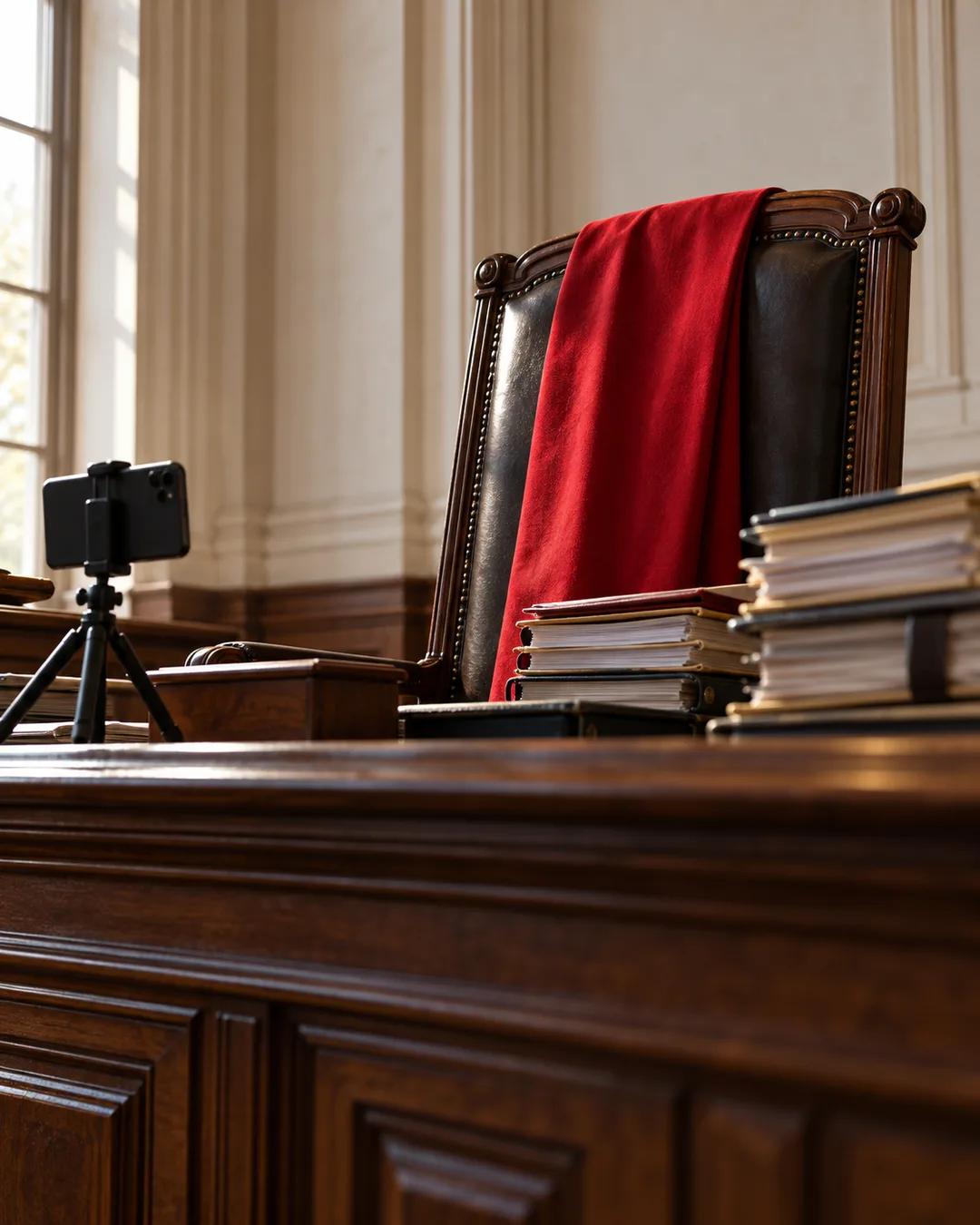
Mostafa Kamel paid the three clerks about $60,000, a lot of money in Egypt, and in return he got access to the courthouse. He filmed himself seated at a judge's bench with piles of files in front of him, wearing a judge's sash, and posted the videos on social media. He even appeared on a TV chat show, where he talked about his humble background and how he rose through the ranks to become a judge.
He used the videos to persuade people that he could secure government housing units for them in return for money, and he collected the Egyptian pound equivalent of hundreds of thousands of dollars. He also bragged about having a firearm he had no license for.
How it unraveled
The scheme unraveled last August, when one of the people who had paid for a housing unit never received it and reported him to the authorities. Investigators went back through his videos. A judge in Egypt would not necessarily carry a firearm tucked under his belt, and Kamel claimed to work at a court of cassation while wearing the sash of the wrong color for that court.
A Cairo court sentenced him to 10 years in prison for impersonating a judge, defrauding several people, and possessing an unlicensed firearm. Two of the clerks received three years each. The third died before the trial began.
How is a court of cassation different?
The word comes from the French casser, meaning to break or quash. A court of cassation does not retry a case from scratch. It reviews whether lower courts applied the law correctly and can overturn their rulings on that basis. Egypt's legal system draws heavily on French civil law, and its civil code of 1949 was drafted by the jurist Abd al-Razzaq al-Sanhuri with French law as a major model.
Why do people trust someone in official dress?
Psychologists have documented a strong habit of deferring to visible symbols of authority. In 1974, Leonard Bickman ran a field study in New York in which pedestrians were far more likely to obey a request from a man dressed as a guard than from the same man in street clothes. Stanley Milgram's obedience experiments at Yale in the early 1960s showed that many participants kept going when an experimenter in a lab coat told them to. Uniforms and robes work as shortcuts because people rarely check credentials when the costume looks right.
Why does housing scarcity feed this kind of scam?
When subsidized housing is handed out through applications, lotteries, or waiting lists, demand outruns supply, and any promised shortcut becomes valuable. Someone who claims inside access sells the one thing applicants cannot get through the official queue. Advance-fee fraud, where victims pay up front for a promised benefit, is one of the oldest confidence tricks. The Spanish Prisoner letters of the 1800s used the same structure, asking for money now in return for a large reward later.
More from Global News Podcast