Korva is a scroll of the internet’s best ideas.
The grain shed that became Cargill

Grain by the tracks
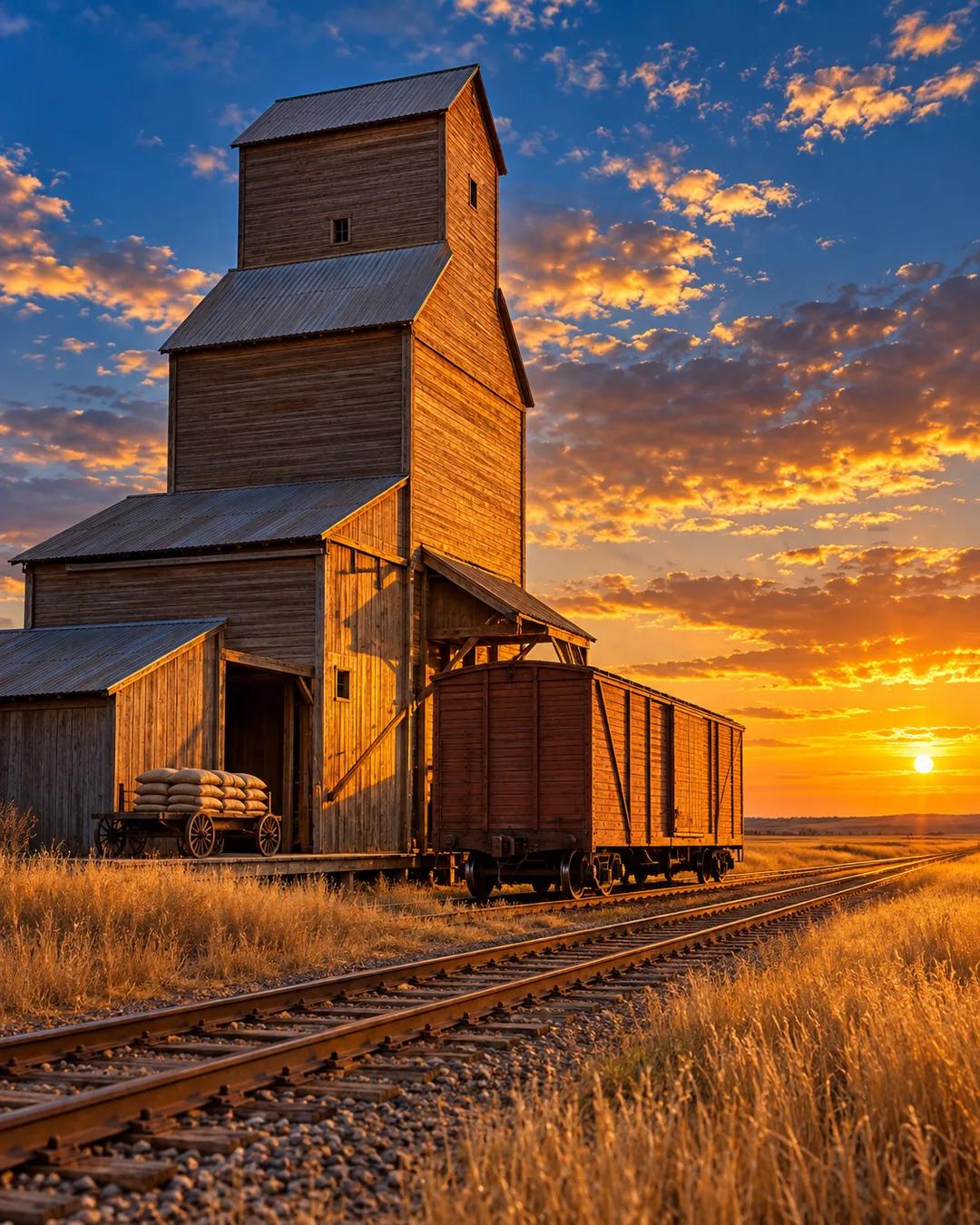
As railroads spread across America, farmers needed somewhere to drop their grain and a way to sell it. Cargill built grain elevators, giant storage buildings, right next to the tracks. A farmer could leave the grain and take an IOU to be paid when it sold, or sell it outright at a flat wholesale rate. Cargill sat physically in the middle, and few others were going to build there.
From there it kept going. Shipping grain by barge was inefficient, so Cargill built its own shipyard and its own ships, and it ended up producing ships for the US Navy. It bought the biggest poultry company, and it now controls a huge share of the meat and grain industries, including about a quarter of US grain exports.
A hamburger's supply chain
Picture a hamburger. Cargill probably sold the farmer the seed and the fertilizer, bought the grain, stored it in its elevator, and moved it by its own barge to a plant that turned it into animal feed. It stored the beef at its meatpacking plants, and it supplies the salt for fast food chains, the corn syrup in the ketchup, the soybean oil for the fries, and the starch in the milkshake.
Family and secrecy
Profits follow an 80/20 rule: 80% is reinvested in the business and 20% goes to the family as dividends. Professional CEOs have run the company for roughly the last 20 years, and the family now includes about 20 billionaires. Its headquarters was a chateau-style building on a lake in the middle of nowhere, called the lake office. For a long time, staying quiet was part of the strategy, so as not to attract competition. A 1980 survey found that 94% of farmers had heard of Cargill, but only half of them knew what it did.
Why were grain elevators built beside railroad tracks?
A grain elevator is named for the bucket conveyor that lifts grain to the top of a tall building. From there, gravity lets the grain pour down chutes into waiting rail cars. Standing next to the tracks meant the grain could move from storage to a train with almost no hauling. Joseph Dart opened the first steam-powered elevator in Buffalo, New York, in 1842.
How can a company this large stay private?
A company that sells no shares on a stock exchange is not required to publish quarterly financial results the way listed companies must. Its owners can keep its books to themselves. Forbes has long ranked America's largest private companies by revenue, estimating the figures for firms that do not disclose them.
Why do companies own every step of their supply chain?
Owning successive stages of production is called vertical integration. It lets a company keep the markup that each outside supplier would otherwise charge. Carnegie Steel in the late 1800s is a well-known example, controlling iron ore, coke, and transport as well as the mills. The approach also gives a company control over supply when a link in the chain gets scarce.
More from My First Million