Korva is a scroll of the internet’s best ideas.
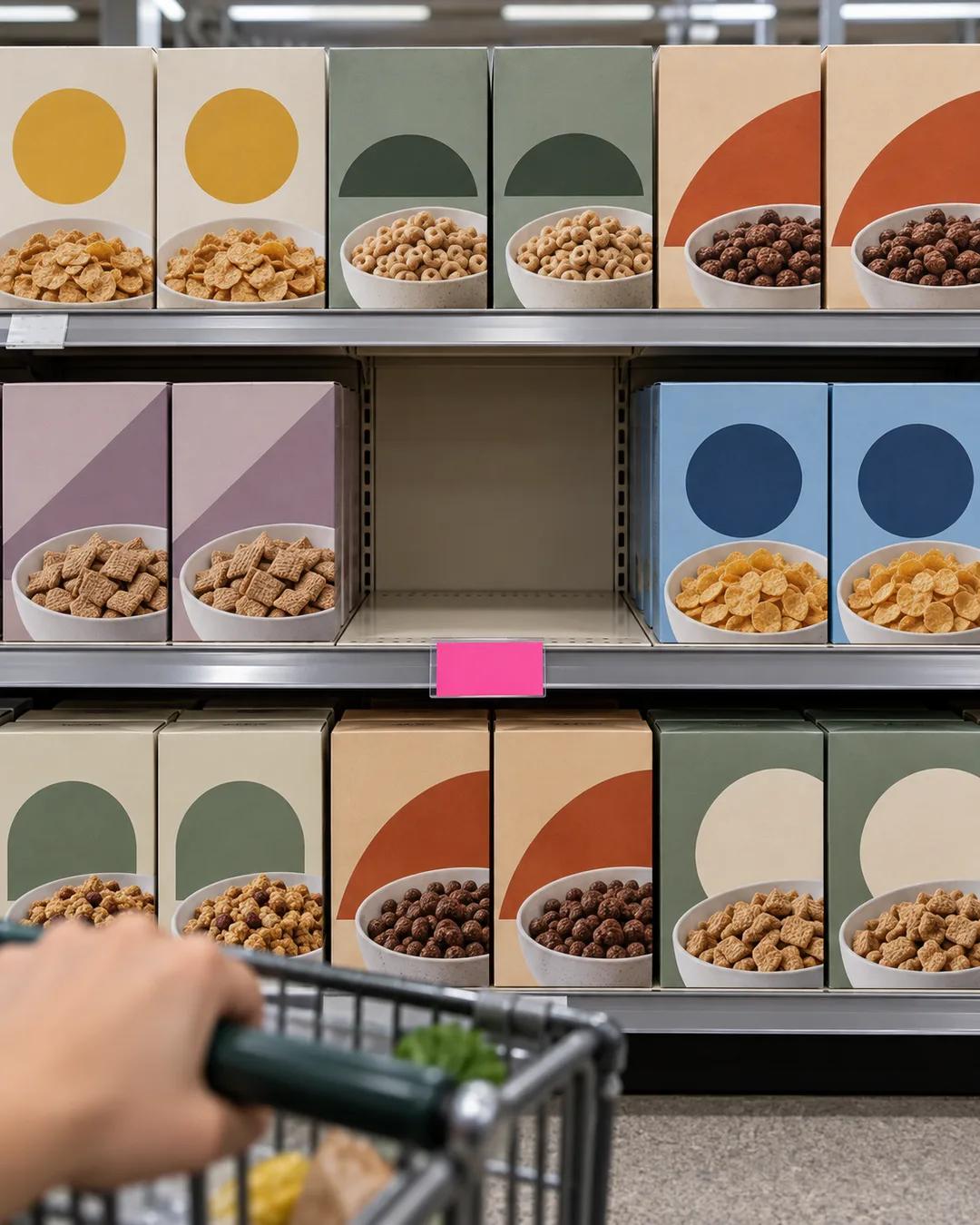
Three stockouts send shoppers elsewhere

The cost of stockouts
A store five minutes from a Walmart, like the City Market in Glenwood Springs, can't afford to run out of a single item. A customer pushed to a competitor who then decides they like Walmart more takes thousands of dollars in annual sales along. The job is to keep everything in stock while holding as little extra product as possible. American supermarkets average some 30,000 products, and those stay in stock about 92% of the time.
Tracking every item
Every item carries a barcode. Products are checked into inventory software when they arrive, subtracted as they're paid for, and reordered when the count runs low. On paper that is simple math, but items also leave by being stolen, going bad, or getting damaged, so the paper count and the shelf drift apart. Stores count by hand every month or two to measure the gap, which they need for financial reporting because a retailer can't know how profitable it is until it knows how much product it lost. The same gap tells the software how far off it typically runs, so reorders happen on time.
Ordering ahead
Ordering also adjusts for what is coming. A sale on an item makes it sell more, so the software ramps up inventory to match. More complex software accounts for outside factors, such as unseasonably warm weather that would raise barbecue charcoal sales and lower hot chocolate sales.
How did barcodes become standard?
The first Universal Product Code scan at a checkout was a pack of Wrigley's chewing gum at a Marsh supermarket in Troy, Ohio, on June 26, 1974. The grocery industry had agreed on the code, and IBM engineer George Laurer designed the symbol. That pack of gum is now held by the Smithsonian's National Museum of American History.
Why do inventory counts drift from the shelf?
Retailers call lost inventory shrink. The National Retail Federation's retail security surveys have traced it to external theft, employee theft, process and paperwork errors, and vendor fraud. Spoilage and damage count as shrink too, and a scanning mistake at the register leaves the records off by one unit. Perishable departments such as produce and bakery tend to show some of the largest gaps.
How does weather feed demand forecasts?
The New York Times reported in 2004 that Walmart studied sales data from past storms before Hurricane Frances. The analysis found that strawberry Pop-Tarts sold at about seven times their normal rate before hurricanes. Walmart used the finding to send extra stock to stores in the storm's path. Forecasting software now tests many such patterns against sales records.