Korva is a scroll of the internet’s best ideas.
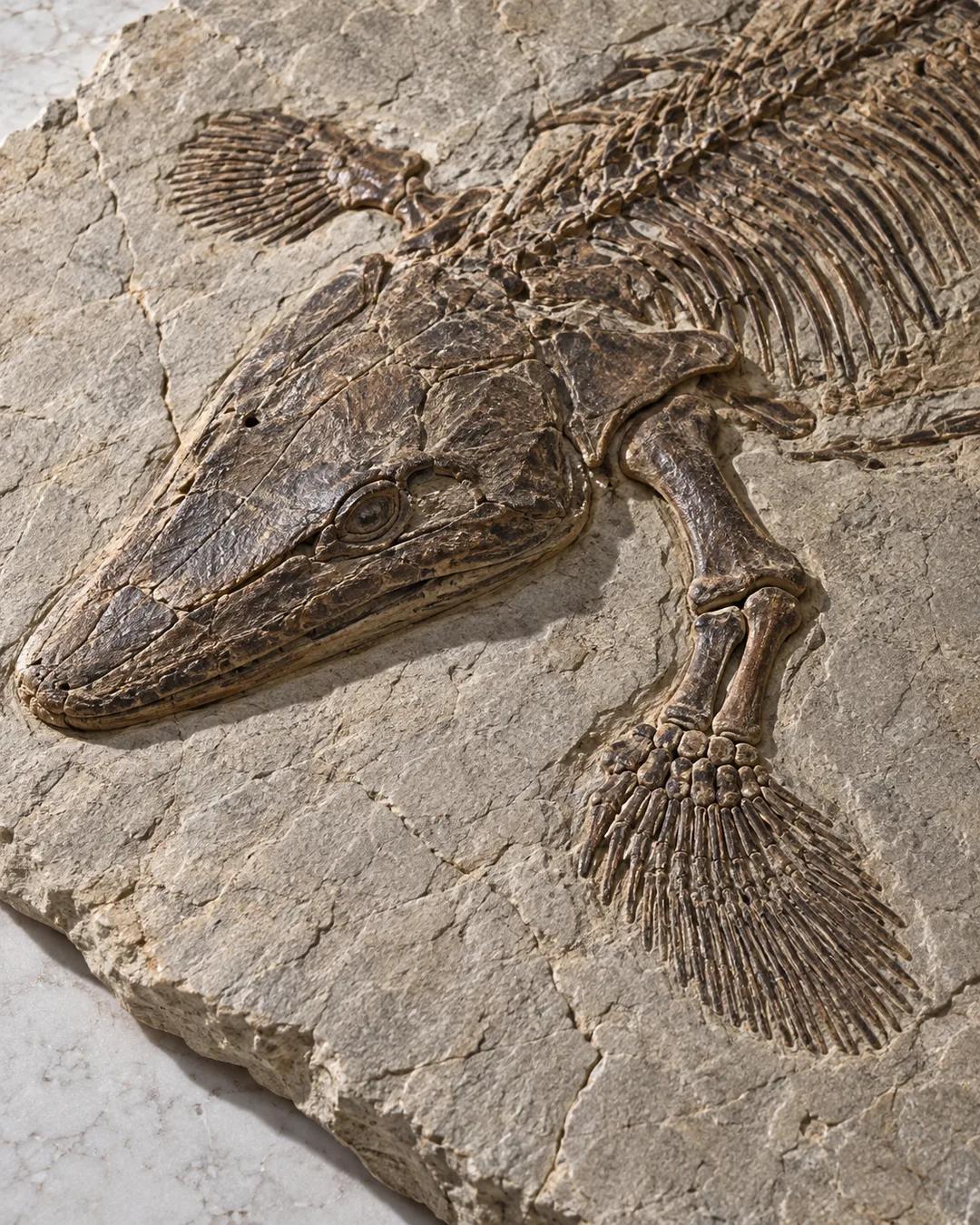
Tiktaalik, the crocodile mermaid

Tiktaalik is a fossil of one of the early pioneers that crawled out of the water, in early December on the Earth calendar. In its fins, one big bone like our humerus connects to two bones like our radius and ulna. At the end of the fin sits a whole load of small bones that became fingers in its descendants.
That pattern of one big bone, then two, then lots of little ones, is repeated in reptiles, amphibians, birds, and mammals. A bird's wing has it, the flipper of a dolphin has it, and so does the arm of a gorilla. Every four-limbed animal on land descends from this fish, including us.
How did the team know where to dig?
Neil Shubin, Ted Daeschler, and Farish Jenkins looked for rocks of the right age, about 375 million years old, that had formed in freshwater streams and were exposed at the surface. They narrowed the search to Ellesmere Island in Arctic Canada. After several expeditions, they found the fossils there in 2004. The discovery was announced in Nature in 2006.
What made Tiktaalik a halfway form?
Tiktaalik had gills and scales like a fish, along with a flat head with eyes on top, like an early amphibian. Unlike most fish, it had a neck, so its head could move apart from its shoulders. Its fins held strong bones and wrist-like joints that let it prop its body up in shallow water. It had no true fingers or toes.
Why did fish start moving toward land?
Animals like Tiktaalik lived in shallow, warm, plant-choked waters where oxygen could run low. Strong fins let them pull themselves across the bottom and prop up in shallows, and they could also gulp air at the surface. Moving into shallow water also took them out of reach of larger predators. The Inuktitut name Tiktaalik, given with the guidance of Nunavut elders, means a large freshwater fish.
More from On Humans