Korva is a scroll of the internet’s best ideas.
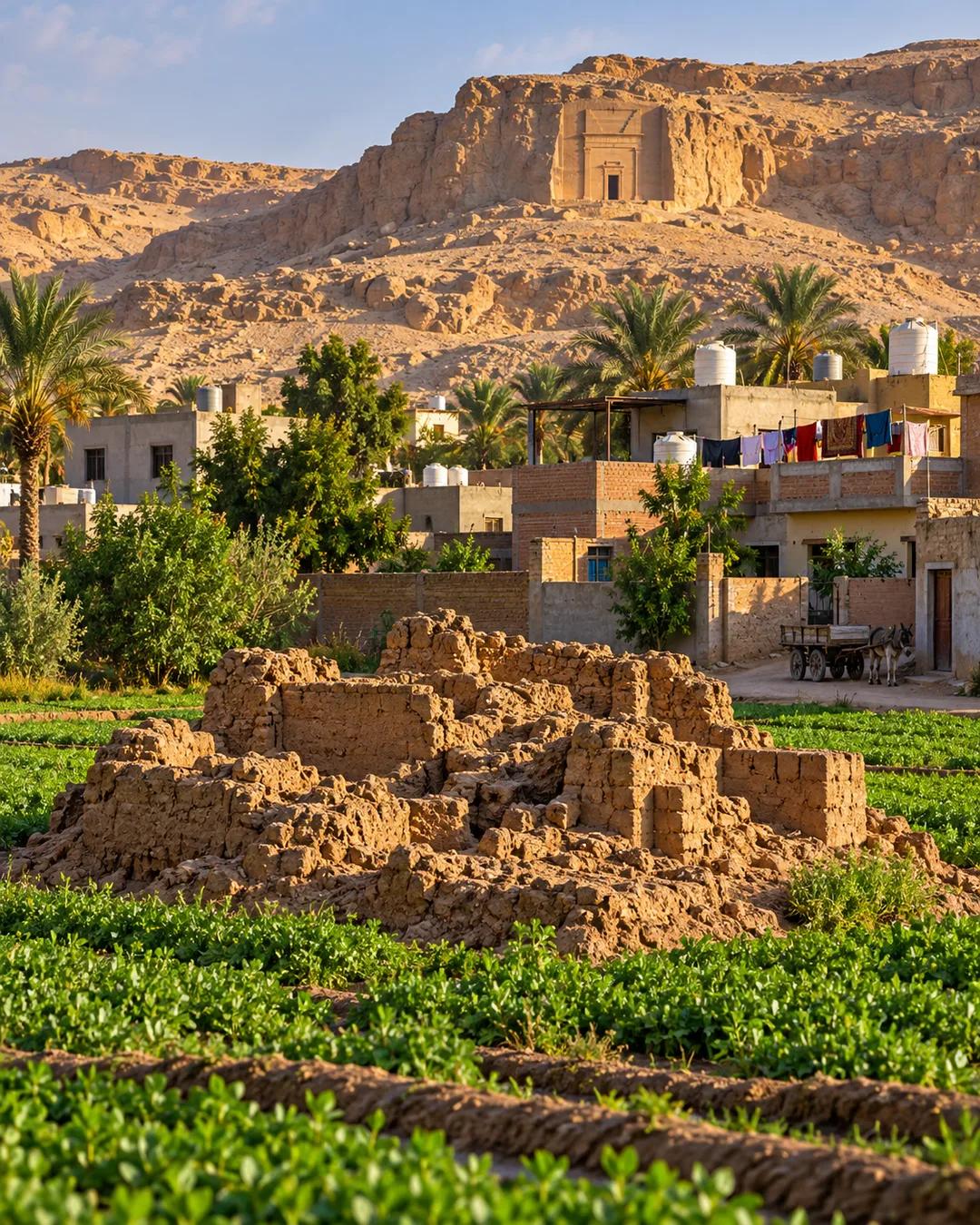
Tombs survive, cities get rebuilt
Built to Last
Tombs were intended as repositories for the finest artifacts Egyptian society produced, and they were generally tucked away in the desert where there is no life. Temples built of cut stone often survive too, since stone survives one way or another, and rock-cut tombs cannot be moved at all.
Cities Rebuilt
Houses, administrative buildings, temples, and royal palaces were built, dismantled, demolished, and rebuilt on a regular cycle over thousands of years. Mud brick, even when it survives, comes down as a jumble that is hard to define. Egyptians also lived in the same sorts of places people live today, so ancient towns and cities lie in among, around, and underneath modern settlements, or under fields.
What Diggers Wanted
Two hundred years ago, diggers wanted pretty objects, especially inscribed ones, while the language was being studied and deciphered, and tombs supplied them. Interest in where ordinary Egyptians lived came later, and it took archaeology a long time to catch up.
Why does mud brick vanish so quickly?
Egyptian mud brick was made from Nile silt and straw and dried in the sun, so water softens it. Once a roof is gone, rain and rising groundwater slump the walls into a mound. Irrigated fields speed the decay. In the 19th and early 20th centuries, farmers dug decayed brick from ancient sites to spread on fields as fertilizer, under the name sebakh.
How did archaeology turn toward ordinary lives?
Flinders Petrie excavated the town of Lahun in the 1880s and 1890s, a settlement built for the workers of a nearby pyramid. At Deir el-Medina, the village of the royal tomb builders, excavations in the early 20th century recovered thousands of pottery and limestone fragments written on by the villagers. These texts record work rosters, disputes, and household matters. They are among the richest records of daily life from ancient Egypt.
Why were tombs stocked so lavishly?
Egyptians believed the dead needed food, furniture, clothing, and jewelry in the afterlife. Families and kings supplied tombs with the best goods their society could produce. When Howard Carter's team opened the tomb of Tutankhamun in 1922, they catalogued more than 5,000 objects. Most royal tombs had been robbed long before, which makes that find unusual.