Korva is a scroll of the internet’s best ideas.
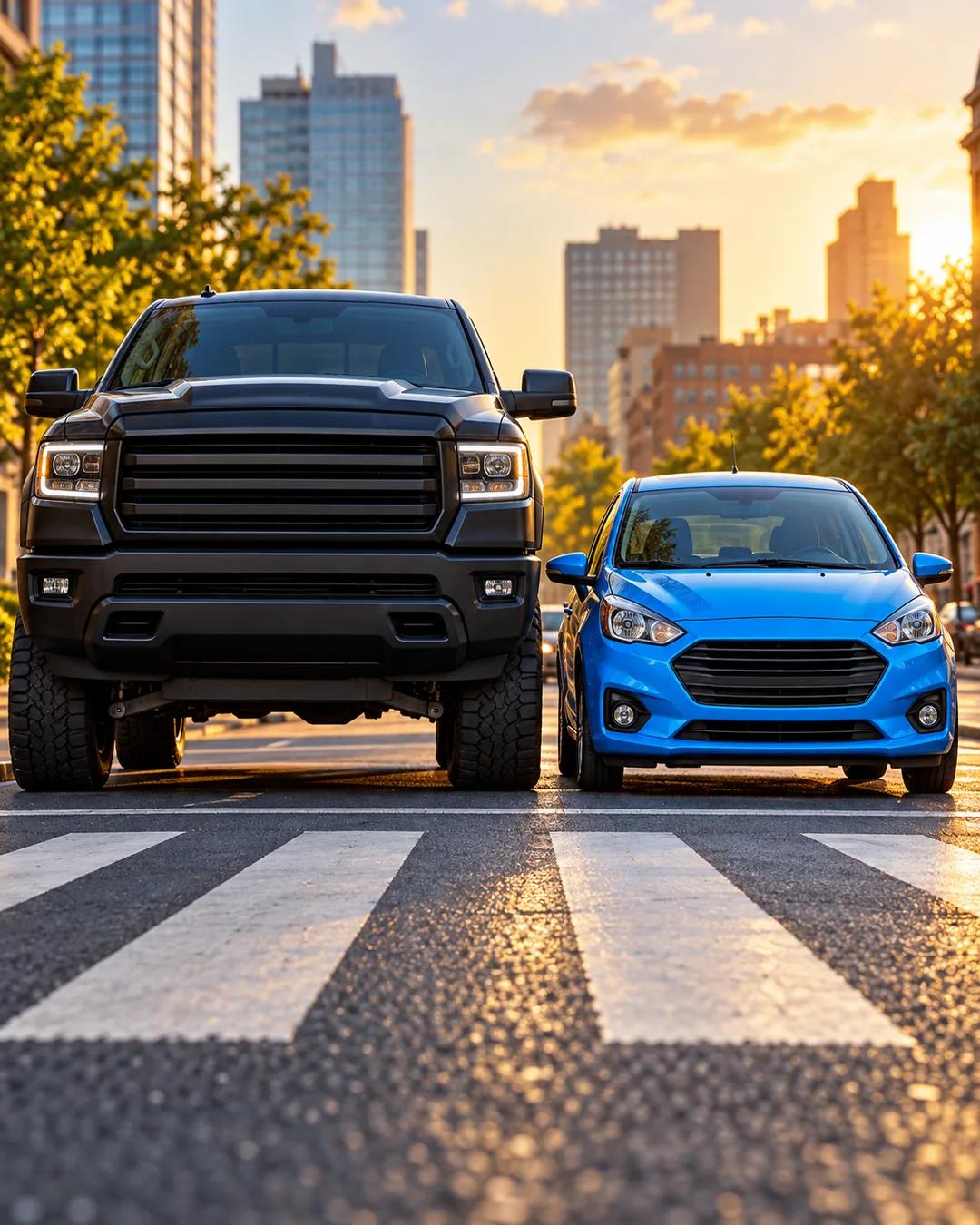
Trucks started a safety arms race

Taller means deadlier
Taller vehicles are generally more dangerous to others. A car will likely strike a pedestrian on the legs, while the raised grille of a truck or SUV collides with the head or torso, increasing the odds of a fatal accident.
The safety arms race
The danger reaches other drivers as well: collisions are two and a half times more fatal when they involve a truck or SUV. These vehicles are, however, usually safer for their owners. Each added truck raises the risk for everyone around it and gives the next buyer a reason to choose one too, which makes the whole thing a kind of safety arms race.
Bigger every year
Meanwhile, trucks and SUVs have gotten bigger, heavier, wider, and more expensive. Americans pay 61% more for pickups today than they did in 2009, and average weight increased by 32% between 1990 and 2021. The small truck is practically an endangered species, a novelty.
Why do tall hoods raise pedestrian deaths?
A higher front end strikes an adult higher on the body, so the impact falls on the torso and head instead of the legs. It also tends to push a person forward and down rather than over the hood. The Insurance Institute for Highway Safety reported in 2023 that vehicles with hood heights over 40 inches were about 45 percent more likely to cause a pedestrian fatality than vehicles with hoods 30 inches or lower in similar crashes.
Why are heavier vehicles safer for occupants?
In a crash between two vehicles, momentum is conserved, so the lighter vehicle undergoes the bigger change in speed. That sudden change in speed is what injures the people inside. A heavier vehicle also puts more structure and more distance between its occupants and the point of impact. The occupants of the lighter vehicle absorb the harsher forces.
How do economists price risk to others?
Economists call harm that falls on people outside a transaction an externality. In a 2014 study in the Review of Economic Studies, Michael Anderson and Maximilian Auffhammer estimated that each additional 1,000 pounds of a vehicle's weight raised the chance of a fatality in the other vehicle by 47 percent in a collision. They also used the estimate to calculate an external cost for each added pound of weight. Their analysis drew on records of crashes in the United States.
More from PolyMatter