Korva is a scroll of the internet’s best ideas.
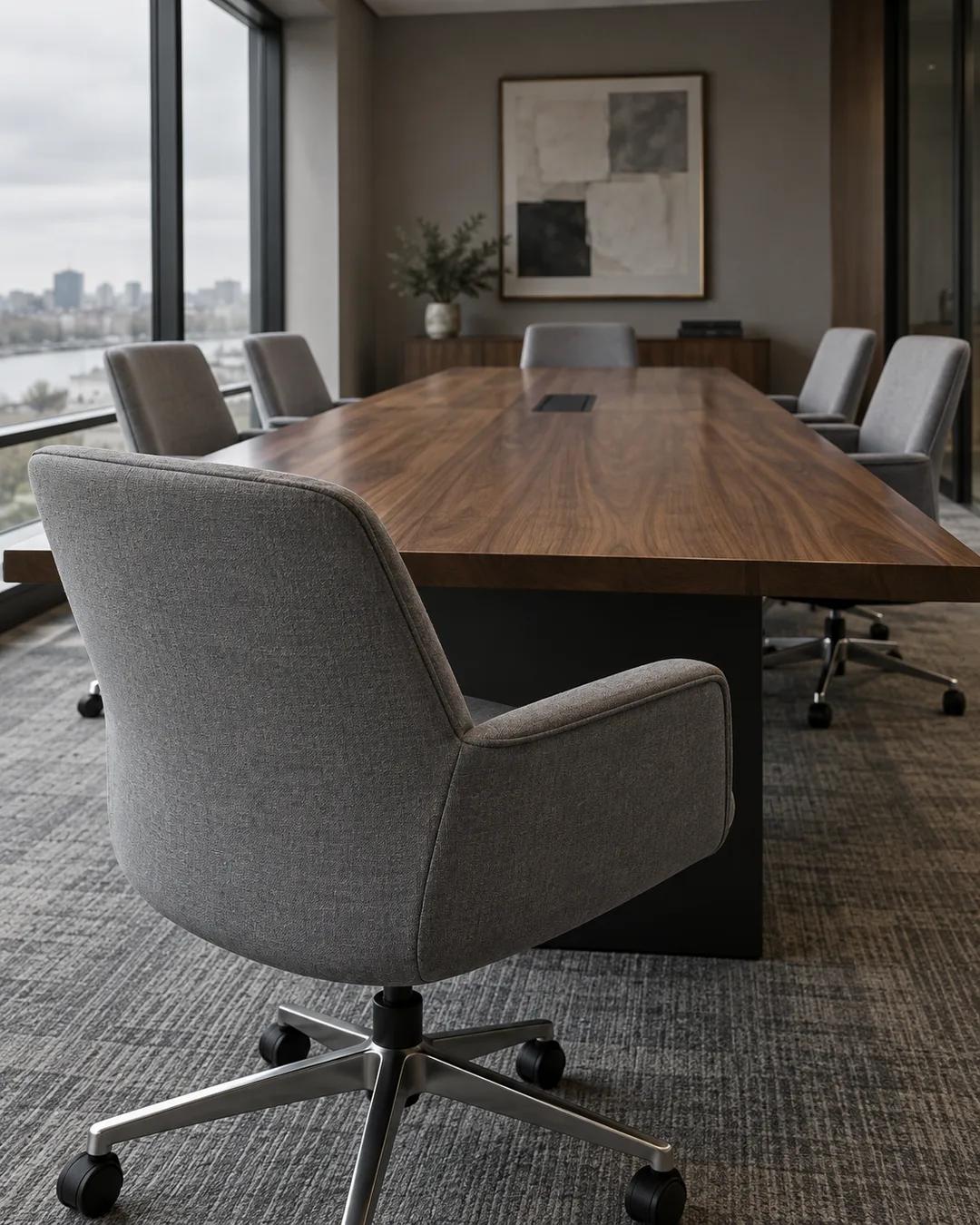
Turn your chair toward the speaker

Closed body language changes how people talk: with arms pinned to the sides or crossed over the chest, people speak in shorter sentences and are more likely to say no. Armrests do the opposite by immediately bringing space. The elbows move out to the side, the chest broadens, and that brings more oxygen and more vocal power.
A swivel chair adds freedom of movement and lets a person front whoever is talking. Turning the whole chair toward the speaker is a nonverbal sign of respect that says tell me more, I'm aligned with you. When two people sit on parallel lines, they can see each other's body language better and feel like they are on the same page.
How does seating arrangement shape conversation?
In studies of seating from the 1960s, the psychologist Robert Sommer found that people prefer to sit side by side when cooperating, corner to corner when chatting, and across from each other when competing. People also tend to avoid sitting directly beside strangers when other seats are open. Many of his experiments used cafeteria and library tables.
How does rapport build between two people?
Linda Tickle-Degnen and Robert Rosenthal proposed in 1990 that rapport has three components: mutual attentiveness, positivity, and coordination. Coordination is the smooth, synchronized rhythm of movements and posture between people. Their analysis suggested that attentiveness and positivity matter most early on, and that coordination matters more as the relationship develops.
More from The Mel Robbins Podcast