Korva is a scroll of the internet’s best ideas.

Who built what
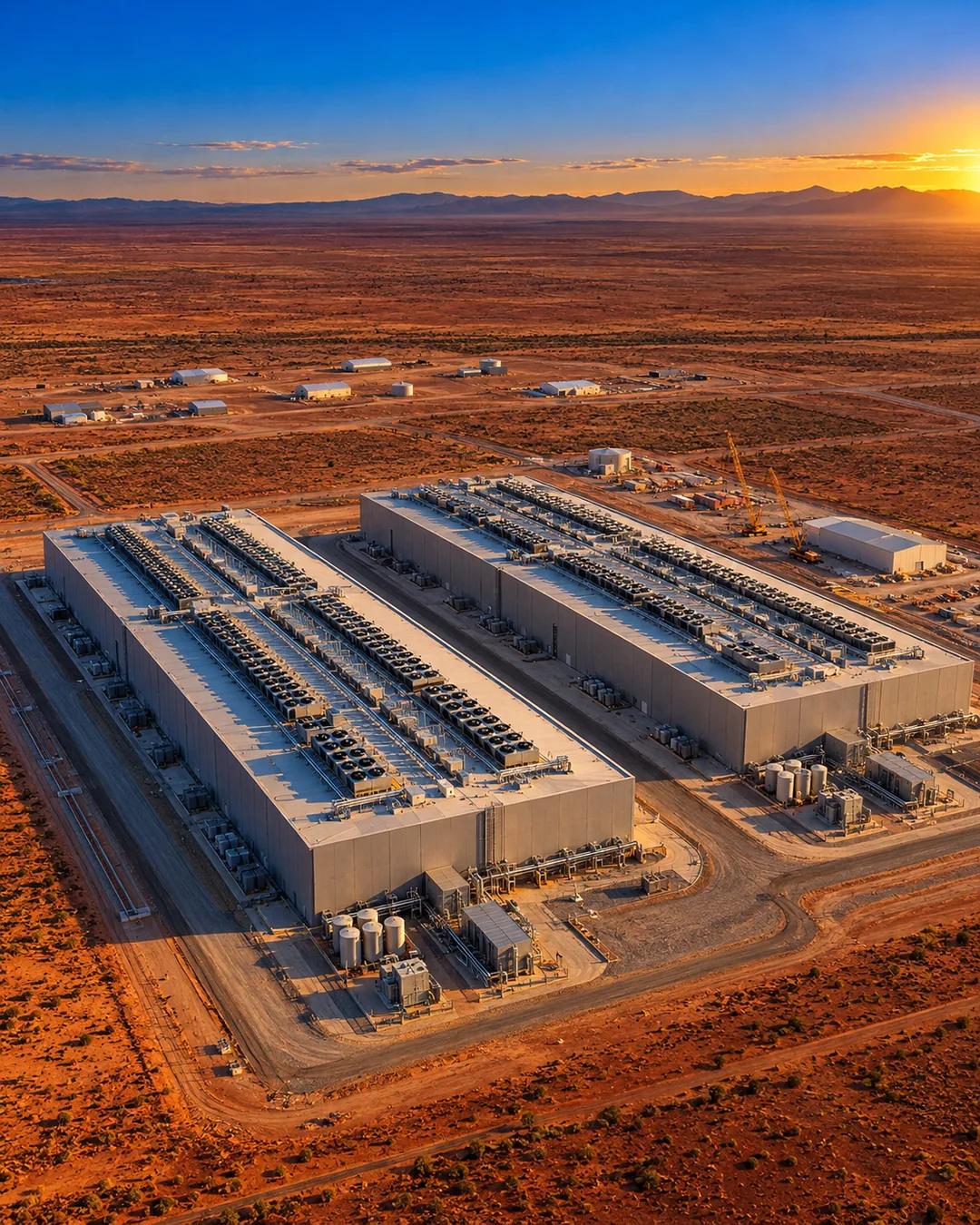
At the start of this year OpenAI had about two gigawatts and Anthropic had less than two. By the end of the year both are above five, which is three to four times the compute in twelve months. The share keeps rising because the contracts are already signed, and the builders behind it are changing. SpaceX is putting up a large amount of capacity that it will most likely lease to the labs, since they can pay the highest price. OpenAI is moving to its own chips, and Anthropic is buying TPUs from Google and deploying them with Fluid Stack.
Hardware stretches the lead
New hardware stretches the lead. The world adds roughly 30 gigawatts this year, 50 next year, and 70 in 2028, and each new watt from GB300s, TPU v7s, and Trainium 3s delivers three to five times the performance of the previous generation.
Half of new capacity
By December 2027 the two labs hold half of the world's new capacity, and that half outperforms everything installed before it. By the end of 2028 they control most of the usable flops in the world.
Why does new hardware deliver three to five times more?
Each chip generation packs in more math units and works with smaller number formats, so more operations fit in the same power. Faster memory, called HBM, keeps those units fed with data. Newer systems also link more chips together over fast connections, which lets one big model span them with less waiting. These gains stack across a generation.
Why do labs sign contracts years ahead?
A large data center takes one to three years to design, permit, and build, and the power connection often takes as long. A builder can borrow against a signed multi-year lease far more cheaply than against a hope of future customers. Locking in a lease also secures the capacity before a competitor does.
Why did Google build its own TPU chips?
Google began work on the Tensor Processing Unit around 2013 after calculating that voice search on neural networks would require doubling its data centers. The chip is specialized for the matrix multiplication at the center of neural networks. The first TPUs were running in Google's data centers by 2015, years before the company offered them to cloud customers.
More from Dwarkesh Podcast