Korva is a scroll of the internet’s best ideas.
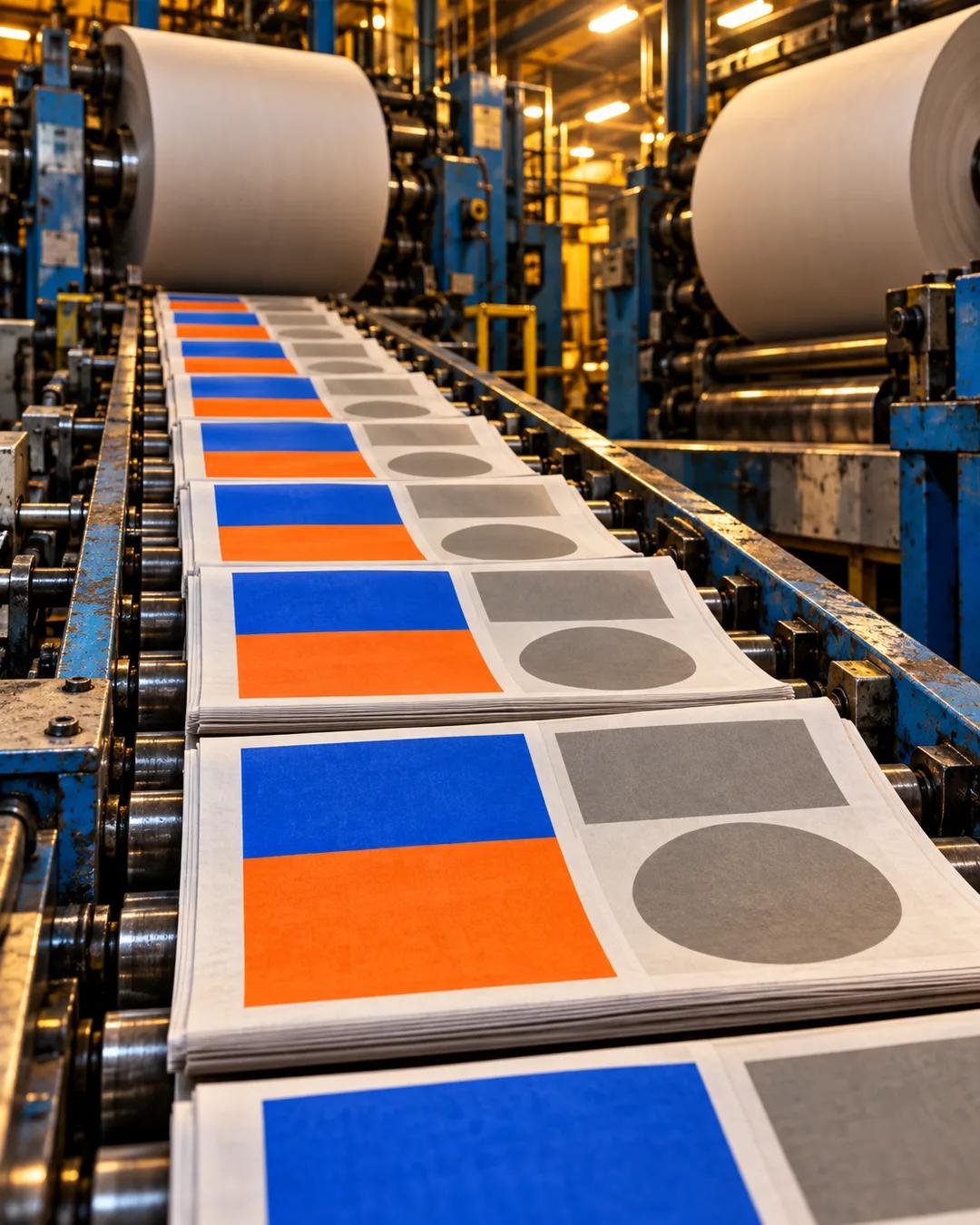

Newspapers in the United States and the United Kingdom were printed on two or sometimes four parallel presses to make enough copies. The output of the presses was interleaved, a bit like shuffling a deck of cards. A reader and the next-door neighbor might get different ads, and which one they saw was effectively random, which avoided results skewed by the rich getting one ad and the poor another.
By the 1920s, long before medicine had grasped the randomized controlled trial, direct response advertisers were testing this way. Their coupons carried codes that showed which ad and which medium drew each reply. They tried headlines in tiny classified ads the size of a couple of postage stamps, then used the winner in a full page. One medium might work four times better than another, and very small changes sometimes made enormous differences.
An ad for a correspondence course in grammar began with the headline: Do you make mistakes in English? Adding the word these made readers curious whether they made those mistakes. Another change, Do you make these common mistakes in English, took away the stigma of being an ignoramus for making them.
How did coupon codes show which ad worked?
Advertisers added a small variation to the reply address, such as a department number or a letter after the street name, that differed from one ad to the next. When replies came in, counting by code showed which headline and which publication had drawn them. Claude Hopkins described this keyed-ad method in his 1923 book Scientific Advertising.
How did randomization reach medicine?
The statistician Ronald Fisher developed random assignment for experiments at the Rothamsted agricultural station in the 1920s, and he set out the method in his 1935 book The Design of Experiments. The 1948 British Medical Research Council trial of streptomycin for tuberculosis, led by Austin Bradford Hill, is widely regarded as the first properly randomized clinical trial. Patients were allocated using sealed envelopes containing random numbers.
Why test headlines in tiny ads first?
A small classified ad cost a fraction of a full page, so an advertiser could try many headlines cheaply. The headline that drew the most replies for the money then moved into a larger ad. David Ogilvy championed this kind of testing in Confessions of an Advertising Man, first published in 1963.
More from My First Million