Korva is a scroll of the internet’s best ideas.
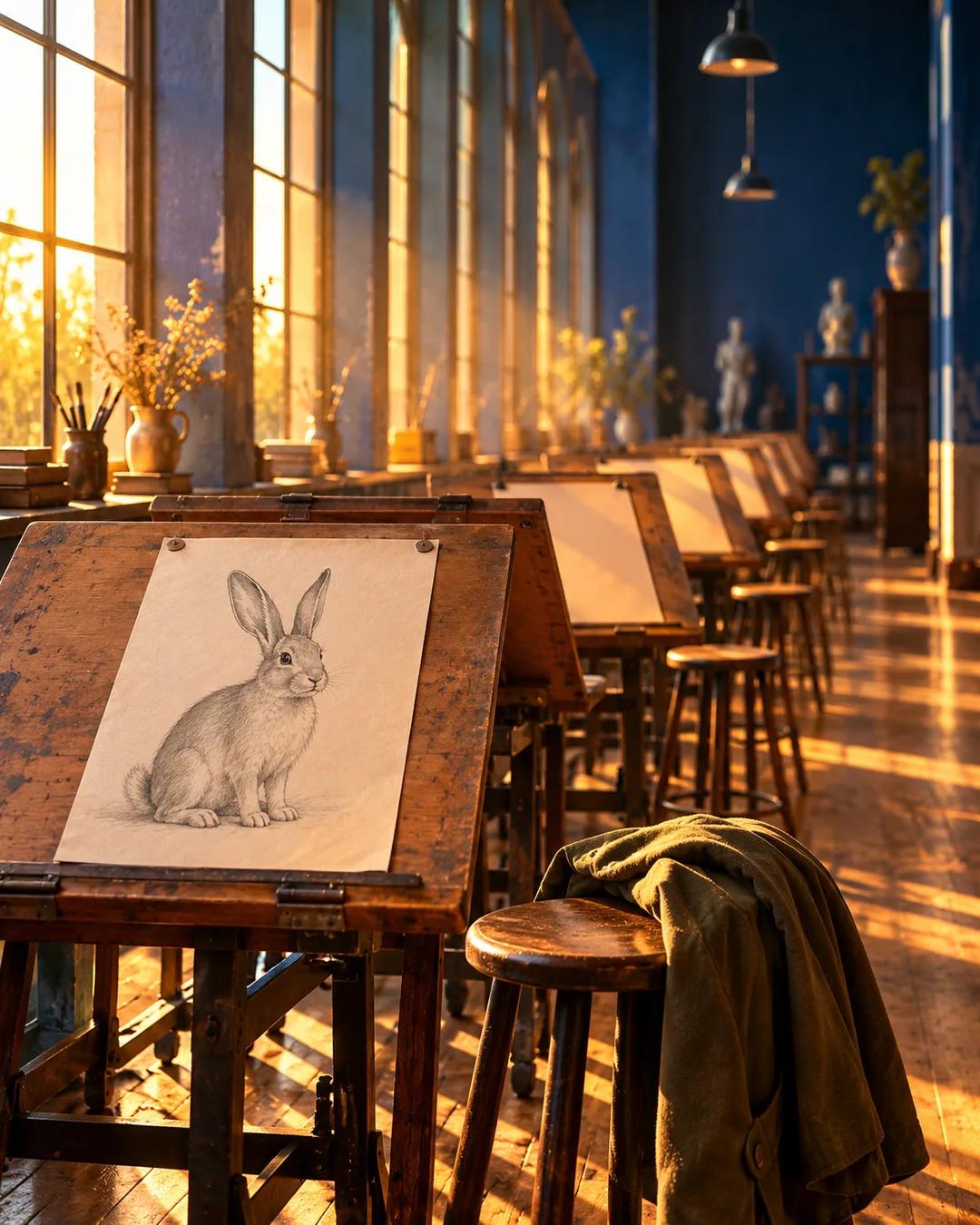
Walt's studio was suddenly worthless

Losing the rabbit
Oswald had been a big hit for Universal, for the distributors Charles Mintz and Margaret Winkler, and for Walt's studio, which had grown to about 25 employees. But Universal, not Walt's studio, owned the character, and Walt and his brother Roy apparently never read the fine print on their contracts.
Mintz refused the raise and offered to pay $500 less per cartoon, which wiped out the studio's margin. He had already secretly signed nearly all of Walt's animators, apart from Iwerks and a few loyal holdouts. Walt had no employment contracts with his animators, no rights to Oswald, and no customer contract, so he had no leverage at all.
Mintz then made the studio finish the Oswald shorts left on its contract and pay the animators who were about to leave.
A mouse is born
On the long train ride back to Los Angeles, as legend has it, Walt sketched a new character on his drawing pad, a mouse named Mortimer who dreamed of flying like Charles Lindbergh. His wife, Lillian, thought Mortimer was the wrong name and suggested Mickey. The more likely version has Walt, Roy, and the animators who stayed loyal brainstorming a replacement after they got back. They landed on a mouse with the same round ears and black outline as Oswald, and this time the studio would own it.
How did distributors end up owning characters?
In the silent era, producers sold finished shorts to distributors at a fixed price per cartoon. The distributor usually held the copyright on the series it released, so the character belonged to whoever put up the release. Merchandising barely existed yet, so few producers thought to bargain for character rights. That began to change in the 1930s, when licensed products turned characters into valuable assets.
What happened to Oswald after Walt left?
Mintz's studio kept producing Oswald shorts for a short while. In 1929 Universal took the series in-house and handed it to the animator Walter Lantz. Lantz directed the rabbit's cartoons for several years. He later created Woody Woodpecker, who debuted in 1940.
Why does Mickey's design start with circles?
Round shapes were quick to draw and easy to keep consistent across a crew of animators. Ub Iwerks is credited with Mickey's original look, built from a circle for the head and circles for the ears. Simple forms also held up in black-and-white film, where fine detail got lost. Mickey's design was refined repeatedly over the following decades.
More from Acquired