Korva is a scroll of the internet’s best ideas.
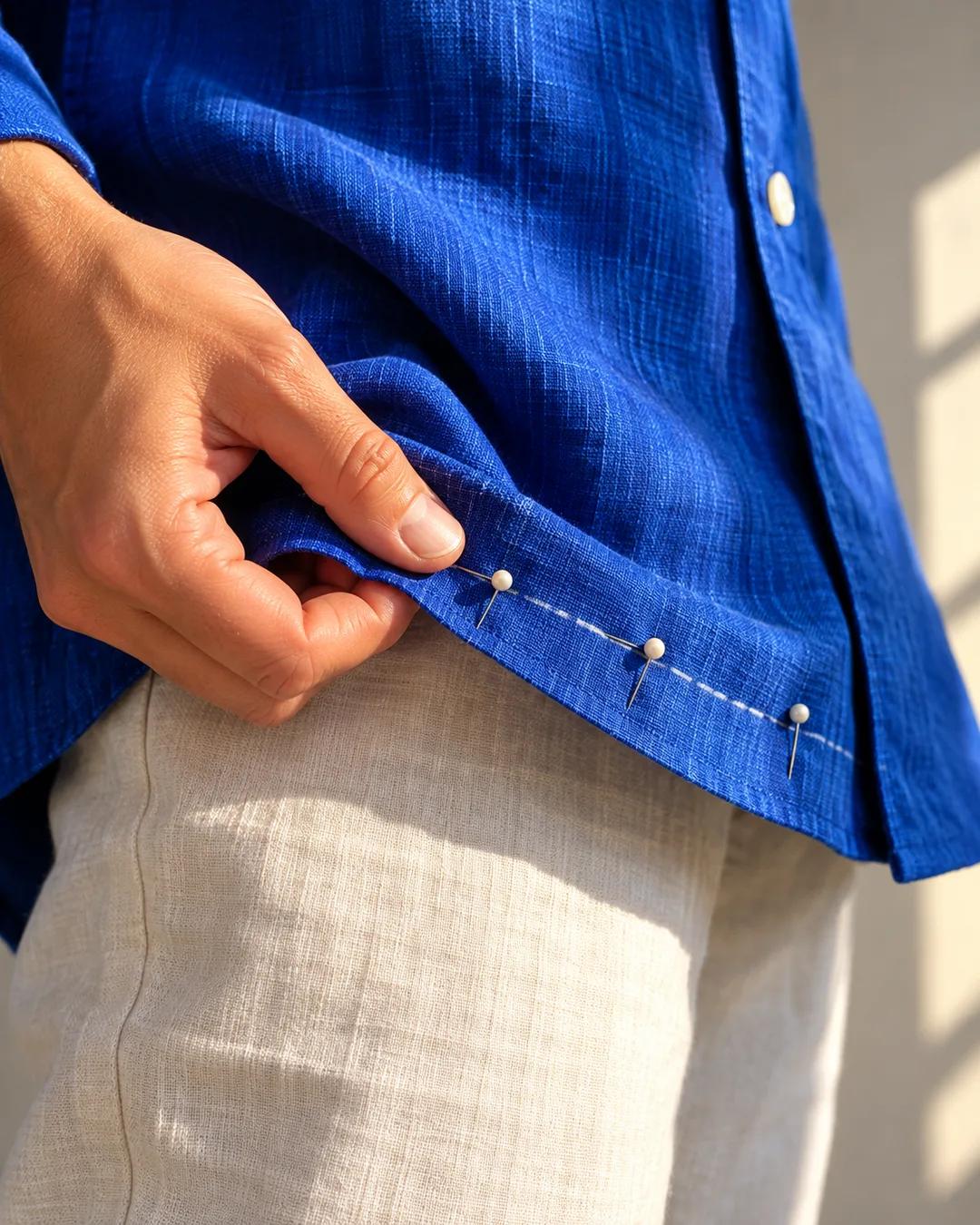
Watch where you tug your clothes
Spotting the fidget
A stylist watches for who is adjusting a piece of clothing, who keeps lifting it, who pulls at the hemline. That fussing points to the fix.
Then comes the testing. A hem taken up two inches, with the bottom rolled, might feel better. So might tucking the piece into pants that hit around the same spot. In the stylist's example, the answer to each was that the person liked it better.
Sorting a closet
The same attention helps when sorting a closet. Try everything on and ask whether the piece is still liked and feels good. A flat no goes in the donate pile. A piece that is liked but doesn't fit right may be alterable.
Dye is another way to change a piece that is already owned, and it can come from plants such as avocado pits and onion skins.
Why do avocado pits dye fabric pink?
Avocado pits and skins contain tannins and related pigments that turn from colorless to pink and rust when simmered in water. The pigments are drawn out into the water, and fabric soaked in that bath takes up the color. Dyers have used this scrap-based method for natural dyeing for years. Onion skins give yellow to orange, a color traced to the pigment quercetin.
Why do natural dyes need a mordant?
Many plant dyes rinse out unless something bonds them to the fiber. A mordant, usually a metal salt such as alum, forms a link between the dye molecule and the fiber. Wool and silk are protein fibers that take plant dyes readily, while cotton and linen are cellulose fibers that often need extra preparation. Alum has been used in dyeing since antiquity, and the Roman writer Pliny the Elder described it in his Natural History.
Why do people fidget with their clothes?
Psychologists Paul Ekman and Wallace Friesen called small self-touching movements adaptors in a 1969 paper on nonverbal behavior. Tugging at a collar or smoothing a sleeve counts as one. They noted that adaptors tend to happen with little awareness and show up more when a person feels uneasy. Ekman and Friesen sorted nonverbal behavior into five categories, and adaptors were one of them.
More from Life Kit