Korva is a scroll of the internet’s best ideas.
Water with meals may add bites
What the study found
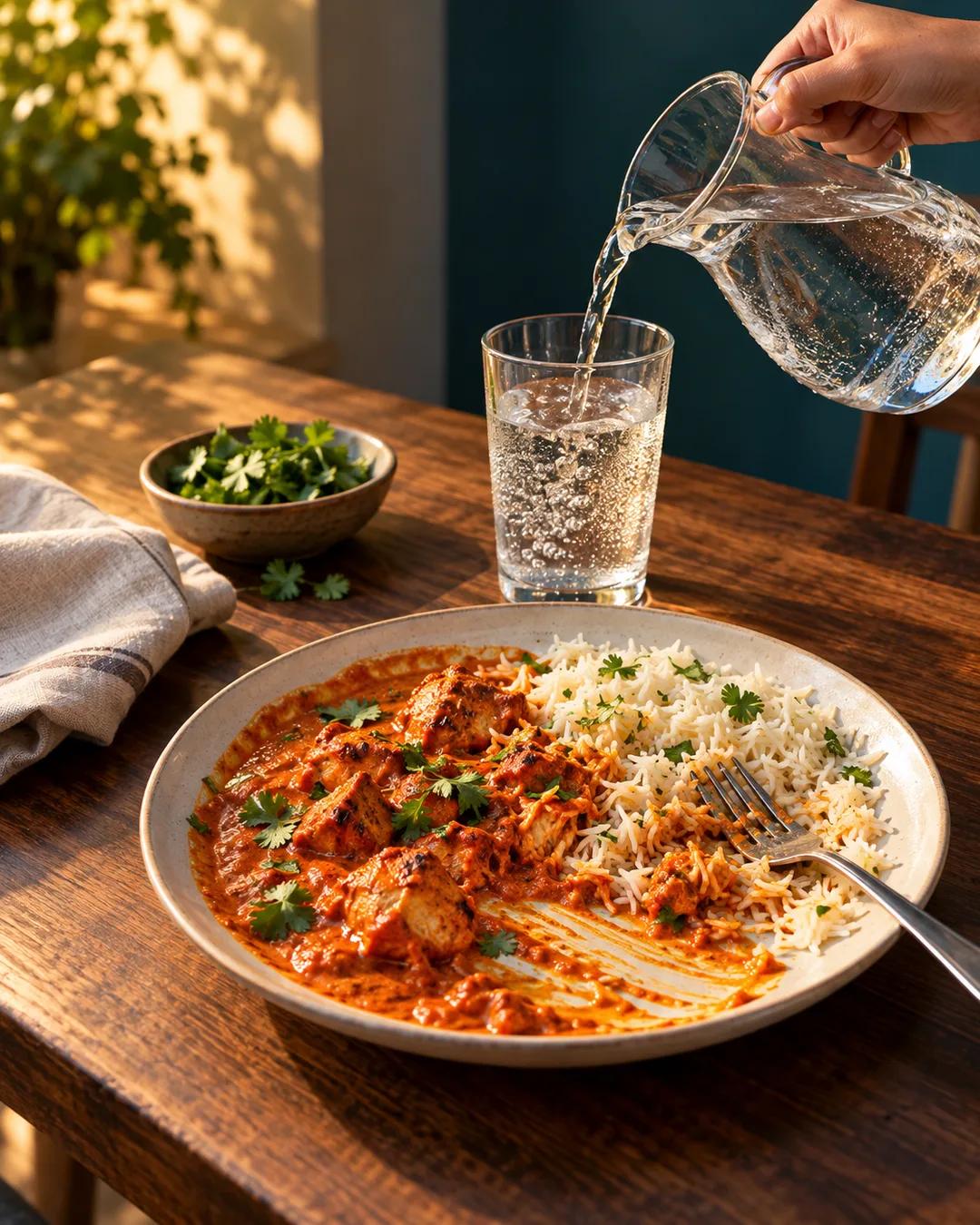
Food scientists at Cornell filmed 49 healthy adults eating a dish of their choice, either chicken tikka masala or beef chili, with water on the side. For every 100 grams of water (3.4 ounces) someone sipped, they ate an additional 39 grams of food, which adds up to around 49 calories. People who alternated sips and bites ate even more, with each switch adding a little over 4 grams.
Why water may add bites
Water empties quickly from the stomach, so it likely doesn't fill anyone up for long. It may also lubricate the food, which can speed up eating, and keep the mouth from going dry, which can prolong enjoyment of the food.
Then there is sensory-specific satiety: the more of one kind of food a person eats, the less they enjoy it, even tikka masala. Water between bites may work as a palate cleanser, making the next bite taste new again and stretching the meal out.
The fast sipper surprise
Fast sippers were the surprise. The researchers expected people who drank faster to take in more water and more food, and instead those fast sippers ate less overall. A longer stretch with water in the mouth, meaning slow sipping, could sharpen the contrast between water and food and make the next bite more appealing. These links come from a secondary analysis of associations, and a follow-up study is under way to test cause and effect.
Why does food lose its appeal as we eat it?
The effect is called sensory-specific satiety, and it was described in the 1980s by researchers including Barbara Rolls and Edmund Rolls. In their experiments, the pleasantness of a food that had just been eaten dropped much more than the pleasantness of foods that had not. Recordings from neurons in the orbitofrontal cortex of monkeys showed cells that responded less to a food the animal had been fed to fullness, while their response to other foods stayed strong. This is why a table with many different dishes tends to keep people eating longer than a single dish does.
How quickly does water leave the stomach?
Plain water passes through the stomach far faster than solid food. In gastric emptying studies, half of a drink of water typically leaves the stomach within about 10 to 20 minutes. Solid meals are held back and ground into small particles first, which is why they take hours to empty. The stomach releases liquids with few calories almost immediately, since there is little to digest.
Why does a palate cleanser make the next bite taste new?
Taste receptors and the neurons behind them adapt to a steady stimulus, so the response to the same flavor fades the longer it stays in the mouth. Rinsing the mouth removes the lingering molecules and lets the response recover. This is the logic behind the sorbet course served between dishes in classical French dining, the pickled ginger that comes with sushi, and the plain crackers used between wines at a tasting. Sensory scientists use water and unsalted crackers between samples for the same reason.