Korva is a scroll of the internet’s best ideas.

What moves the scale
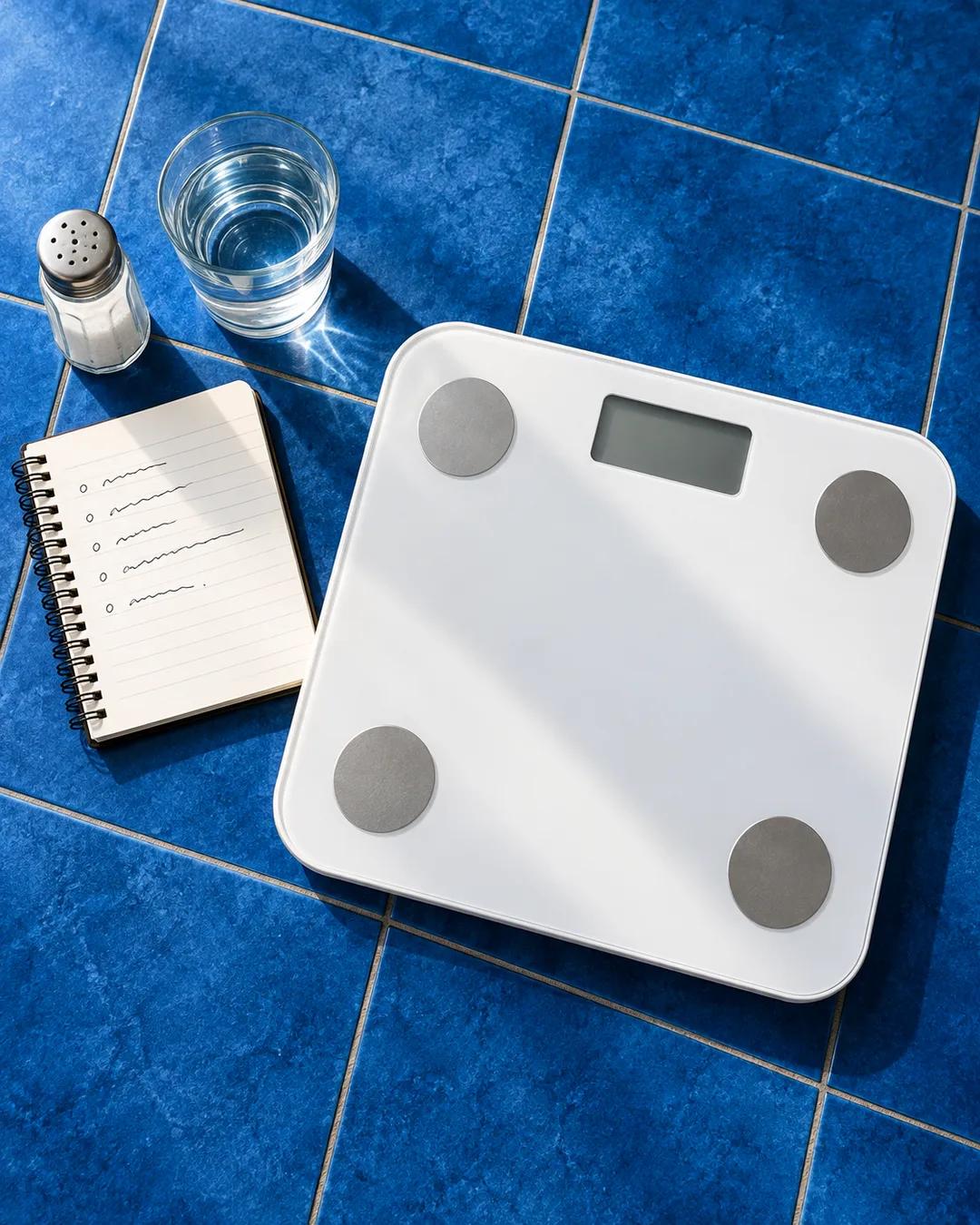
Salt, carbohydrates, eating later, sleeping worse, or a hard workout the day before can all push the scale up, usually through inflammation and water retention. The women who lost 30 pounds and kept it off learned to stop reacting to those swings. A higher number no longer meant cutting calories or adding an extra walk. Some kept a list of the usual causes beside the scale, so a rise got traced to a salty dinner or a bad night of sleep.
Reading the trend
What they watched was the trend. Daily weigh-ins feed that, because the weekly average is the number that matters. A week can have the same average as the last while two of its days come in lower, which already points in the right direction. A new low each week and a lower high each week both show the line heading down, and sleep, nutrition, and energy get averaged over the same weeks.
When to look closer
When three weeks pass with no movement across those numbers, that is the point to look closer at what the days actually contain.
Why does salt raise the scale overnight?
Sodium is the main dissolved particle outside the body's cells, and the body keeps its concentration steady by holding water. A salty meal leads to extra fluid being retained until the kidneys clear the sodium. The kidneys can adjust how much sodium they excrete over several days, which is why the extra weight tends to fade without any change in body fat.
Why do carbohydrates move the scale so fast?
The body stores carbohydrates as glycogen in the liver and muscles, and each gram of glycogen is stored with roughly three to four grams of water. Adults hold several hundred grams of glycogen in total. A change in carbohydrate intake can therefore shift body weight by a pound or two within a day or so, with no change in fat.
Why does a weekly average beat one weigh-in?
Day-to-day readings combine the real trend with random noise from water, food in the gut, and timing. Averaging several readings cancels much of the noise and leaves the trend. In a 2015 trial reported in the Journal of the Academy of Nutrition and Dietetics, Dori Steinberg and colleagues at Duke found that participants who weighed themselves daily lost more weight than those who did not.
More from The Metabolism and Menopause Podcast