Korva is a scroll of the internet’s best ideas.
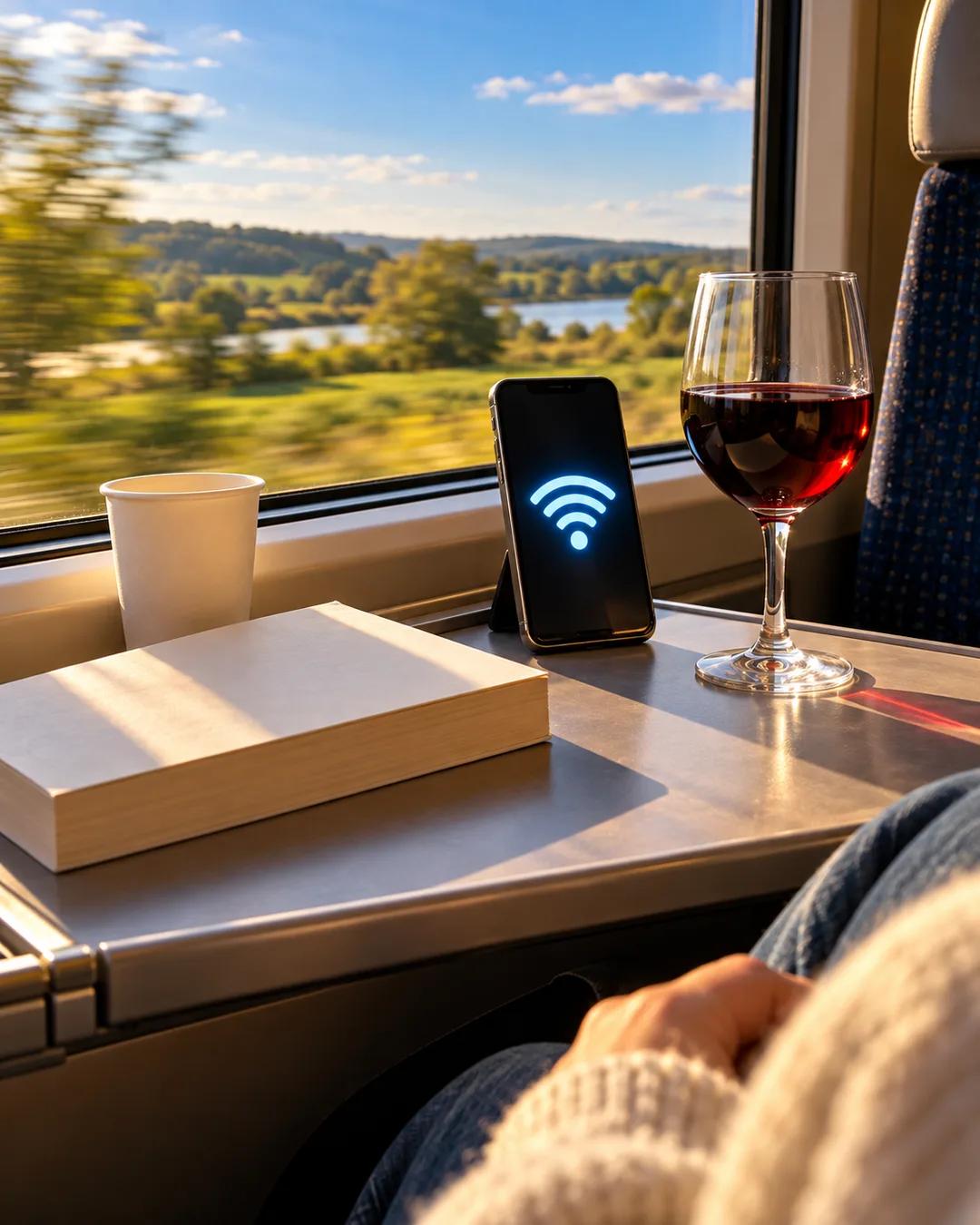
Wi-fi beats a faster train
What wi-fi would do
Wi-fi wouldn't have shortened the ride at all. It would have made the time more enjoyable and more useful, and it would have cost about 0.01 percent of the budget.
Free wine and supermodels
Now picture spending about 10 percent of the money on the world's top male and female supermodels, walking up and down the train handing out free Château Pétrus to every passenger. Most of the budget would still be left, and passengers would ask for the train to be slowed down.
Why such ideas get filtered
Ideas like these rarely get a hearing, because creative, emotionally driven ideas have to survive a cost-benefit analysis, a feasibility study, and an ROI study run by people more rational than their authors. It rarely runs the other way. People with an engineering or economic framework treat logic as its own answer, and they seldom take a plan whose numbers add up to some really crazy people to see whether they can come up with something better.
How does wi-fi make a trip feel shorter?
David Maister put it as a principle in his 1985 essay The Psychology of Waiting Lines: occupied time feels shorter than unoccupied time. A passenger with a connection can work, stream, or message instead of watching the clock. Maister was a professor at Harvard Business School, and this was the first of his principles of waiting.
What did the high-speed line change for Eurostar?
Eurostar services began in 1994 and ran at lower speeds on the British side of the Channel Tunnel. High Speed 1, a dedicated fast line into St Pancras station in London, opened fully in November 2007. It brought the trip between London and Paris down to about two hours and fifteen minutes.
Why do measurable gains beat enjoyable ones?
The social scientist Daniel Yankelovich described the pattern in 1972, and it became known as the McNamara fallacy, after Robert McNamara, the US Secretary of Defense in the 1960s. It starts with measuring whatever can be easily measured. Journey time fits neatly into a spreadsheet, while enjoyment of the ride does not. Yankelovich laid out four steps in the pattern, and measuring what is easy to measure was the first.
More from TED