Korva is a scroll of the internet’s best ideas.
Win words doubled work time
The experiment
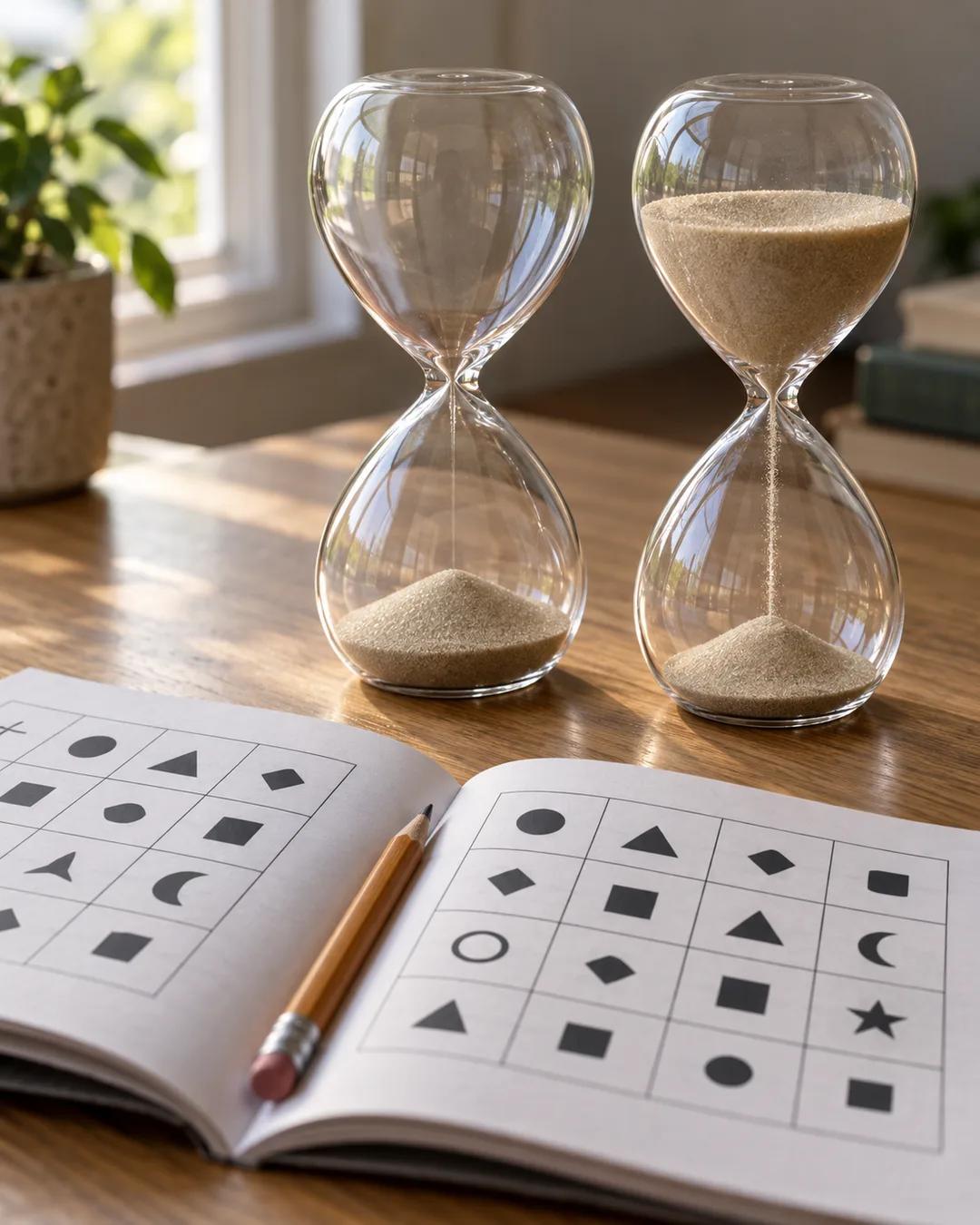
Participants in a lab got a basic intelligence task in one of two versions. One had sterile, formal directions: please complete the following to the best of your ability. The other had the same directions with a couple of achievement-oriented words sprinkled in, words like master, success, win, and achieve.
Everyone who got the achievement words performed better. They spent double the amount of time on the task, were more motivated, and enjoyed it more.
Priming your day
The same priming works on the words a person sees every day. A calendar block named for the task, like a writing block, primes boredom. Renamed Winning Morning, with phone alarms that read Power up, it primes the words the person actually wants to see.
How did researchers test goal priming?
In a 2001 paper in the Journal of Personality and Social Psychology, John Bargh and colleagues primed participants with words such as win and strive and then gave them a word-search puzzle. Primed participants found more words than those who saw neutral words. The authors argued that the words activated a goal outside conscious awareness.
How do everyday cues trigger behavior?
In a 2002 diary study, Wendy Wood, Jeffrey Quinn, and Deborah Kashy found that about 43 percent of the behaviors people recorded were habitual. Habits link a behavior to a context, so the setting itself becomes the trigger. Cues can be places, times of day, or the objects that people see. Participants often performed these behaviors while thinking about something else.
More from The Mel Robbins Podcast