Korva is a scroll of the internet’s best ideas.
Wringing out capacity for free

Why plasmids matter
Aldevron, a business Danaher acquired a few years ago, is the gold standard in plasmid manufacturing, and plasmids are where drug development in cell and gene therapy starts. Adding capacity there takes a lot of money and often a couple of years.
How SMED helped
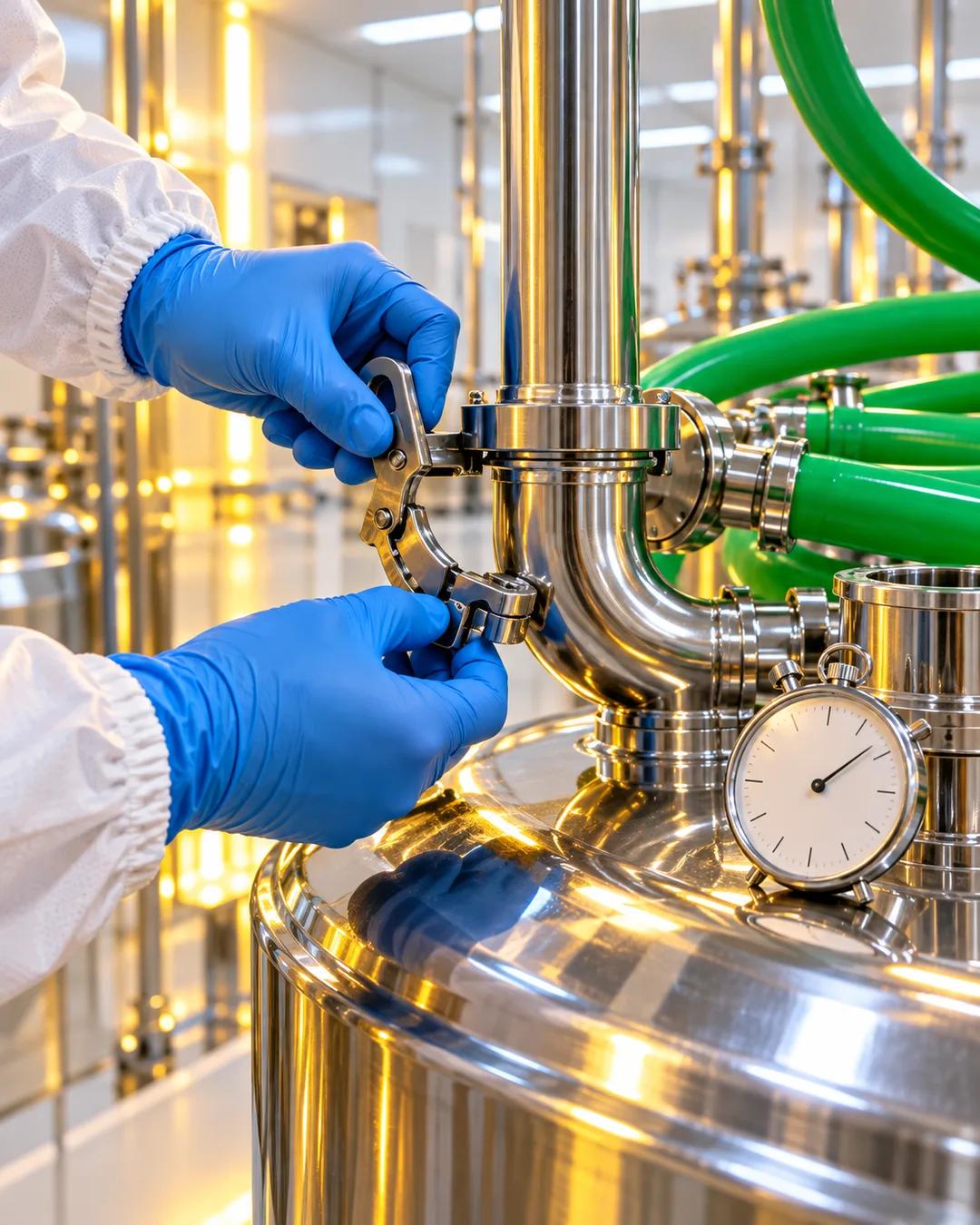
Danaher's toolbox includes SMED, short for single minute exchange of dies. It shrinks the time needed to change tooling when moving from one therapy to the next. Applying it freed up 20 to 30 percent more capacity with no dollars invested.
The payoff
The need was sharp. During COVID, lead times on plasmids across the industry stretched toward 18 months, a hard wait for a young company with a new drug. Aldevron's are now probably three or four months, down from 12 to 18, which is a real advantage when it tells a young company that its product can arrive a lot faster.
Why do gene therapies start with plasmids?
A plasmid is a small circular loop of DNA that can carry a gene and copy itself inside bacteria. Manufacturers use plasmid DNA as the starting template for mRNA, which is made from it in a lab reaction, and as the instructions fed into cells that produce viral vectors for gene therapy. Because the plasmid defines the final product's genetic sequence, its quality limits everything made downstream. Regulators such as the US Food and Drug Administration expect starting materials like these to be made under good manufacturing practice.
How are plasmids made at scale?
Manufacturers insert the gene into a plasmid and grow Escherichia coli bacteria carrying it in large fermenters. The bacteria copy the plasmid as they divide. After harvest, the cells are broken open and the plasmid DNA is separated from bacterial DNA, proteins, and endotoxin through filtration and chromatography. Each batch is tested for identity and purity before release.
Why do product changeovers eat plant capacity?
In a plant that makes several products, switching from one to the next means cleaning equipment and proving it is clean. Cleaning verification guards against cross-contamination, a major concern under good manufacturing practice rules. Time spent on cleaning, setup, and paperwork is time the equipment makes nothing. Cutting that time frees capacity without adding any equipment.
Why does adding drug-making capacity take years?
Cleanrooms must be built or retrofitted, equipment ordered and installed, and utilities such as purified water and air handling set up. Then each system goes through qualification and validation, which document that it performs as intended. Regulators review the facility before it can make material for patients. Custom stainless steel equipment can itself take many months to arrive.
More from Joys of Compounding