Korva is a scroll of the internet’s best ideas.
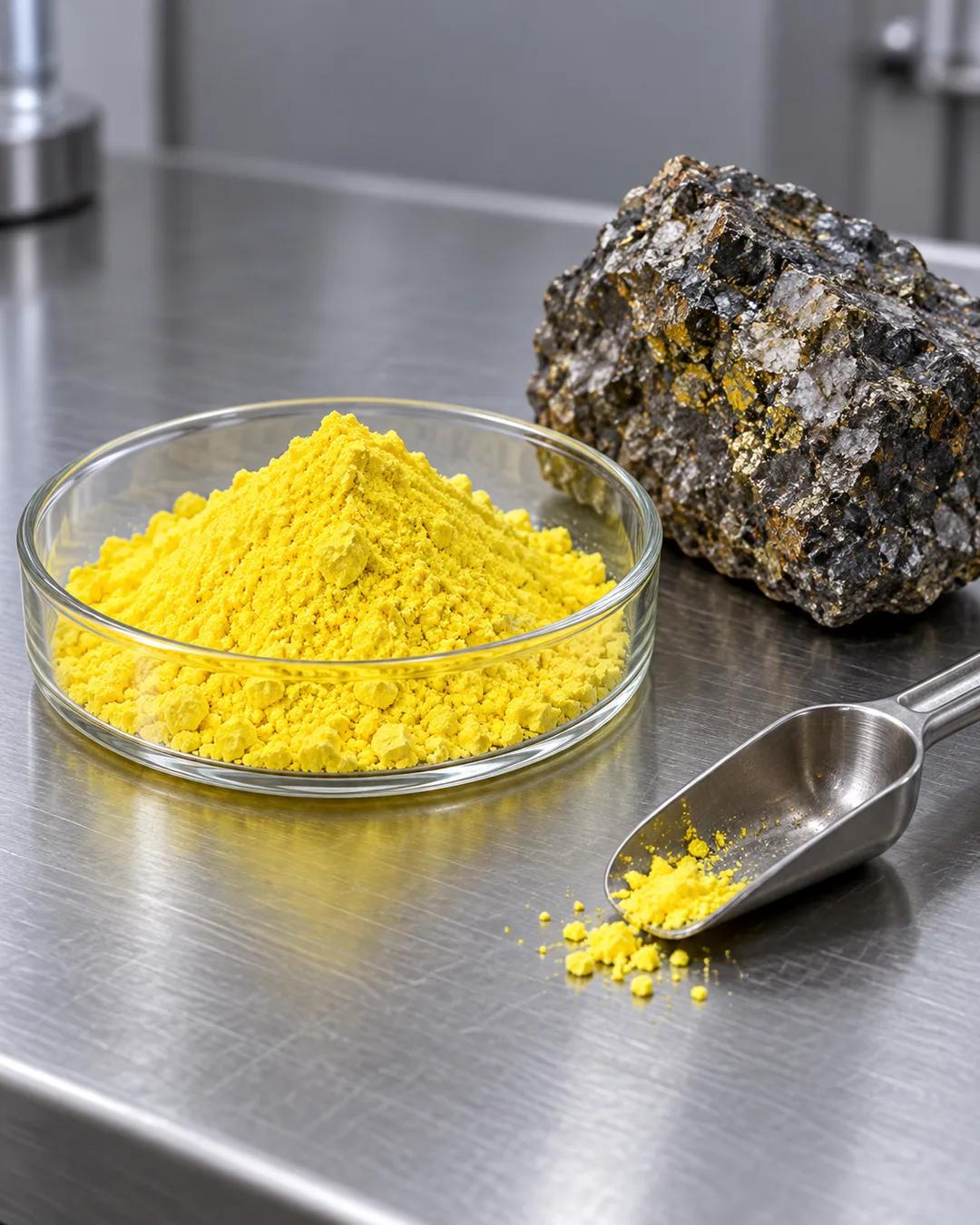
Yellowcake is just two elements

What Yellowcake Is
Turning ore into yellowcake concentrates the uranium without enriching it. It is still 99.3% uranium-238, and it weighs less, which makes it easier to transport. With the other elements gone, it is also the easier place to start enriching.
Separating the Isotopes
Enrichment relies on the fact that uranium atoms differ in weight, because they carry different numbers of neutrons. Converted to a gas, the uranium can be spun in a centrifuge, which separates the atoms by weight and picks out the most unstable, radioactive uranium-235. What is left behind is called depleted uranium.
How Much Enrichment
A nuclear power plant needs uranium enriched to only about 3% uranium-235. Submarine and aircraft carrier engines need more, and weapons-grade material needs more still. Centrifuges take expertise, money, and information that only state governments have, and today even they use lasers. In the United States, any amount of enrichment is against the law.
Why is yellowcake called yellow?
Early production methods left a bright yellow powder, mostly ammonium diuranate, which gave the product its name. Modern processes dry it at higher temperatures, so today's yellowcake is often brown, olive green, or nearly black uranium oxide. The name stuck anyway. Producers typically ship it in steel drums.
How can a centrifuge separate nearly identical atoms?
Uranium-235 and uranium-238 differ in mass by only about 1%, so one spin barely separates them. In practice the uranium is converted to uranium hexafluoride, a compound that becomes a gas at about 57 degrees Celsius. The gas is fed through machines linked in long chains called cascades, where each stage enriches the stream slightly more. Reaching reactor-grade levels takes thousands of centrifuges in a single plant.
Why does uranium-235 matter more than uranium-238?
A uranium-235 nucleus splits readily when it absorbs a slow neutron, releasing energy and more neutrons that can split other nuclei. Uranium-238 mostly absorbs neutrons without splitting, so it cannot sustain a chain reaction by itself. Natural uranium holds only about 0.7% uranium-235. Enrico Fermi's Chicago Pile-1, the first self-sustaining reactor in 1942, ran on natural uranium arranged with graphite.