Korva is a scroll of the internet’s best ideas.
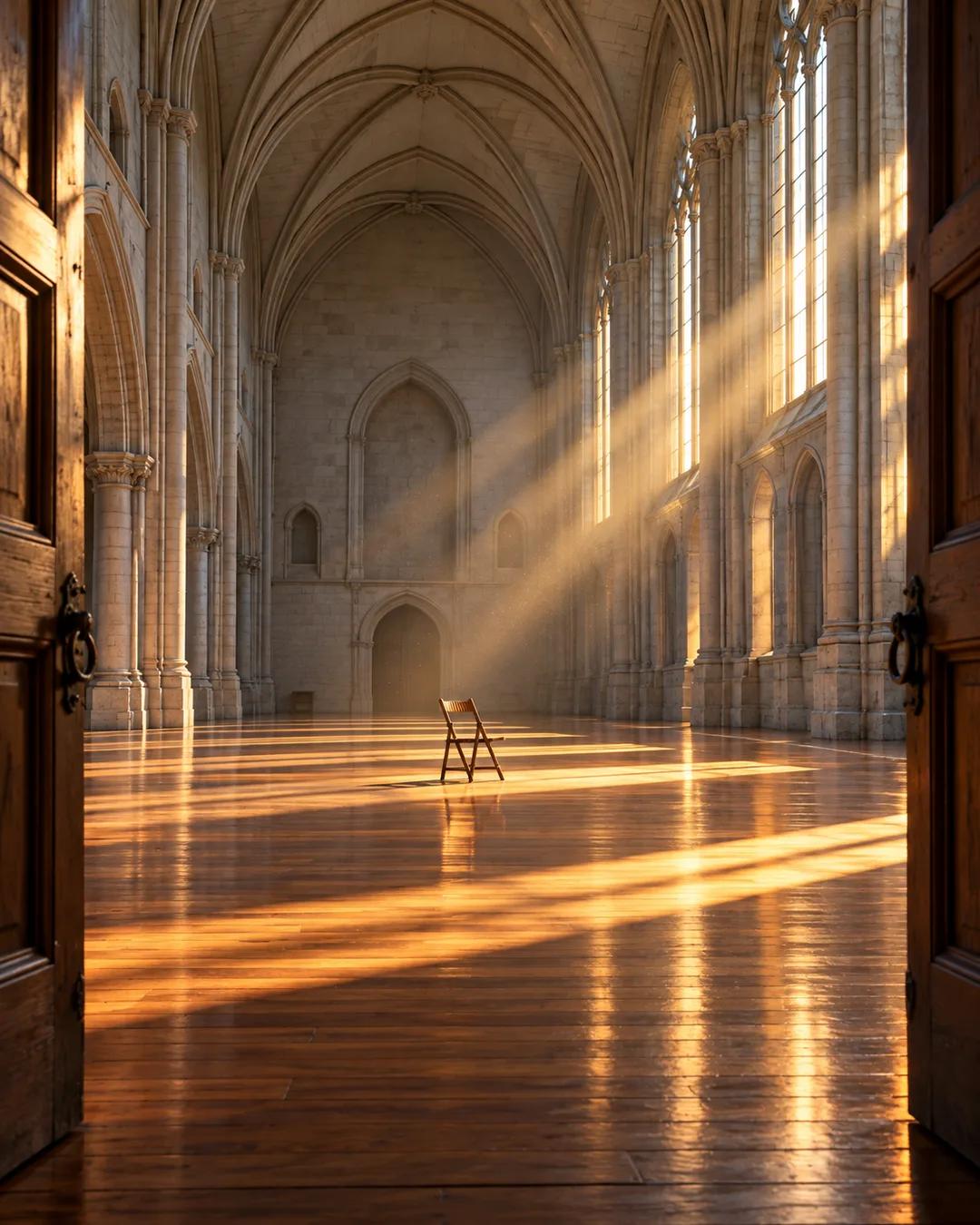
Your ears measure the room

Space and crowds
The size of a room registers through reverberation, the bouncing of sound off its surfaces. The number of people nearby registers through the micro-noises they make.
Time and meaning
Sound also places a listener in time, because every sound has time embedded in it. Listening may be the main way anyone experiences the flow of time from past to future. One quote captures it: sonority is time and meaning.
Listening consciously keeps a person connected in space and in time to the physical world around them.
How does reverberation reveal room size?
Reverberation time is how long a sound takes to fade by 60 decibels after its source stops. In the 1890s, Wallace Clement Sabine at Harvard found that this time grows with a room's volume and shrinks with the amount of sound its surfaces absorb. Big rooms with hard walls leave long tails, which the ear reads as space. Sabine's work guided the design of Boston Symphony Hall, which opened in 1900.
How can people see with echoes?
Some blind people click their tongues and listen to the echoes that come back to locate objects. In a 2011 study in PLoS ONE, Lore Thaler and colleagues scanned the brains of two blind expert echolocators. The echo sounds activated regions of the visual cortex, not only the areas for hearing.
Why does sound carry time so strongly?
A sound exists only as it unfolds, because it is a pressure wave moving through air. The ear also resolves timing more finely than the eye: listeners can detect a silent gap of about two to three milliseconds in a sound. Flickering light, by comparison, blends into steady light at around 60 flashes per second in typical conditions.
More from TED