Korva is a scroll of the internet’s best ideas.
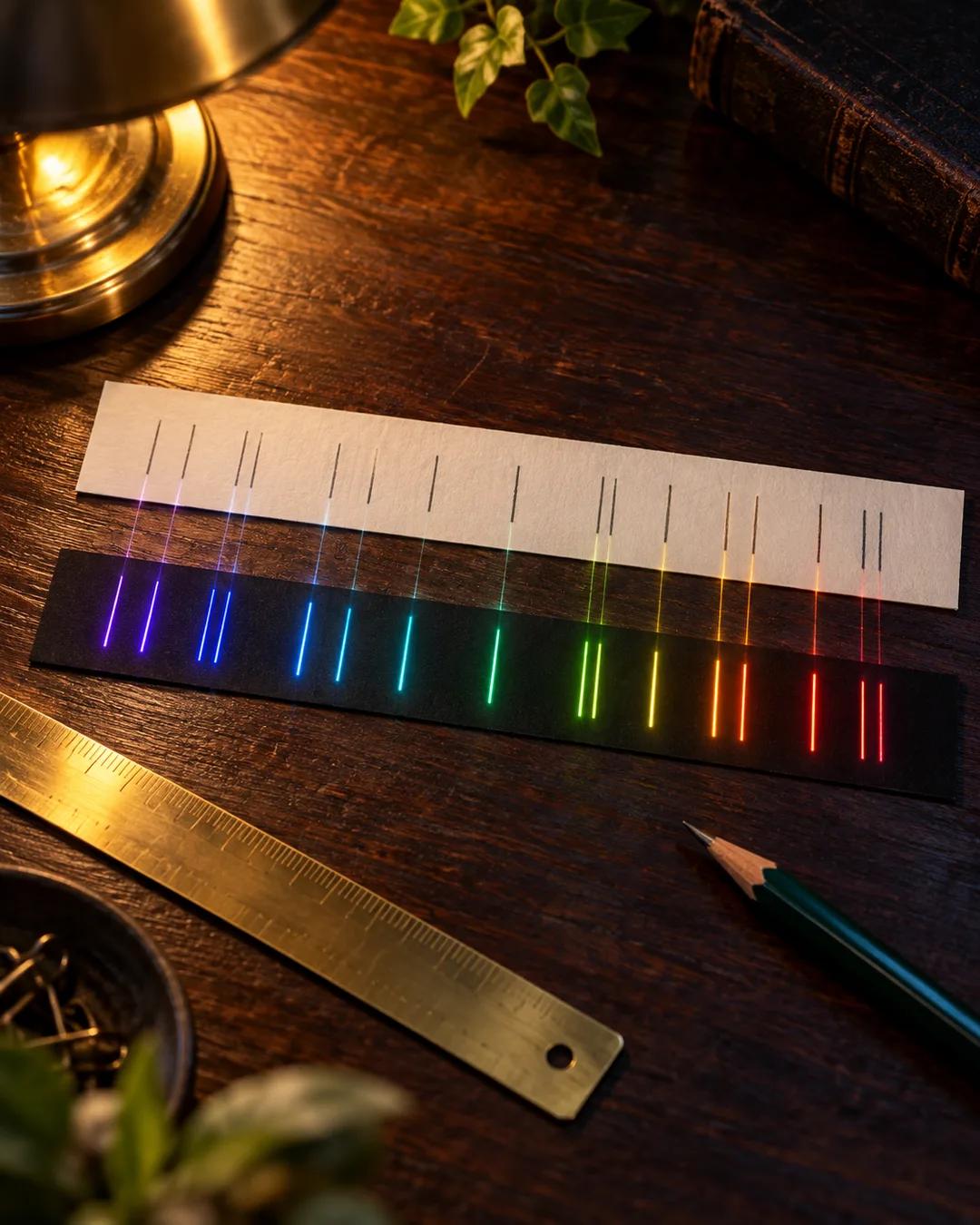
Zeta zeros match nuclear energy levels

Montgomery's formula
Riemann came up with the zeta function because he thought its zeros would connect to the density of prime numbers, and the Riemann hypothesis asks whether all of those zeros sit on a straight line. Hugh Montgomery, a number theorist at the Institute for Advanced Study, was trying to understand the statistical correlation between pairs of those zeros. He found a quantitative question he could ask and wrote down a formula that looked like one over sine squared.
Dyson's recognition
Freeman Dyson, a physicist, recognized the expression. It comes up in studying the eigenvalues of random Hermitian matrices, which show up in the energy levels of a nucleus. That the statistics of two seemingly different things were the same prompted an exploration of whether random matrix theory has something to do with the Riemann zeta function.
What came of it
Whether there is fruit to be had there is still an open question. The link surfaced because the two men happened to talk, and it joined expertise in quantum physics to expertise in analytic number theory.
Why do random matrices model atomic nuclei?
Heavy nuclei contain so many interacting particles that their exact energy levels cannot be calculated. In the 1950s, Eugene Wigner proposed treating the interaction as a random matrix and studying the statistics of its eigenvalues instead. The resulting levels repel each other, so they rarely sit close together, and measured nuclear spectra show the same spacing pattern.
How was the zeta zero pattern checked?
Andrew Odlyzko computed huge numbers of zeta zeros on supercomputers beginning in the 1980s. He compared the spacings between zeros with the random matrix prediction for the Gaussian unitary ensemble. The match was close, even for zeros located around the ten-to-the-twentieth position.
Where did Montgomery and Dyson meet?
Hugh Montgomery visited the Institute for Advanced Study in Princeton in 1972. He was introduced to Freeman Dyson over tea, and Dyson recognized the pair correlation function Montgomery had derived. Dyson knew it from his own work on random matrices in the 1960s.
More from Dwarkesh Podcast