1,500 AI Surveillance Towers Are Planned Far Beyond the Southern Border
The towers can capture detailed images from two miles away and follow people as they move.
 The Headlines · The A.I.-Powered Cameras Watching Border Towns, and a Midterms Attack Ad Causes Outrage
The government plans to put up 1,500 surveillance towers far outside the Southwest, with new sites planned by the northern border, on the Caribbean island of Puerto Rico, and along shorelines nationwide.
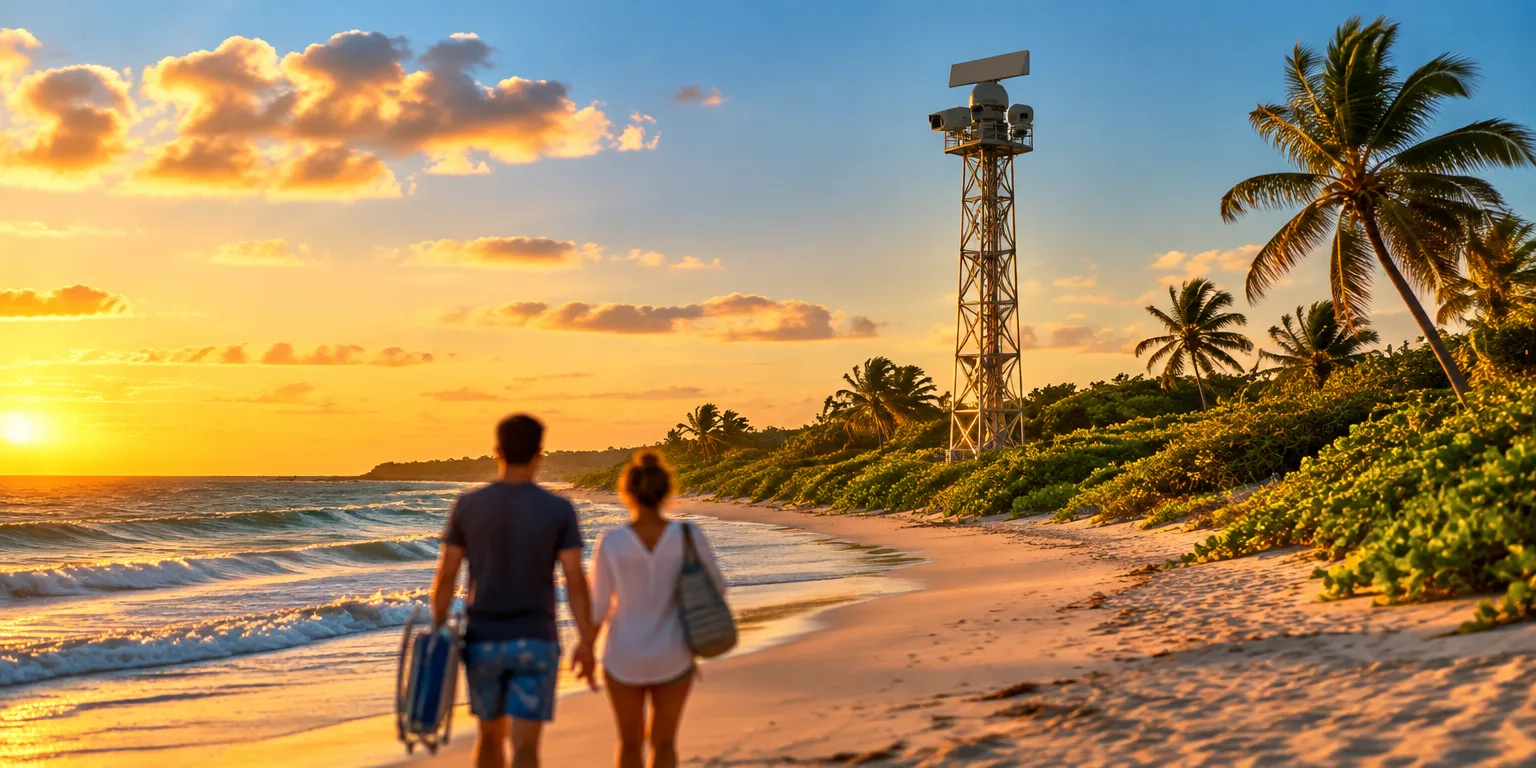
The towers carry cameras that can record clear pictures from as far as two miles off, with motion-sensing radar, night vision that detects heat, and software that can follow vehicles and people. Linked together in a row, they can pick up a person in one camera's view and keep tracking that person as they move into the next camera's view.
The towers already watch over schools, houses, parks, and beaches, and over a million residents on both sides of the southern boundary live where the cameras can see them. Many people near the border don't know the towers are there, and those who notice them often take them for cell towers. When asked how well the towers worked at intercepting unauthorized crossers or drug traffickers, officials gave no information, though Customs and Border Protection called them essential to border security.
Questions people ask
What can these towers actually see?
They use high resolution cameras, often paired with radar and infrared for night vision, mounted high enough to see over homes and parks. From that height, they can make out people and vehicles from up to two miles away, though what they can identify depends on weather, terrain, and light.
Who watches the footage?
The towers described here are operated by U.S. Customs and Border Protection, part of the Department of Homeland Security. The video and sensor alerts typically go to monitoring stations where agents review them and decide whether to send officers to investigate.
Is this kind of surveillance already used elsewhere in the U.S.?
Yes. Police departments, sheriffs, and federal agencies use fixed cameras, license plate readers, and surveillance towers for traffic, crime, and border enforcement. The notable change here is linking many towers into one tracking network and expanding it well beyond the southern border.