180 Israeli Tanks Faced 800 Syrian Tanks, and One Brigade Fell in a Day
The 7th Brigade held in the north, the 188th was left with five working tanks, and the losses pushed Israel to put its nuclear weapons on alert.
 nationalinterest.org · Israel Nearly Went Nuclear to Win the 1973 Yom Kippur War
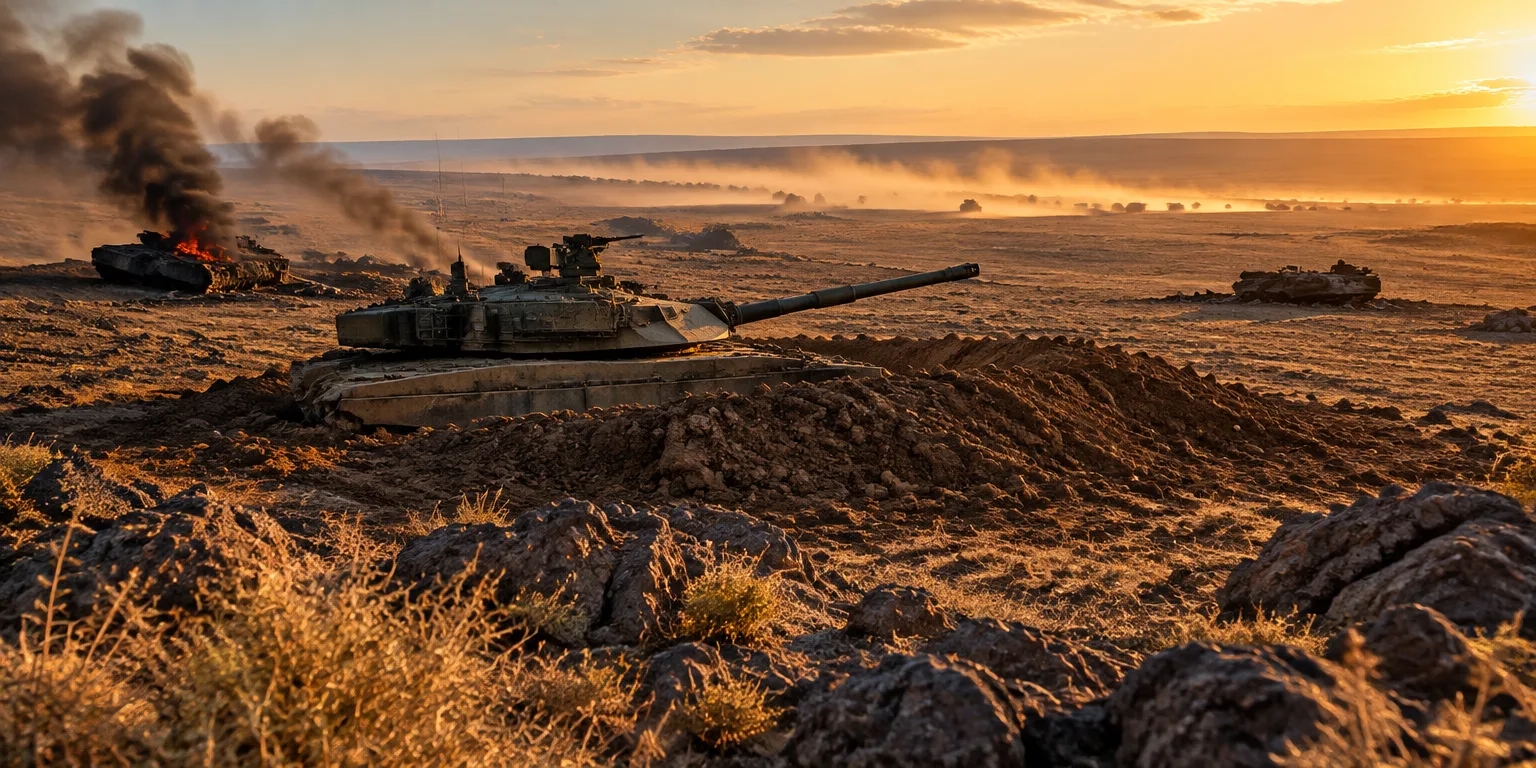
The Syrian tanks came on in waves, as many as 800 of them, backed by 188 artillery batteries and 28,000 troops advancing on Israel's defensive line in the Golan Heights. Waiting for them were just 180 Israeli tanks, split between the 188th Barak and 7th Armored Brigades, aided by paratroopers and eleven batteries of artillery. Their orders were to hold for two days, until reserve armor and artillery could reach them.
The machines were closely matched. Israel's British-built Centurion tanks, later joined by American M48 Pattons and even rebuilt American Sherman tanks from World War II fitted with powerful 105-millimeter guns, were roughly equal to Syria's Soviet-built T-55 and T-62 tanks. The Israelis had only modestly better aiming systems, and ramp-like mounds of earth built for cover. Syria also brought highly mobile BMP-1 troop carriers, boxy armored vehicles that could carry soldiers and fire tank-killing missiles and light cannon.
What followed in October 1973 was a fight against impossible odds that ended in a severe setback for Israel. One brigade would be gone in a day with just five tanks still working, and the losses would lead Israel to put its nuclear strike forces on alert.
Israeli tank crews had far stronger training and leadership, while Syrian units endured severe communications and coordination failures. Small groups of Israeli armor destroyed dozens of Syrian tanks that struggled to spot where the fire was coming from. At times, shooting from just one Israeli tank led Syrian officers to stop attacks that had been moving forward.
Skill and nerve made up for numbers for a time, but the weight told hardest in the south. In the north, the 7th Brigade held the Quneitra gap. On the flatter ground to the south, the 188th was virtually wiped out in 24 hours, with its officers dead and just five tanks still working. Syrian armor broke through there, and commandos arriving by helicopter seized a critical Israeli intelligence outpost on Mount Hebron, 2,000 meters above sea level.
The setback shook Jerusalem enough that on October 9, Golda Meir, Israel's prime minister, ordered Israeli nuclear strike planes and missiles onto alert.
Questions people ask
Where are the Golan Heights, and why did they matter so much?
The Golan Heights is a rocky plateau above northeastern Israel, overlooking Israeli farms and towns below. Whoever holds it can see and shoot down into the lowlands, which is why Israel seized it from Syria in 1967 and why Syria tried to retake it in 1973.
What kind of tank was the Centurion?
Centurions were British-built tanks that formed the backbone of Israel's armored force in 1973. They were heavy, well armored, and fitted with good guns, and crews liked them for their ability to fight from fixed positions behind earth ramps.
Did Israel actually use nuclear weapons in the war?
No. Israel put strike planes and missiles on alert but did not use them. After Washington learned of the alert, it shipped 72 Phantom and Skyhawk jets, 200 Patton tanks, TOW missiles, and heavy artillery to Israel.