45-day-old twins in Yemen sometimes get only water because war made milk too expensive
Their father fled bombs and drones to reach a clinic in Aden that can fill only 13 of its 22 beds after losing foreign aid.
 Global News Podcast · Yemen's humanitarian crisis
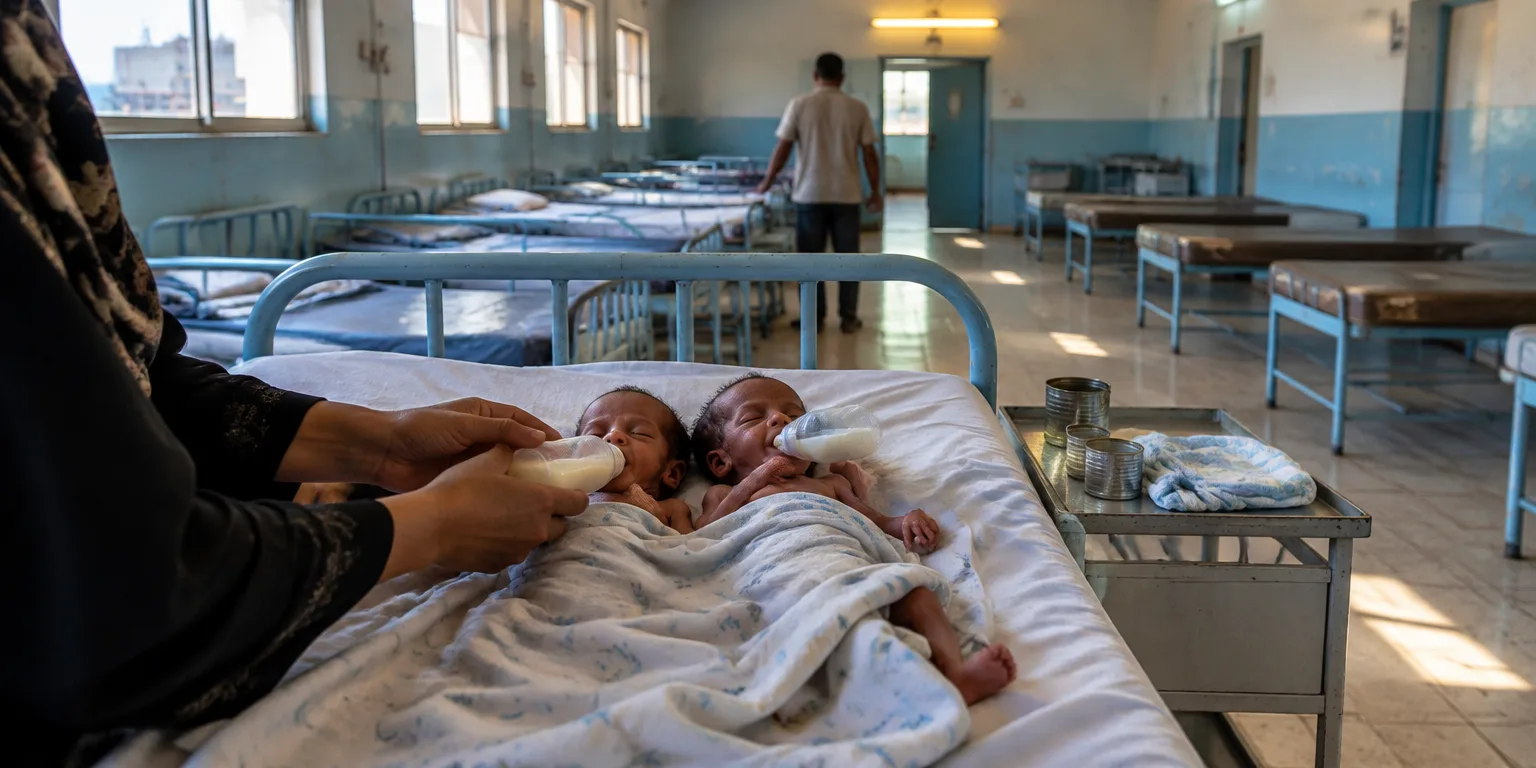
The father walked into the emergency room with his entire family. Bajash Ali Hassan, a Yemeni father of five, had his wife beside him and his youngest in his arms, 45-day-old twins, a son and a daughter, with thin arms and legs. Orla Guerin, the correspondent who met them in Aden, said their health "looks very, very poor."
Their names are Ragad and Rad. Hospital staff say they suffer from severe acute malnutrition, and they arrived at a malnutrition unit in the port city of Aden after fleeing fighting. The case shows what war and lost aid have done in Yemen, where the World Food Programme says more than two million children under five are acutely malnourished.
Bajash said the family had been afraid on the journey because of bombs, shooting, and drones hitting civilian cars. When asked about feeding the twins, he said, "It's very difficult." He buys only small amounts of milk and feeds them twice a day with whatever is available.
Bajash said, "A can of milk is very expensive because of this war." Sometimes they only have water.
Inside the unit, children had been arriving hour after hour. Orla Guerin, a senior international correspondent reporting from Aden, found a ward with 22 beds where staff said they could admit only 13 patients at a time. They did not have enough nurses, doctors, or money. Funding that used to come from international organizations is no longer coming.
Noor Mohammed, a young doctor in the unit, examined the twins and said she keeps seeing children with malnutrition getting worse as the war has flared again. Asked if the unit loses many patients, she admitted that they do lose patients. She said they lack good medical equipment, like ventilation machines and oxygen bottles.
The twins were admitted and placed together to share a bed. Their mother, Lena, fed them enriched milk from a small nursing bottle. She said the girl, Ragad, was doing better than before, but the boy was even worse than before.
Lena said the family could not go home when the babies are discharged because there is fighting and Houthi rebels, who control much of northern Yemen, are in their village. Her husband was still looking for a place to stay, perhaps a tent. That night, with no shelter found, Bajash bedded down outdoors with their three older little ones, all younger than five.
Questions people ask
What does severe acute malnutrition do to a baby?
Severe acute malnutrition means a child is dangerously thin for their height or has swelling from lack of protein. Their immune systems weaken, growth stalls, and even a common infection can kill them. Treatment uses special fortified milk and pastes, plus close medical monitoring.
Why is there a war in Yemen?
Yemen has been in civil war since 2014, when Houthi rebels seized the capital and a Saudi-led coalition intervened to back the government. The fighting, blockades, and economic collapse have made food and medicine scarce and expensive. A recent escalation has included fears of Houthi attacks on Saudi oil facilities.
Why did the clinic lose its funding?
Malnutrition units depend heavily on UN agencies and foreign donors for staff pay, food supplies, and equipment. In recent years, the United States and other major donors have cut humanitarian budgets, and UN agencies including the World Food Programme have warned of funding shortfalls. Clinics then cut beds, staff, and supplies even as patient numbers rise.