60% of America's wild seafood comes from Alaska
That is why a fight over giant fishing nets is shaping the state's campaigns.
 The Headlines · The 2026 Nobel Peace Prize Winner, and the Pentagon’s Plan to Livestream an Execution
About 60% of all the wild seafood harvested in America comes from Alaska.
That share ranges from pricey salmon to the fish used in a McDonald's Filet-O-Fish. The scale helps explain why fishing is a central topic in Alaska's midterm elections.
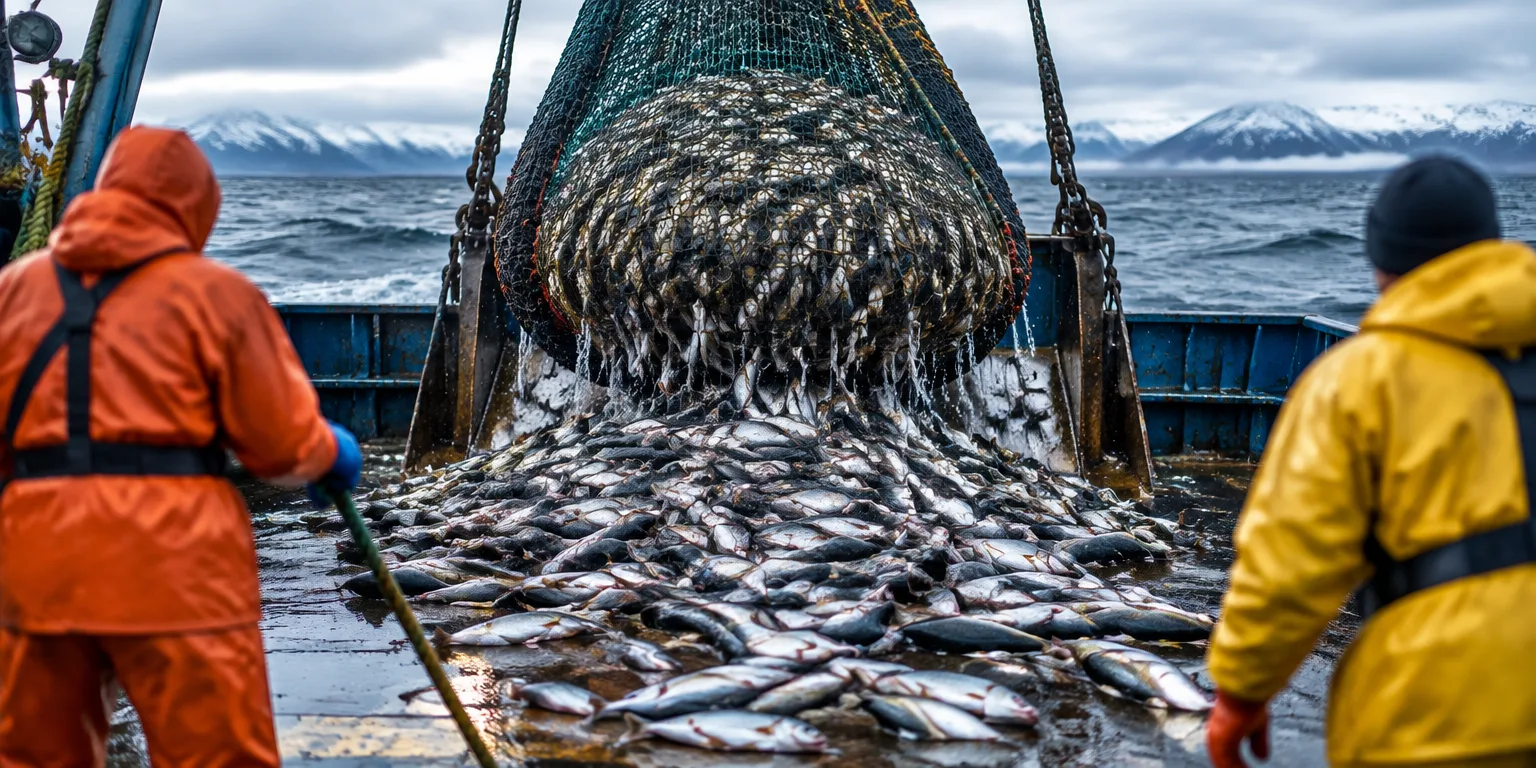
At the center is deep-sea trawling, in which crews drag giant nets through the ocean to pull up billions of pounds of fish. Many of those fishermen are not from the state, while fishermen who live there, including Native communities, say they are struggling to make a living now.
Candidates for the House, Senate, and governor are pitching bans on out-of-state boats and tougher action against Russian and Chinese fleets working in nearby waters. What happens there matters far outside Alaska, across the United States.
Questions people ask
What fish is in a McDonald's Filet-O-Fish?
In the United States, it is wild-caught Alaska pollock, a mild white fish harvested in huge volumes in the Bering Sea and the Gulf of Alaska. McDonald's says its U.S. Filet-O-Fish is made with 100% Alaska pollock from sustainably managed fisheries. Pollock is also used for fish sticks, imitation crab, and fast-food fish sandwiches more broadly.
What is deep-sea trawling, exactly?
It is fishing by dragging a very large net behind a boat, scooping up everything in its path. Trawlers can catch enormous quantities at once, which makes the method efficient but controversial. Critics say it can scoop up unintended species and damage seafloor habitat, while supporters say modern rules and gear have reduced those effects.
Why is Alaska so productive for seafood?
Its waters are cold, nutrient-rich, and vast, with a long coastline, the Bering Sea, and the Gulf of Alaska supporting huge populations of salmon, pollock, crab, halibut, and other species. Federal management sets catch limits based on scientific surveys, and Alaska's fisheries are often cited as among the most productive and closely managed in the world.