68 Shipwreck Survivors Walked Onto Australia and Were Never Found
Seven survivors sailed 41 days to Java for help, but searchers found little sign of the wreck and none of the men.
 RealLifeLore · Why 95% of Australia is Empty
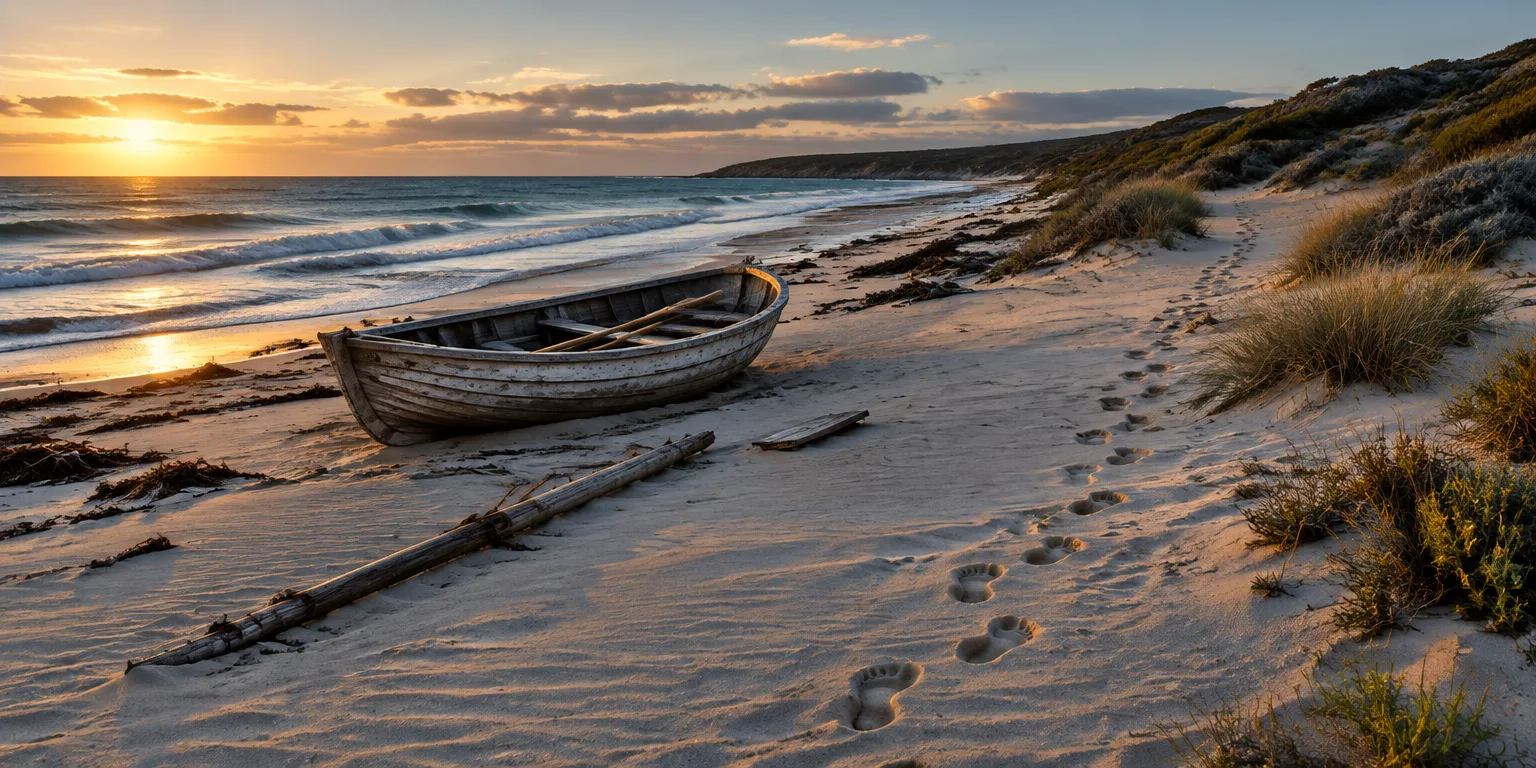
They counted 75 people alive on the sand off Western Australia in 1656. Their Dutch ship, the Vergulde Draak, had crashed off the coast, leaving its crew and passengers on shore. The Dutch had built no permanent settlement on the continent.
The survivors chose seven people to crowd into one of the ship's lifeboats and try to reach Batavia, the administrative capital of Dutch rule on the island of Java, in what is now Jakarta.
After 41 days at sea, the seven reached Batavia and raised the alarm for the 68 people they had left behind in Australia.
The Dutch Navy sent numerous search and rescue missions up and down the western Australian coast over the next several years. The crews found little sign of the wreck and no sign of the people left on shore.
The Dutch had first reached Australia 50 years earlier, landing along the west coast of the far northern Cape York Peninsula in 1606. They never tried to build a permanent town there, judging the parts they saw as too uninhabitable to settle. The wreck of the Vergulde Draak was an accident, and it was as near as the Dutch ever got to settling the continent.
The 68 left behind on shore were never found, and what became of them stayed unknown.
More than three centuries passed before a team of Australian divers found the wreckage of the Vergulde Draak in 1963, roughly 100 kilometers north of present-day Perth. More than a century after the disappearance, the British founded the first lasting European settlement on the opposite side of the continent, near present-day Sydney, with about 1,300 people in 1788. At that time, the Indigenous population of the whole continent was likely only around 650,000. The fate of the 68 people left on shore in 1656 is still unknown.
Questions people ask
Why were Dutch ships sailing so close to Western Australia in the first place?
The Dutch East India Company ran a rich spice trade between Europe and the East Indies. Captains used a fast southern route that caught strong westerly winds across the Indian Ocean, then turned north for Java. Ships that mistimed the turn could strike the then poorly charted western coast of Australia.
What was Batavia?
Batavia was the fortified headquarters of Dutch rule in Asia, built on the northwest coast of Java. It controlled warehouses, shipyards, and administration for the Dutch East India Company. Today the same city is Jakarta, the capital of Indonesia.
Why didn't the Dutch settle Australia after finding it?
The Dutch were merchants focused on profitable spices, and the western and northern coasts they saw looked dry, infertile, and thinly populated. They saw little to trade and poor prospects for farming. Britain did not establish its first permanent town, at Sydney, until 1788, on the other side of the continent.