A 10-Gram Scoop of Moon Dust Could Reveal How Mars Got Its Moons
Japan's spacecraft will haul back less than half an ounce, but scientists say single grains are enough to test two rival origin stories.
 Global News Podcast · France halts protests with curfew crackdown
The rockets lit up the night sky over South Japan as a spacecraft blasted off for Phobos, a moon of Mars. It is traveling light and planning to come home even lighter, with just 10 grams of moon rock tucked aboard.
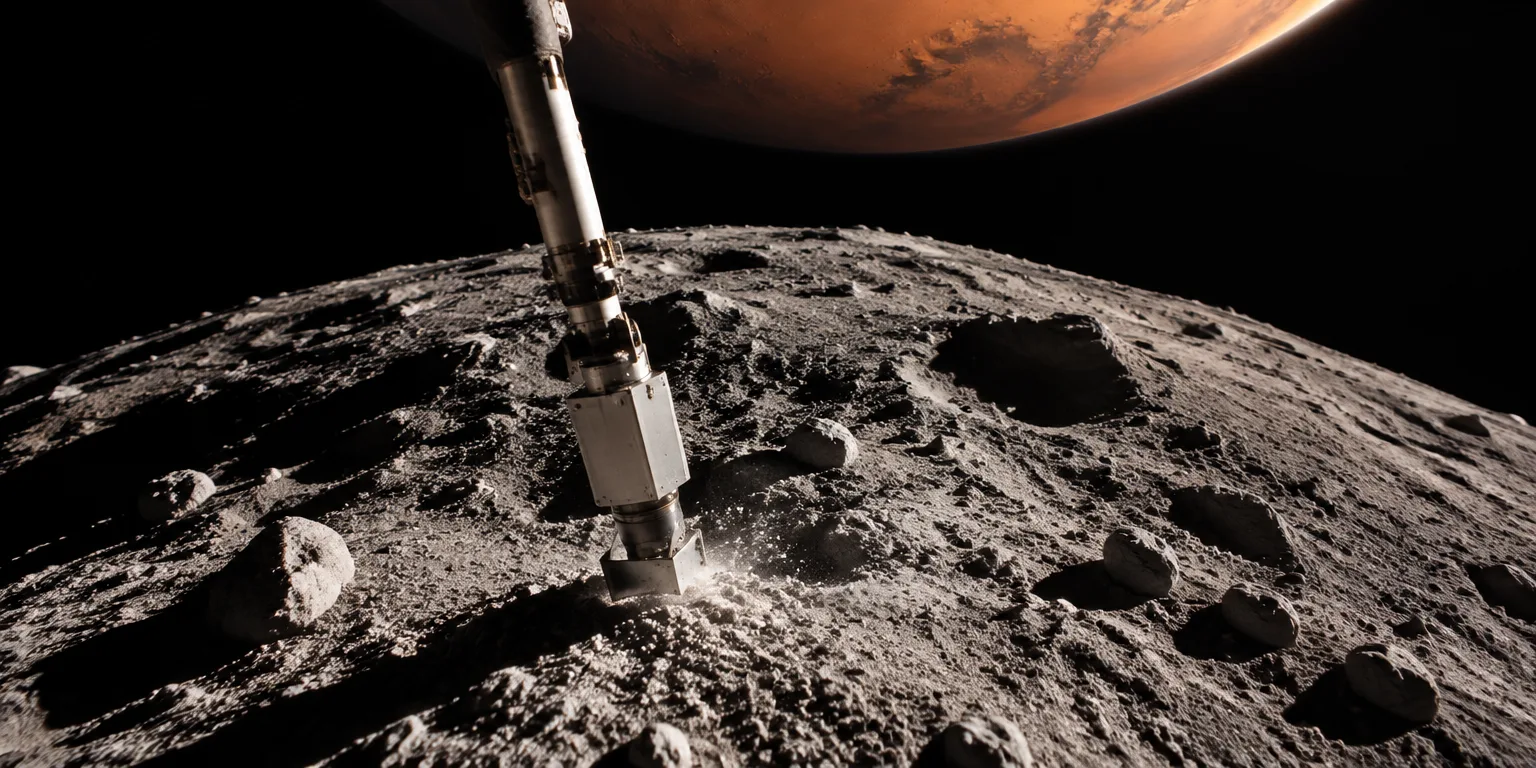
Phobos is a tiny target, just 12 miles across and shaped like an irregular potato. The Japanese mission, known as the Mars moons exploration mission, is now on its way there. It is the first attempt to bring back rock gathered from the Mars system for testing on Earth.
The plan runs in careful order. Once the craft reaches the Mars system next August, it will first drop a rover to survey the ground. Then the main craft itself will land, scoop up rock and dust, and send the sample on a long trip home, due back on Earth in 2031.
Ten grams sounds like almost nothing, and it is. But a small sample is enough for lab tests of individual grains. Dr. Chrysa Avdella, a mission team scientist at Leicester University in England, says researchers can run several studies on individual grains, so they do not need buckets of rock to do real science.
That matters because chemistry can tell the two stories apart. One idea, called capture, says the moons of Mars were wandering rocks from the distant solar system, later trapped by the gravity of Mars. The other says a huge space rock slammed into young Mars, and the moons grew from the wreckage.
Mission scientists say studying the chemistry will uncover the answer. If the sample looks like asteroid material, that would point toward capture. If it looks like Mars mixed with impact debris, that would point toward the giant collision.
For a puzzle about two small moons, the long trip is worth the effort.
Questions people ask
Why go to Phobos instead of just scooping Mars itself?
Mars has a thin atmosphere, strong winds, and strict rules meant to prevent Earth microbes from contaminating a planet that might once have held life. A small airless moon with weak gravity is simpler to land on, scoop from, and leave again, and its dust may still record Mars history if it formed from impact debris.
What can scientists actually learn from one grain of dust?
Labs use microscopes, X-ray beams, and mass spectrometers that can weigh atoms in a speck barely wider than a human hair. They measure ratios of elements and isotopes, which act like fingerprints for where a rock formed and what heated or altered it since.
What happens to the 10 grams after it lands in 2031?
Samples are typically split among labs, stored in clean nitrogen cabinets, and preserved for decades. That matters because instruments improve, so dust returned in 2031 could still be answering new questions in 2051.