A 100-Year-Old Safe Could Not Be Opened Because No One Had the Key
Its creator, a magazine publisher, left the key with a great-niece, not the Smithsonian, and the safe sat forgotten in Washington for nearly 100 years.
 99% Invisible · 100 Objects #1: The Century Safe
In 1971, a curious reporter started asking what had become of a time capsule sealed 95 years earlier. When the questions reached the Smithsonian, a Smithsonian staffer had an awkward answer. Yes, the institution still had the big iron safe, but no one knew how to open it.
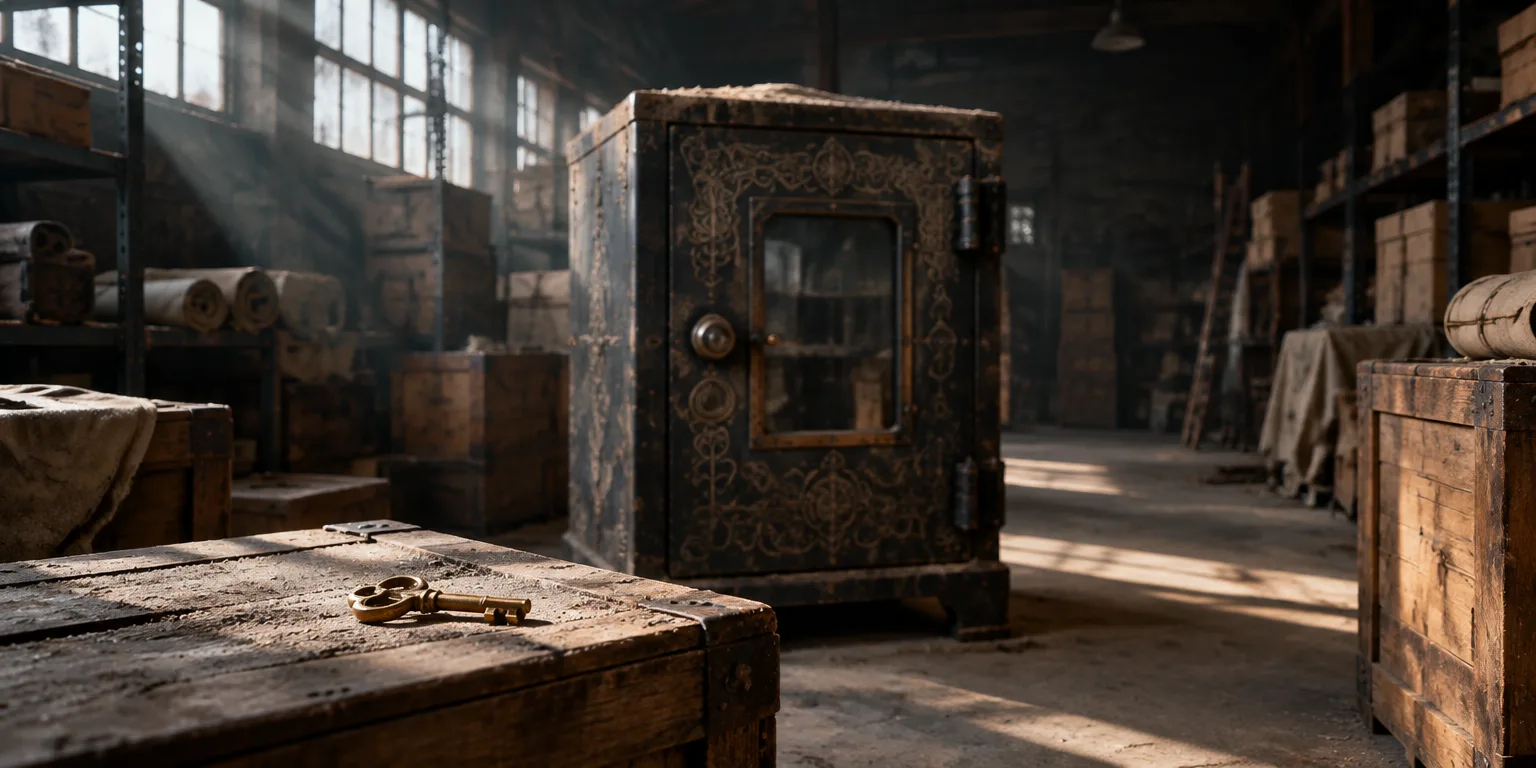
The safe was hard to miss, at least in theory. It looked like something out of a Western train robbery, a bulky, portable iron box covered in engraving, with a glass door. It had been built in 1876 to mark the 100th anniversary of the Declaration of Independence, filled with photographs and papers meant to represent American life, then sealed with written instructions for a sitting president to unlock it a hundred years later.
This is the story of how that plan almost failed for the simplest reason. The country had kept the safe for nearly a century but had lost the key.
After the 1876 fair, its creator had entrusted the sealed safe to Congress. She was Anna Dean, a Civil War widow and magazine publisher, and a canny businesswoman who had dreamed up the safe as a publicity stunt to sell subscriptions. Visitors could pay to sign an autograph book that went inside, a “clever ruse” that made her a “pretty penny,” in the words of historian Jill Lepore.
Lepore joked that it ended up in the “Raiders of the Lost Ark storage facility.” It sat in Washington while the country changed around it, through wars and depressions and the building of monuments. Nobody would have expected anyone to check on it before its date.
The 1971 inquiry exposed the problem. The New York Times summed it up in a headline: “Smithsonian can't find keys to centennial safe.”
A man in Florida saw the article and realized he had the key. Dean had no children, and for reasons no one fully explained, she had not left the key to the Smithsonian. She had left it to a great-niece, and generations later it was in the hands of that woman's great-grandson in Florida.
Once the key surfaced, officials still had to find the safe in storage and arrange to move it to the Capitol building. In 1976, President Gerald Ford opened it in Statuary Hall at the Capitol, before photographers waiting for the century long wait to end.
Questions people ask
What was actually inside the Century Safe?
Mostly paper and photographs: pictures of Abraham Lincoln and Ulysses S. Grant, a group photo of the 1876 Congress, a temperance pamphlet, an inkstand said to belong to poet Henry Wadsworth Longfellow, a book listing 80,000 federal workers, and autograph books signed by politicians, clergy, and ordinary fairgoers who paid for the privilege.
How did the 1976 opening go?
President Gerald Ford pulled items out one by one before reporters in Statuary Hall, struggled to identify some of them, and the crowd laughed as one unremarkable object followed another. He was eventually called away because House bells had rung for a vote.