A 13-year-old dropout built the empire behind Vogue and Reddit by holding newspapers for decades
He worked from a briefcase, sealed deals with handshakes, and judged every purchase on ten years of profit.
 My First Million · There’s 98 days until 2027...Do this and you’ll thank yourself on Jan 1st
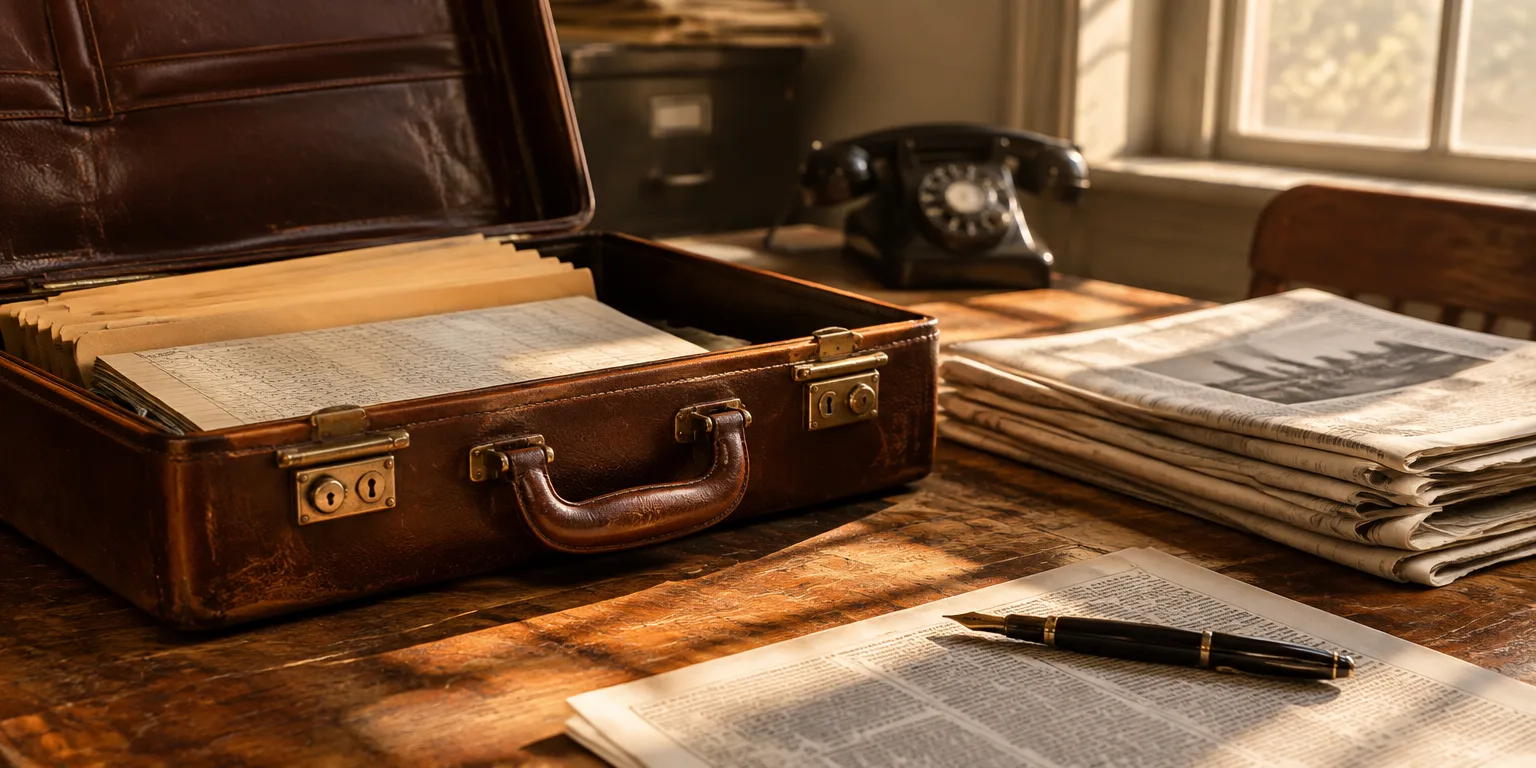
By the time his company was doing a billion dollars a year in revenue, Sam Newhouse still had no office, no partners, and no executive team. The founder of Advance Publishing ran everything from a briefcase he carried with him, sealed deals with handshakes, and spent his weeks driving from paper to paper, politely asking the publisher he had installed at each one how things were going.
He built what became among America's biggest private businesses with a single habit repeated for 60 years, buying a newspaper every three years and holding it for decades while it produced advertising profit.
Newhouse was born around 1895 into a Jewish family. He was five foot two and one of five children. His father developed severe asthma and could no longer work, so when Newhouse was 13 or 14, his mother told him he had to leave school and help support the family. He took a mail order course in bookkeeping, an early form of remote study, and talked a local businessman into hiring him to keep the books when he was 15.
A year later, that businessman, who owned a very small local newspaper, asked the teenager who kept his books to watch over the paper. It brought in the equivalent of about $800,000 a year in revenue and barely made money. Within six or seven months, the 17 year old had made it profitable. Impressed, the owner gave him a share of the profits and a little ownership.
Newhouse decided he was good at it. After a few more years, he pooled loans from family members and bought his first paper of his own, the Staten Island Advance. The name endured, and his company is still called Advance Publishing. His premise was blunt. The papers existed to sell ads, and the journalism should be as good as possible as long as the paper still made money. He was gifted at selling advertising and relentless about holding down costs.
That formula compounded. He added a new paper about every three years, growing revenue by roughly 15 to 20 percent a year. By around 1980, the collection of newspapers had become a giant doing about a billion dollars in revenue. Today, Advance does about $8 billion a year.
He judged each paper on how much profit it could produce over the next 10 years, often paying six to eight times annual earnings when the decade math worked.
It was his sons who chased prestige. They bought The New Yorker and Conde Nast, home to Vanity Fair, Vogue, and GQ, and hired star editors including Anna Wintour, the longtime Vogue editor depicted in The Devil Wears Prada. Their arrangement was hands off, hire brilliant editors and leave them alone provided the magazines earned something.
The family company is still private. It also owns the Ironman triathlon series, a mountain biking event, Turnitin.com, about 14 percent of Charter Communications, and about 4 percent of Warner Bros. Discovery. The clearest example of the long hold came online. Advance bought Reddit for $10 million, kept it as it grew, and later spun it out as its own company. By one estimate, Advance still holds about 30 percent, worth roughly $2 billion to $3 billion.
Questions people ask
How does a Reddit stake bought for $10 million become worth billions?
Advance bought Reddit in 2006 when it was a tiny startup attached to the magazine group, then held it for years while its user base and ad business grew. When Reddit later raised outside capital and went public in 2024, Advance kept a large stake, so the rising valuation multiplied its early investment. Holding, rather than selling early, did most of the work.
What are Charter Communications and Warner Bros. Discovery?
Charter is one of America's largest cable and broadband providers, selling internet, TV, and mobile service under the Spectrum brand. Warner Bros. Discovery is a major entertainment company that owns HBO, CNN, the Discovery channels, and the Warner Bros. film studio. Advance holds minority stakes, about 14% of Charter and about 4% of Warner Bros. Discovery, rather than operating them.
Why stay private instead of going public?
A private owner can think in decades, pay six to eight times earnings, and ride out bad years without explaining quarterly results to shareholders. It also lets the family give magazine editors wide creative freedom as long as the titles make some profit. The tradeoff is less access to public stock as currency and less liquidity.