A 194-year-old tortoise has the cell energy systems of a 5-year-old
The rest of his genes look very old, but his cellular power supply has barely aged.
 Global News Podcast · US military execution to be livestreamed
On the grounds of the governor's residence on Saint Helena, a remote island in the South Atlantic, a giant tortoise named Jonathan is still plodding along at 194. Researchers describe him as the oldest land animal alive today, and they think he might help people live longer.
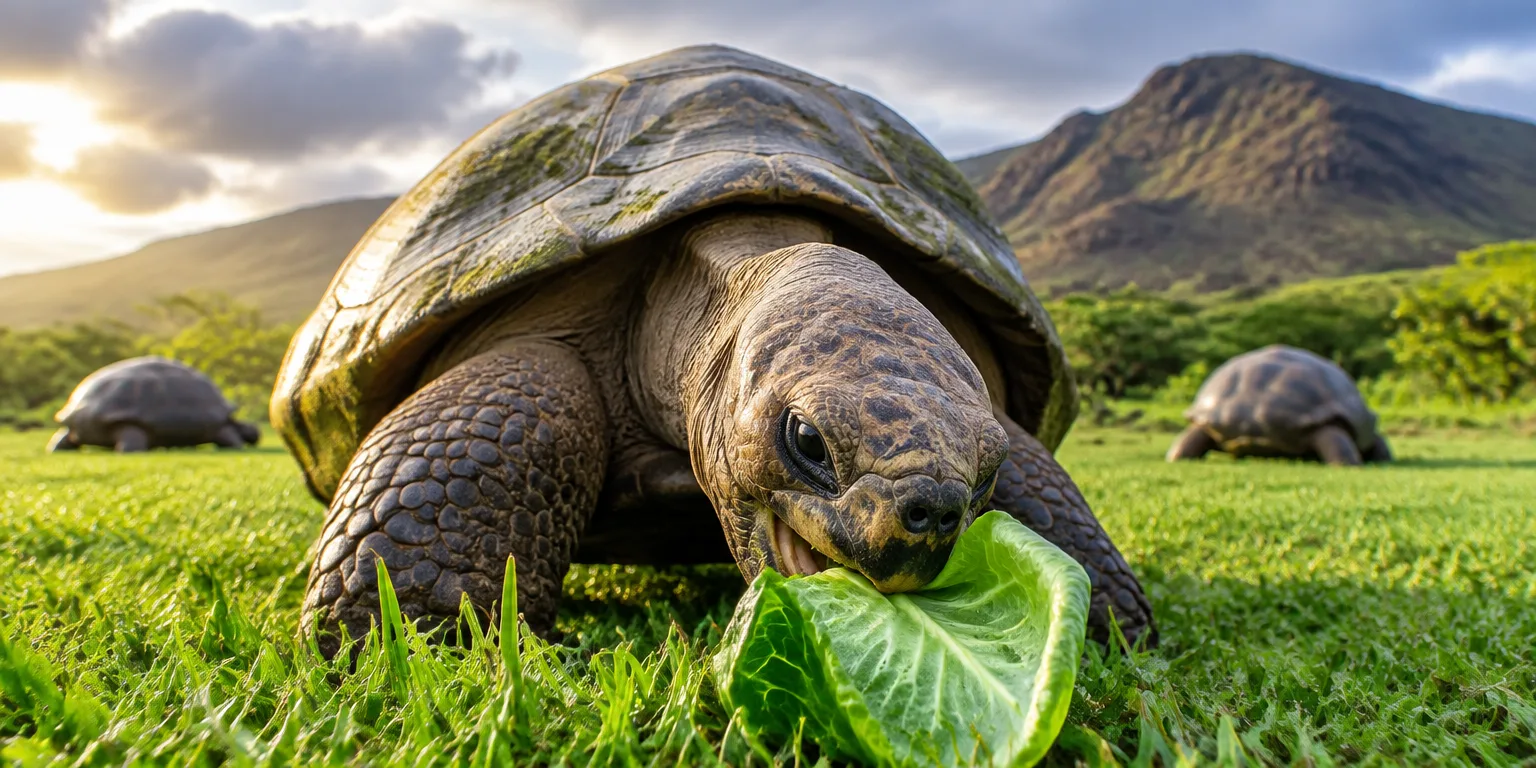
Jonathan is a familiar character to Joe Hollins, the resident vet, who calls him "A 300-pound crusty old reptile I'm very, very fond of." Hollins says Jonathan comes toward him because he expects food, and describes him tucking into cabbage with "Very fleshy, almost mammalian tongue, and a long reptilian neck, very much like a snake."
Scientists are confident about his age because of a photograph taken in 1882. Stephen Clark, the senior researcher studying Jonathan's DNA, says Jonathan was already fully grown in that picture, which allowed the team to estimate when he hatched. Without that lucky piece of evidence, Clark says, they could not have placed his age for sure.
The surprise came when the team examined his genetic code. As expected, Jonathan had accumulated many mutations in genes and pathways across his body. Everything looked its age, except for one part.
That exception is the mitochondria, the tiny structures inside cells that produce energy for living creatures. In Jonathan, those energy makers have not degenerated the way the rest of his body has. They are pristine and comparable to those of a five-year-old tortoise.
That is unusual because mitochondria normally wear down with time. Clark says scientists have long observed that mitochondrial function declines with age in people. Clark is not aware of any other aged animal with mitochondria this well preserved, and no one yet knows how Jonathan did it.
That question is the next step. Clark says his nonprofit group now wants to find targets in the mitochondrial system that could be used to make human mitochondria younger. The aim is to learn how the tortoise kept his cellular power supply fresh, and whether that knowledge could one day slow human aging.
Questions people ask
What exactly do mitochondria do?
Mitochondria are small structures found in nearly every animal cell. They convert food into a chemical fuel called ATP, which powers everything from muscle movement to brain activity. Because they work so hard, they are especially vulnerable to damage over time.
Where is Saint Helena, and how did Jonathan get there?
Saint Helena is a small British island in the South Atlantic Ocean, about 1,200 miles from Africa. Jonathan lives on the grounds of the governor's residence there, where giant tortoises were brought in the 19th century. He shares the paddock with other tortoises.
Do other giant tortoises live this long?
Giant tortoises grow slowly and can live well over 100 years, far longer than most reptiles. Their slow metabolism, large size, and ability to store energy are thought to help protect them from disease and stress. Jonathan is exceptional even by those standards.