A $3 Billion Destroyer Adds a Dozen Missile Slots a Year. Robot Ships Could Add Hundreds.
Saronic's founders argue missile slots per year shows why crewless ships could add firepower faster and cheaper.
 All-In with Chamath, Jason, Sacks & Friedberg · China Outbuilds America 230-to-1. Saronic Has a Plan
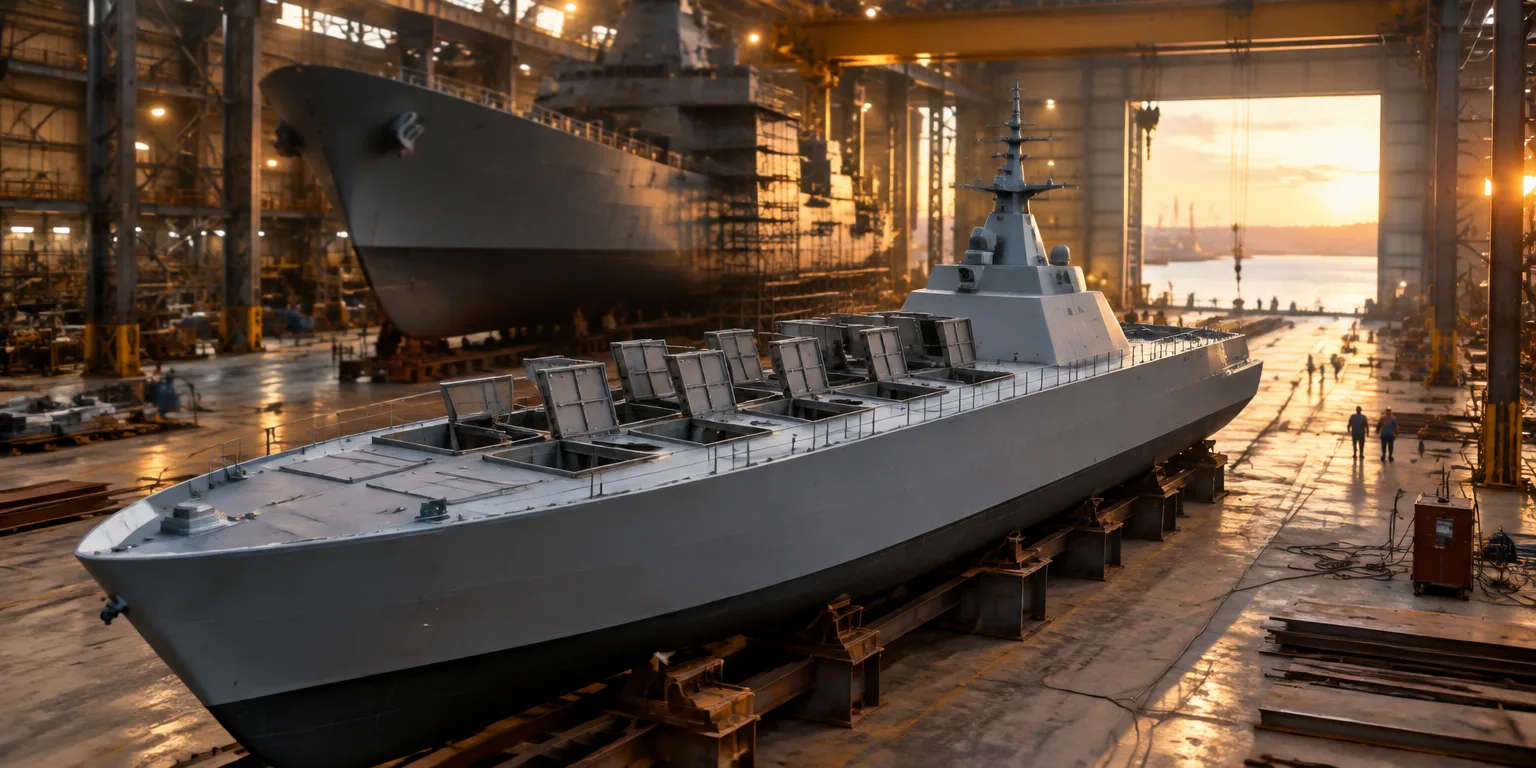
Saronic co-founders Dino Mavrukas and Vib argue that the Navy should measure shipbuilding less by hulls and more by how quickly it can add firepower. Their test is missile slots per year, and they say crewless ships win that math.
The measure is VLS tubes, or vertical launch systems. Those are the deck slots that each hold one large missile, such as a Tomahawk, so the count shows how much striking power a ship puts to sea.
Mavrukas, a Saronic co-founder who says he spent 11 years in the Navy SEAL teams, lays out the comparison this way. He says a “naval destroyer costs about $3 billion” to buy, not counting maintenance over its 30 to 40 year life, and takes six to eight years to build. It carries about 96 tubes, which he rounds to 100 for easy math. That averages roughly 10 to 15 tubes added per year, at about $30 million per tube.
His contrast is the company’s 180-foot Marauder, a fully autonomous ship that carries the equivalent of 16 tubes. He says Saronic plans to build 20 Marauders per year at its shipyard in Louisiana. That would add 320 tubes per year, at what he describes as a fraction of the cost.
Vib, Mavrukas’s Saronic co-founder, describes the logic as large-scale attritable mass, meaning enough relatively inexpensive ships to deploy widely and risk losing. Vib says “an aircraft carrier takes 10 years” and $13 billion to build, and is easy to find from space. In their account, removing the crew lowers the cost of operating at sea, lets a smaller team watch more water, and keeps sailors out of harm’s way.
In that framing, one way to judge a shipyard is not only what each ship costs, but how many missile slots it can put to sea each year.
Questions people ask
Would crewless ships replace destroyers and aircraft carriers?
In their account, no. They describe a hybrid Navy with a mix of crewed and crewless ships, in which crewed ships keep forward-deployed decision makers aboard while crewless ships go into combat areas to keep those sailors safer.
Who decides when an unmanned ship fires?
Humans would still set the mission and authorize firing. Mavrukas says software would help classify contacts and carry out a commander's intent when communications are poor, with policy limits built into the software.
What is the downside of having no crew aboard?
There is no one aboard to fix a breakdown or make an on-the-spot repair. The founders say the answer has to be proving reliability through daily operation, close work with Navy operators, and matching each ship to a mission it can complete.