A 7-year-old says peekaboo builds memory and trust
Copycat play, naming play, and peekaboo each build a different skill through back and forth with an adult.
 TED · How Every Child Can Thrive by Five | Molly Wright | TED
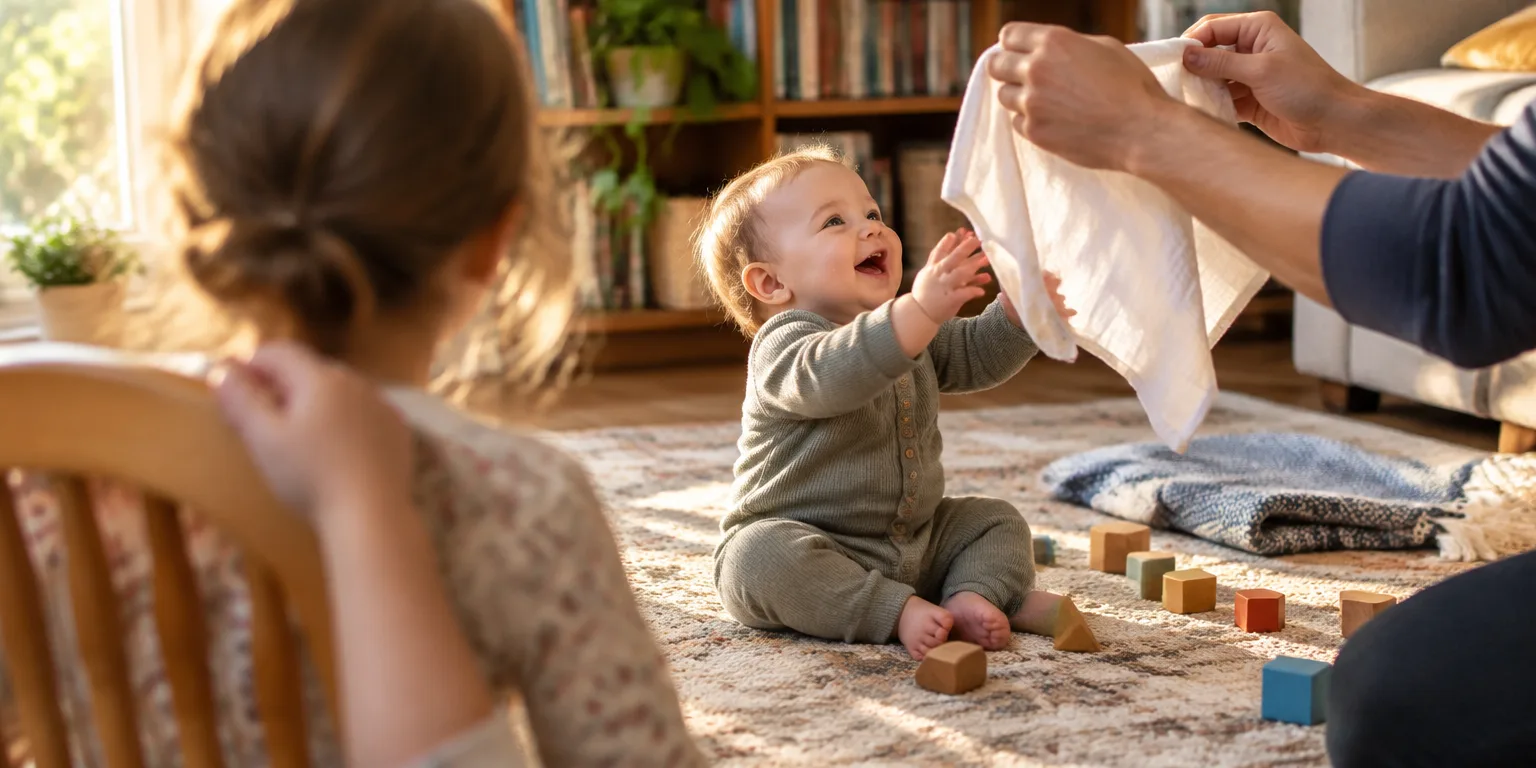
Molly Wright is seven. For her talk she invited her neighbor Amarjot and his baby, Ari, to play in front of the audience. When Amarjot covered his face and reappeared with a loud peekaboo, Ari laughed. Molly says games like peekaboo build memory and trust.
What makes games like this matter, she says, is the back and forth. "Scientists call it serve and return. That’s just a grown-up way of saying connect, talk and play with us," said Molly Wright.
Molly says, "Our brains develop faster in our early years than at any other time in our lives," making up to one million neural connections every second. Our healthy development, she says, depends on five things: connecting, talking, playing, a healthy home, and community.
Molly says different games do different jobs. When Amarjot and Ari copied each other and laughed, that kind of copycat play supported imagination and caring about others. When they traded names, Daddy and Ari, that kind of naming play supported words and focus. And peekaboo, she says, supports memory and trust.
Each time you talk or play with us, Molly says, it strengthens our bonds and emotional health. It also teaches us, Molly Wright says, "from making friends to taking the test, to getting a job, to one day maybe even starting a family of our own." That is why she says it helps to connect, talk, and play early and often.
Questions people ask
Does serve and return have to come from a parent?
No. The key is a responsive adult, and that can be a grandparent, caregiver, teacher, or family friend. What matters is that the adult notices the child's signal and responds consistently. Regular, caring responses from any trusted adult help build connections.
When does this back and forth matter most?
It matters from birth, and especially in the first five years when the brain is growing fastest. In the first year alone, a baby's brain nearly doubles in volume. But back and forth interaction continues to help learning, language, and emotional health well beyond age five.
What counts as serve and return if I am not good at games?
Ordinary moments count. Talking about what you see on a walk, copying a baby's sounds, naming objects while cooking, and reading together all qualify. The formula is simple: notice what the child is looking at or doing, respond with words or play, and wait for the child to respond back.