A Bankrupt Army Supplier Figured Out How to Slip Mexico's Silver Past a Blockade, Then Landed in Jail
Spain owed Napoleon 72 million francs a year it did not have, until Ouvrard spotted silver in Mexico and the Barings got Britain to let it sail.
 Founders · The Merchant Bankers
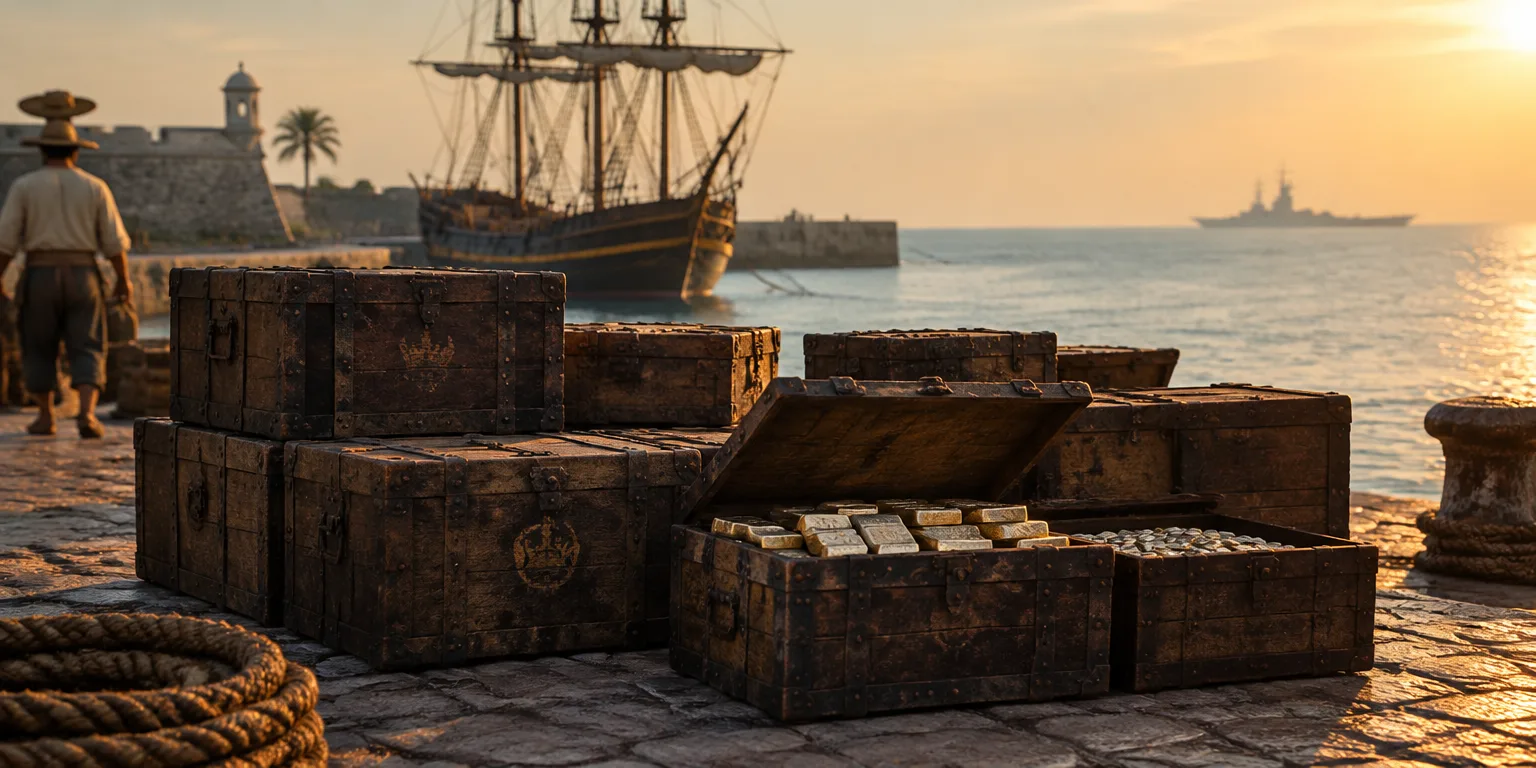
The silver was piled up in Veracruz, on the coast of Mexico, and there was no way to reach it. Spain owed France a fortune it did not have, France wanted its money, and British warships were blocking the sea road between them.
The man who saw a way through was Gabriel Julien Ouvrard, a French financier who supplied food, uniforms, and credit to Napoleon's armies. He was described as a financial genius and the most hotly debated businessman of his era, and contemporaries described him both as a close adviser and as a cheat. He had gone bankrupt, made another fortune, lost that too, and been arrested several times.
The account, drawing on a book about merchant bankers, calls it "the most fantastic transaction in the whole history of merchant banking." It turns on knowing the right people, and getting permission for something that looked impossible.
The problem started with a treaty signed on October 19, 1803. In the war that pitted France against England, Spain had been forced to side against England and to pay Napoleon an annual subsidy of 72 million francs. It was common knowledge, the account says, that Spain could never raise such a sum.
Ouvrard pointed to a place the money did exist. Spain controlled mines producing gold and silver in Mexico and Peru, and large amounts of silver were stored in Veracruz. All one had to do, he said, was get that Mexican treasure out of Veracruz and bring it to Paris.
All, except for the British blockade. Ouvrard could find ships, and Spain had a reason to deal, but he needed someone who could talk to London. So he went to the Barings, a family of London merchant bankers with contacts ranging from senior officials to local police chiefs.
The Barings went to the British government and appealed to its interest. London agreed to let the silver ships pass, on condition that British ships get a share of commerce with ports in Latin America. Rules that looked fixed turned out to be negotiable.
The operation lasted three years and was, in the telling, carefully planned and skillfully carried out. By 1808, the Mexican treasury had been nearly emptied of its gold and silver, which was moved through the blockade.
Ouvrard, who had invented the whole plan, earned nothing from it. Napoleon fell out with his skilled financier, seized his property, and had him jailed. He had survived bankruptcies and prison before.
Questions people ask
Why would Britain let silver pass that would help Napoleon, its enemy?
The British government agreed because the deal gave British ships access to trade with ports in Latin America. Likely, for London, that opening mattered more than stopping one payment to France. Merchant bankers often succeeded by finding an interest the other side wanted more than the stated rule.
Who were the Barings?
The Barings were a British merchant banking family founded in the 1700s by German immigrants. Like the Rothschilds, they began as merchants and learned that lending their trusted name to a deal could be more profitable than moving goods. For more than a century, Baring Brothers was one of the most powerful banks in London.
How much silver was actually in Mexico?
Mexico was the largest source of silver in the world in the late 1700s and early 1800s, producing roughly two thirds of the world's silver from mines such as Guanajuato and Zacatecas. The Spanish crown regularly shipped millions of pesos a year from Veracruz to Spain. That is why the stored treasure looked like one of the largest sources that could help cover Spain's subsidy.