A Broke Agent and a Friend's $25,000 Led to 1,000 Apartments With Other People's Money
The first condo used a friend's cash and Brennan's deal work, and repeating that split with outside investors built the larger portfolio.
 Right About Now - Legendary Business Advice · Building Wealth With Other People’s Money: Justin Brennan on Multifamily Real Estate
In 2008, Justin Brennan was at a conference when a speaker tried a piece of audience participation. The speaker asked who wanted to own rental property, and nearly every hand shot up.
Then he asked who could actually afford to buy any. Brennan, who was working as a real estate agent during the financial crisis, watched as 99% of the hands went down. He had no money himself.
The speaker had a punch line for them. As Brennan recalled it, the speaker said, "You don't need to have a single dime to own rental income property. You just need to have a friend who has the money to own rental income property." If you could scout promising rentals, arrange the purchase, and handle the day to day operation, you would be valuable to anyone holding cash.
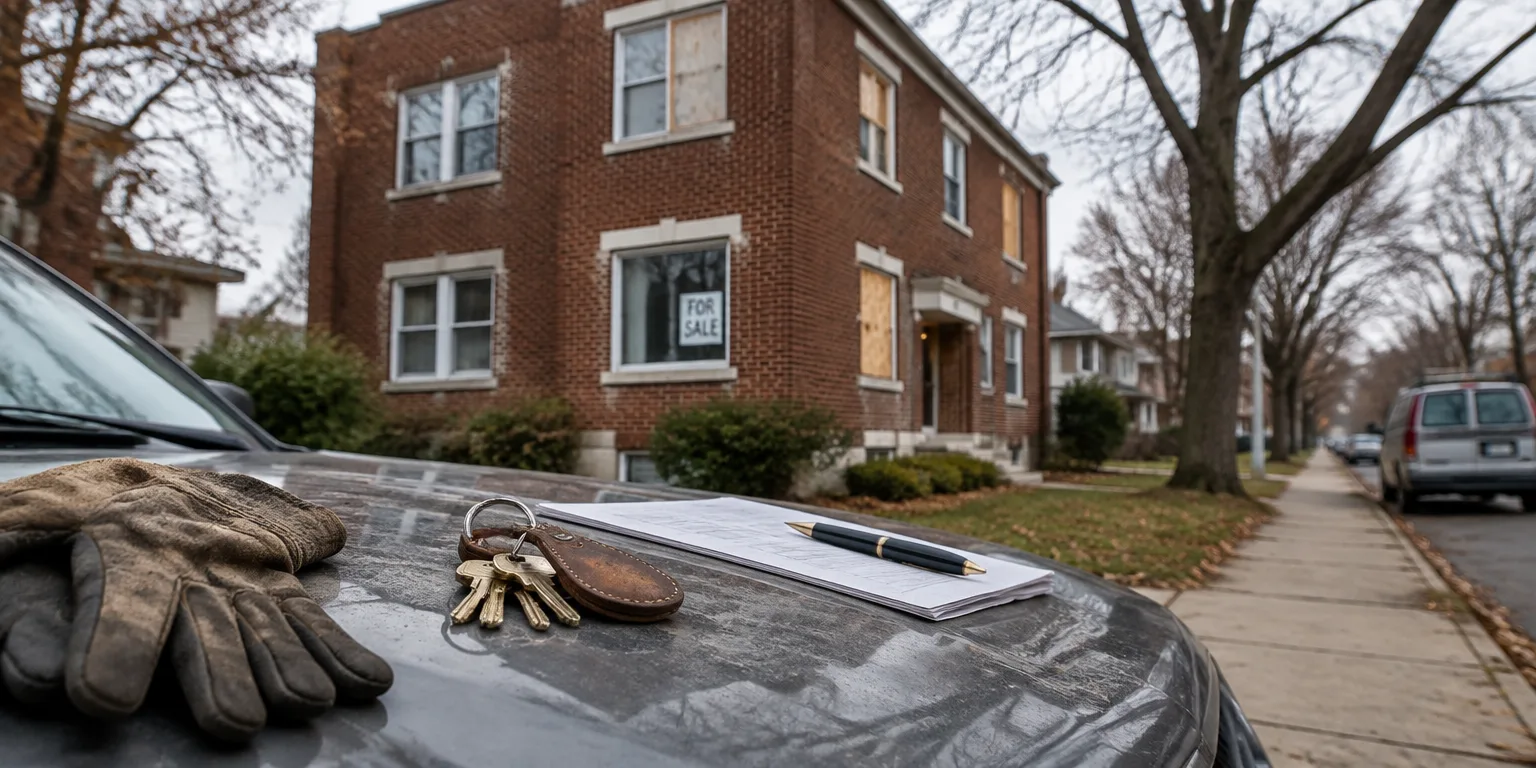
That exchange became the model for Brennan, now a chief executive who buys and manages apartment buildings. In 2010, he and his friend Chris, now his business partner, bought a $100,000 condo. Chris put up the $25,000 down payment and signed the loan. Brennan, who had zero dollars in the deal, found it, analyzed the numbers, structured the purchase, and handled the management. Repeating that split between cash and work with outside investors later allowed the business to pass 1,000 apartments.
Brennan went to Chris and said they needed to buy property now. The market, as Brennan put it, was "we're, like, in a dump." His rule, as Brennan put it, was "You buy when there's blood in the street, even if it's your blood." Brennan said of that time, "We weren't making a ton of money, but it worked."
From there they kept buying small, a two-unit building, then three-unit and four-unit buildings, using their own cash. Brennan later called that self funded stretch the biggest mistake they made, because every dollar stayed trapped in the buildings. After eight years they had only about 20 units and about $3 million in assets by 2018.
The turn came when Brennan learned to repeat the structure of that first condo on a larger scale, combining his team's work with other people's money through a pooling arrangement called syndication. The team supplied what Brennan calls sweat equity, finding and running deals, while outside investors supplied check equity, the cash. Within three years, by 2021, the same operation had grown to more than 1,000 units and almost $200 million in assets.
Brennan now teaches newcomers with little cash to learn that work side first, so they can bring a strong deal to someone who can fund it.
Questions people ask
What is the difference between sweat equity and check equity?
Sweat equity is work instead of cash. In Brennan's split, one side supplies check equity, the down payment and loan backing, while the other finds the property, studies the rents and costs, arranges the purchase, and manages tenants and repairs.
What is real estate syndication?
Syndication is a way to pool money to buy a large building together. A sponsor finds and manages the apartment property, and outside investors contribute most of the cash and share in the rents and eventual sale. Other people's money, or OPM, is the shorthand investors use for that outside cash.
Was it risky to buy real estate during the financial crisis?
Yes, especially then. Lenders were tight, prices kept falling, and many landlords faced vacancies and missed rent. Buying low helped Brennan and Chris, but they also risked further price drops, costly repairs, and trouble filling the unit.