A Catholic Name Could Cost You a Job, a House, and a Vote
Unionist councils feared a new house meant two new voters, so they used waiting lists and ward maps to stay in power.
 The Rest Is History · 697. The Troubles: Murder in Belfast (Part 1)
In Derry in the mid-1960s, about 36,000 Catholics lived alongside about 18,000 Protestants, and Protestants always ran the city. That was not an accident. It was the result of a cycle in which jobs, houses, and votes fed each other, and left Catholics on the outside of all three.
It could start with a name. At the big Harland and Wolff shipyards in Belfast, a man called something like Liam O'Hara would likely not even get an interview. Many Protestant firms would not hire Catholics at all, and unemployment among Catholics ran at double the Protestant rate. A 1967 investigation by the Times of London called Catholics Ulster second-class citizens, and even David Trimble, head of the Ulster Unionists, the main pro-British party, who later won the Nobel Peace Prize, admitted that Unionists had "built a solid house, but it was a cold house for Catholics."
Being poorer also meant having less power in local elections. In local elections only, the vote was limited to ratepayers, meaning people who owned or rented a house and paid local property taxes. The spouse of a homeowner or renter could vote too, usually the wife. Catholics, who were poorer and more likely to live with parents or in large extended families, often had no house in their name and therefore no local vote.
Stormont is Northern Ireland's parliament. At the regional level, the winner-takes-the-seat system, called first-past-the-post, and carefully drawn boundaries kept Unionists in permanent control there.
Housing turned that disadvantage into a trap. One in three houses lacked either running water or an indoor lavatory, so young couples wanted to get out of crumbling terraces and into a place of their own. Unionist councils avoided building homes in Catholic areas and gave Catholics few of the houses they did build, because giving a young Catholic couple a home gave them two more votes.
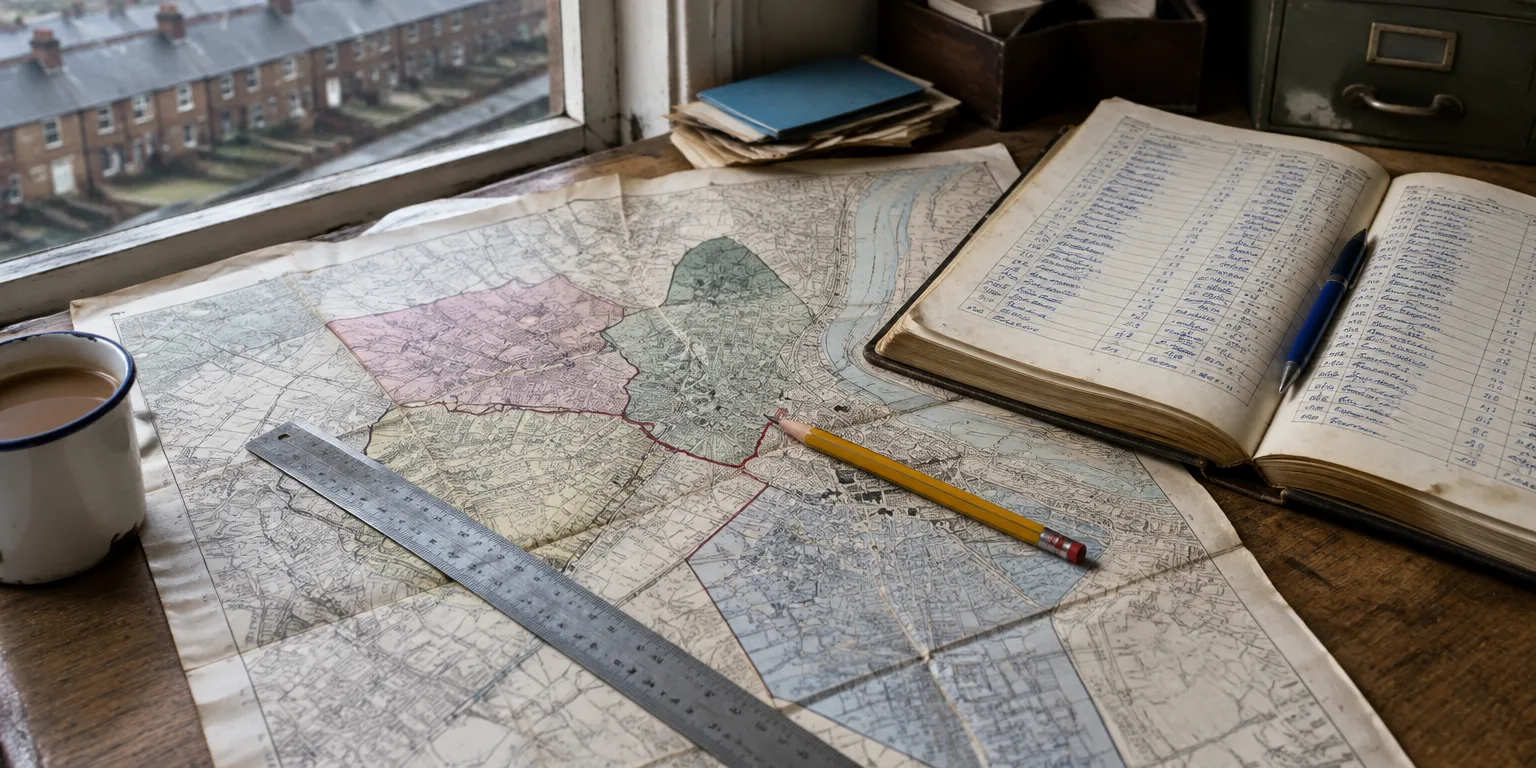
Derry showed how completely the system worked. Protestant-controlled councils kept redrawing the ward boundaries, which they were allowed to set themselves, to preserve a Protestant majority. Almost every Protestant family that wanted a council house got one, while 2,000 Catholic families sat on the waiting list. No house meant no vote, and no vote meant no power to change who got houses.
Questions people ask
What is gerrymandering?
Gerrymandering means drawing voting districts to favor one side. In Derry, council wards were repeatedly redrawn so that Protestant voters, though outnumbered citywide, formed a majority of voters in enough wards to keep control of the council.
What was Stormont?
Stormont was the parliament of Northern Ireland, meeting in a grand building called Stormont outside Belfast. Created when Ireland was partitioned in 1921, it controlled most domestic affairs, including housing and local government, until London took direct control in 1972.
What were the Harland and Wolff shipyards?
Harland and Wolff was the huge Belfast shipyard that built the Titanic and employed tens of thousands of men at its peak. It was one of the biggest private employers in Northern Ireland, and its workforce was overwhelmingly Protestant.