A Chatbot Gets You About 1% of the Way to a Self-Mowing Lawn
Even a backyard mower must see its yard, practice in a virtual copy, and learn from its mistakes in the grass.
 Business Breakdowns · Applied Intuition: A Billion Intelligent Machines - [Business Breakdowns, EP.248]
Ask a chatbot to write a lawnmowing plan and it will answer in seconds. Ask it to build a mower that actually mows the lawn by itself, and you have about 1% of what you need.
That figure comes from Peter Ludwig, co-chief executive of Applied Intuition, a company that builds software for intelligent machines. A general purpose chatbot from leading AI labs is useful, he says, but not enough when lives are on the line and development requires a long chain of specialized tools.
Compare it with phone software. Making software for a phone is now so streamlined that high school students can do it, says Qasar Younis, the company’s other co-chief executive. Building a delivery robot for a college campus, or even a little vacuum that cleans a house, is daunting “even for hobbyists and computer scientists,” as Younis puts it, because they must patch together many separate products and then figure out how to get the software onto the machine.
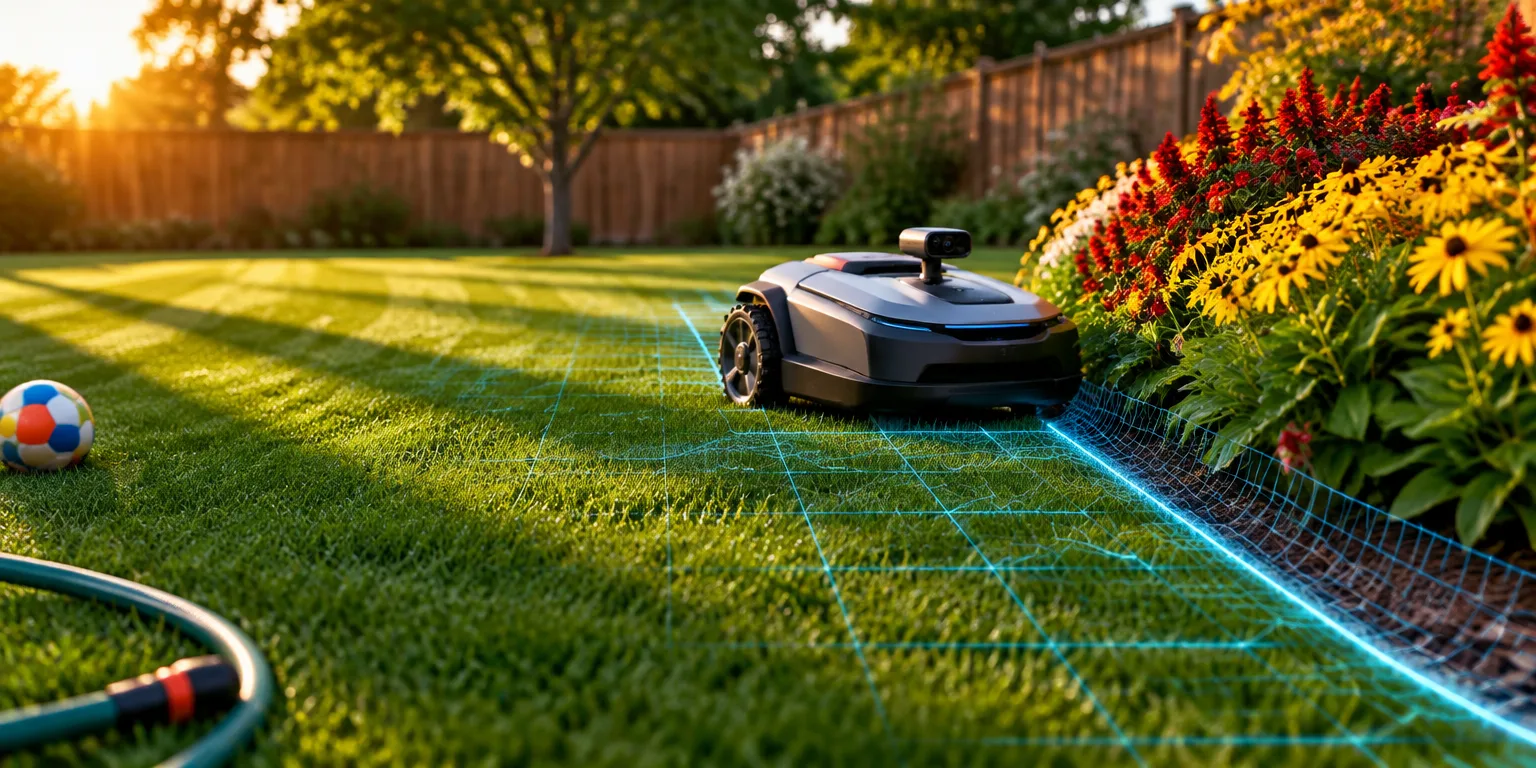
Take the simple case of an autonomous lawnmower. First, Younis says, you need sensors, which are devices like cameras that see the yard, and compute, which is the onboard computer that thinks. Then you need software that understands the physical space, meaning this yard is okay to mow and the neighbor’s flower bed is not.
Next comes simulation, a virtual copy of a backyard where you can test the mower again and again without breaking anything. Simulation alone is so complex that whole companies focus only on it. Once the mower passes enough virtual tests, you run those tests in the cloud, which means renting large numbers of distant computers and coordinating all that work.
Then you put the software on the real mower, and a bunch of things will not work. The parts that move the mower, what engineers call actuation, may not move as expected. The steering, part of the control system, may misbehave. So you need a loop of feedback to find the failure and fix it, something a chatbot was never made to do.
In the past, Ludwig says, that workflow could require switching among 20 different tools, plus separate systems for training and testing the artificial intelligence model, and for collecting and cleaning up data from the real world. The same sequence applies to any machine or robot, which is why his company built Dana, a platform that lets engineers orchestrate all those steps by writing in plain English.
Questions people ask
Why can’t you just prompt a chatbot to build the mower?
A chatbot predicts words from text on the internet. A mower needs to connect cameras and motors, test driving situations, and prove it will stop at the edge of the yard. Those jobs need robotics software, testing systems, and safety checks that a language model does not include.
What kinds of sensors does an autonomous mower actually use?
Typically cameras to see boundaries and obstacles, plus location sensors to know where it is in the yard, and sometimes radar or ultrasonic sensors that measure distance the way bats use sound. The mower’s computer fuses those signals to decide where to steer and when to stop.
What does it mean to simulate a backyard?
Engineers build a three-dimensional model of a yard, with grass, slopes, fences, pets, and toys, then run the mower’s software inside it over and over. It is far cheaper and safer to discover in simulation that the mower would get stuck or crush flowers than to learn it on a real lawn.