A Church About to Split Over Gay Marriage Stayed Together by Practicing How to Argue
The minister banned absentee ballots, set no date for the vote, and made the congregation rehearse disagreeing before it debated.
 The Curiosity Shop with Brené Brown and Adam Grant · Can Conflict Actually Make Our Relationships Stronger? with Priya Parker
The elder stood up with three pages of notes and started reading. He was loud, and he had ignored the rules. He was explaining why the church should not accept gay marriage when another member shouted, "This is unconscionable."
The whole room froze. Copenhaver, through gritted teeth, said with them the line they had rehearsed: "May the Holy Spirit speak through us."
The minister watching it happen was Martin Copenhaver, who led a church in the 1990s that was coming apart over whether to become open and affirming, a decision about welcoming gay couples and gay marriage. Many churches facing the same question at the time were being torn apart, and he thought his normal way of deciding would make things worse.
Copenhaver had concluded that parliamentary procedure, the motion and vote rules known as Robert's Rules of Order, could not settle something this personal. Instead, he searched his church's own archives and found a practice from 250 years earlier called congregating.
He told the church they would not import some strange outside method. They would return to their roots for what he called a precious conversation. First, they held four meetings that were not about gay marriage at all. They were rehearsals for disagreeing.
The central rule was simple. After every speaker finished, the whole room had to repeat the same sentence, "May the Holy Spirit speak through us." Copenhaver said the line did not mean assuming the Holy Spirit was speaking through them. He said it meant making a pause, a bit of verbal spacing that invited curiosity and humility before the next person talked.
That was why the frozen moment did not explode. The congregation had trained its response to escalation. As conflict facilitator Priya Parker puts it, "We're asking ourselves to be Olympic athletes when we haven't trained to walk."
Copenhaver added other rules to keep people in the same room, literally and figuratively. He banned absentee ballots, saying members had to be present and open to being altered by what they heard. He alone would decide when they were ready to vote. And when they did vote, no one would be allowed to celebrate the result.
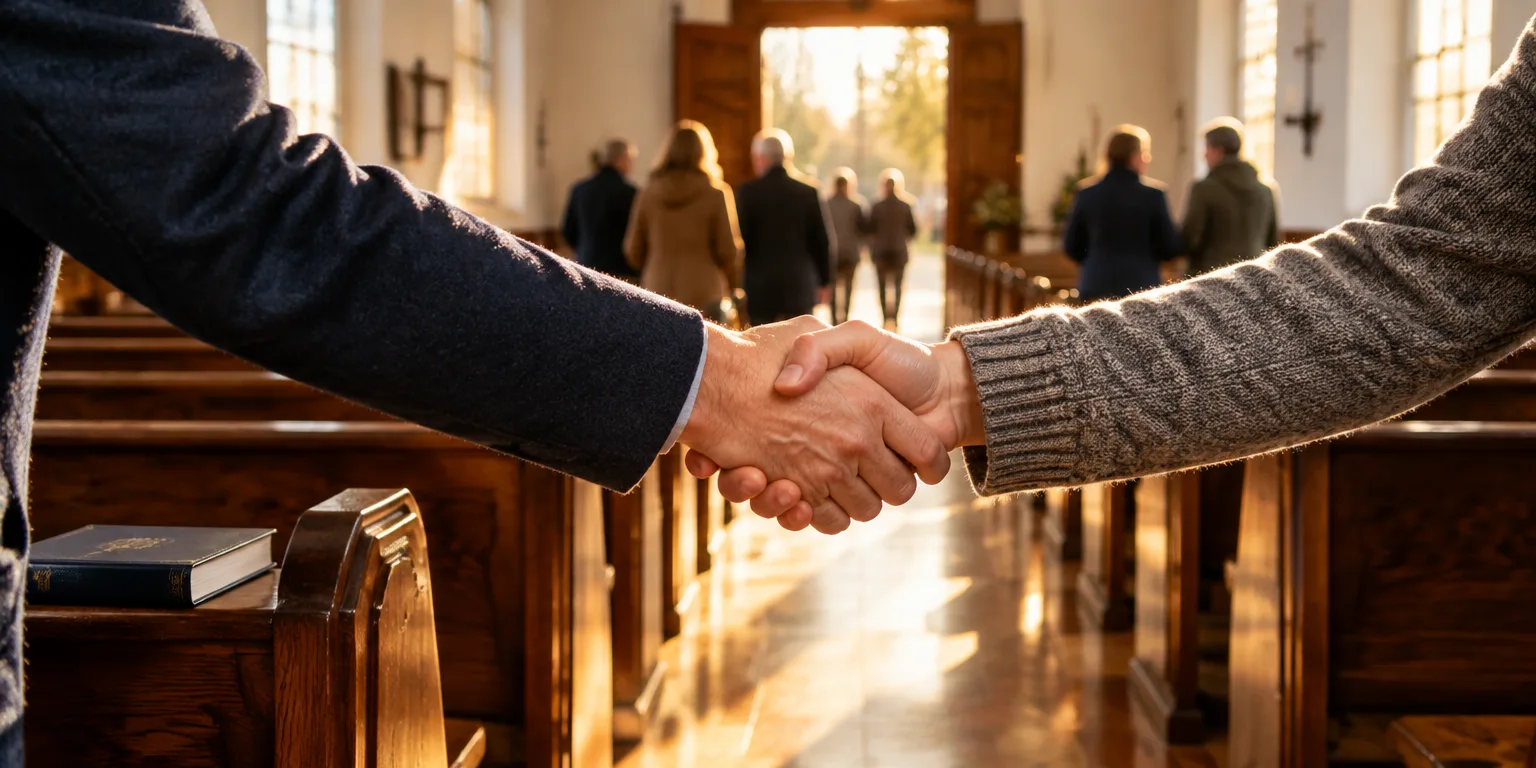
The measure passed. No one left the church. Before members walked out that day, Copenhaver asked each person to find someone with a different opinion, say hello, and shake hands. He said he did not want them debriefing in the parking lot. He wanted them to debrief there, with one another.
Questions people ask
What are Robert's Rules of Order?
Robert's Rules of Order is a widely used manual for running meetings, with motions, seconds, debate limits, and majority votes. It is efficient for routine decisions but leaves little room for listening or acknowledging emotion, which is why Copenhaver thought it would fail for a question about identity and belonging.
What does open and affirming mean?
Open and affirming is a designation used by some Protestant churches to state publicly that gay, lesbian, and transgender people are fully welcome as members and can marry and serve in the church. In the 1990s, adopting it often divided congregations and denominations.
Do other groups use methods like this to argue better?
There is no single formula, but facilitators often recommend practice on low stakes topics, clear speaking and listening rules, and in person discussion before a vote. The key idea from this story is preparation: groups handle a heated moment better when they have rehearsed a shared pause or response.