A Civil War Widow Built a Time Capsule to Sell Magazines
For a nickel, fairgoers could sign a book to be locked inside for 100 years, and then the safe, and its key, vanished into storage.
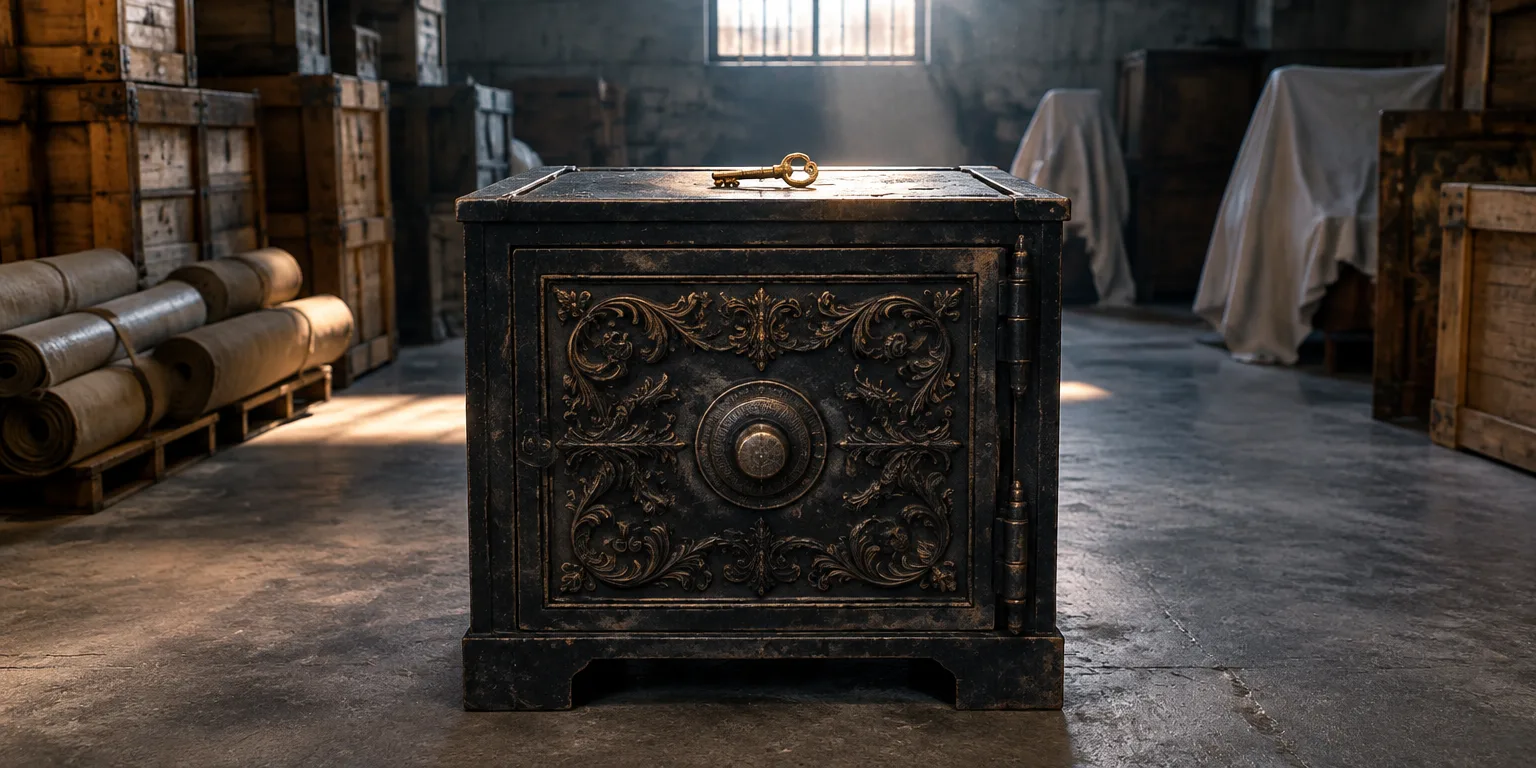
 99% Invisible · 100 Objects #1: The Century Safe
In 1876, beside the bustle of the World's Fair, visitors came upon an unusual sight: a large iron safe covered in engraving. The lettering promised that a U.S. president would unlock it on July 4, 1976, a date so distant it must have seemed like science fiction.
The safe was the brainchild of Anna Dean, a Civil War widow who published a magazine and a newspaper. Dean was, in the words of Jill Lepore, a Harvard historian, a canny businesswoman. She had commissioned the safe as a stunt to draw attention and sell subscriptions, and she had secured floor space at the fair to show it off.
The object on display was the safe itself, and what was already inside it. Dean's twist was that visitors could pay a nickel to sign an autograph book that would be locked inside for 100 years.
They did. Lepore calls them chumps, but the trick worked. Imitating the pitch, Lepore says: "Come here, kid. You got a nickel?" Dean made a little money from it.
After the fair closed, Dean sealed the safe and entrusted it to Congress. Then it disappeared into government storage, what Lepore jokes was the "Raiders of the Lost Ark storage facility." It was not checked on. As Lepore puts it, it was "meant to be forgotten for a century."
So it was, almost too well. The safe sat in Washington while the country changed around it. When a reporter went looking for it around 1971, staff said they thought they still had it but did not know how to open it. The New York Times summed up the embarrassment in a headline: "Smithsonian can't find keys to centennial safe."
Dean never gave the key to the Smithsonian. Dean had no children, and she left the key with a great-niece. Nearly a century later, a man in Florida read the newspaper account and realized the old key passed down in his family was the one. After some rigmarole about getting the safe out and bringing it to the Capitol, workers located it in storage. In July 1976, President Gerald Ford opened it in Statuary Hall.
Questions people ask
What World's Fair was this?
It was the Philadelphia Centennial Exhibition of 1876, the first World's Fair held in the United States. It filled more than 200 buildings with about 30,000 exhibits, including the telephone prototype and Heinz ketchup, and it drew millions of visitors.
What was inside besides the signature books?
Photographs of Abraham Lincoln and Ulysses S. Grant, a picture of the 1876 Congress, a temperance pamphlet, an ink stand said to belong to poet Henry Wadsworth Longfellow, and a book listing federal workers.