A Commander Overruled His Captain To Chase Open Water And Lost His Ship To The Ice
Capt. Richard Pike wanted to wait and finish unloading, but Lt. Ernest Garlington ordered the Proteus into Smith Sound, where the ice closed like a trap.
 American History Tellers · Greely Arctic Expedition | No Relief | 2
Captain Richard Pike, a veteran Arctic seaman, was snatching sleep below decks off Cape Sabine while his crew unloaded supplies. He was startled awake by knocking. At the door stood Lt. Ernest Garlington, the Army officer commanding the relief expedition.
Garlington said, "I spotted an open lane north through the ice," and wanted to sail immediately before it closed. Pike, who had spent days threading narrow openings to get that far, urged him to wait a few days and finish unloading.
The argument was about more than timing. This was the 1883 mission to rescue Adolphus Greeley's starving party at Fort Conger, and Garlington's decision to push north led the rescue ship Proteus into the ice still 200 miles from the men it was meant to save.
Pike warned that the opening might be only a tidal shift, not a true lead, and that rushing could crack the hull or trap them. Garlington answered, "my orders are to reach Fort Conger as quickly as possible," and said Pike would violate his duty to the United States government and to the men if he refused.
Pike gave in. Although Garlington was an Army man with no naval command, he was expedition commander. At 8 p.m. on July 22, Pike ordered the Proteus full steam ahead into Smith Sound, the narrow channel between Ellesmere Island and Greenland.
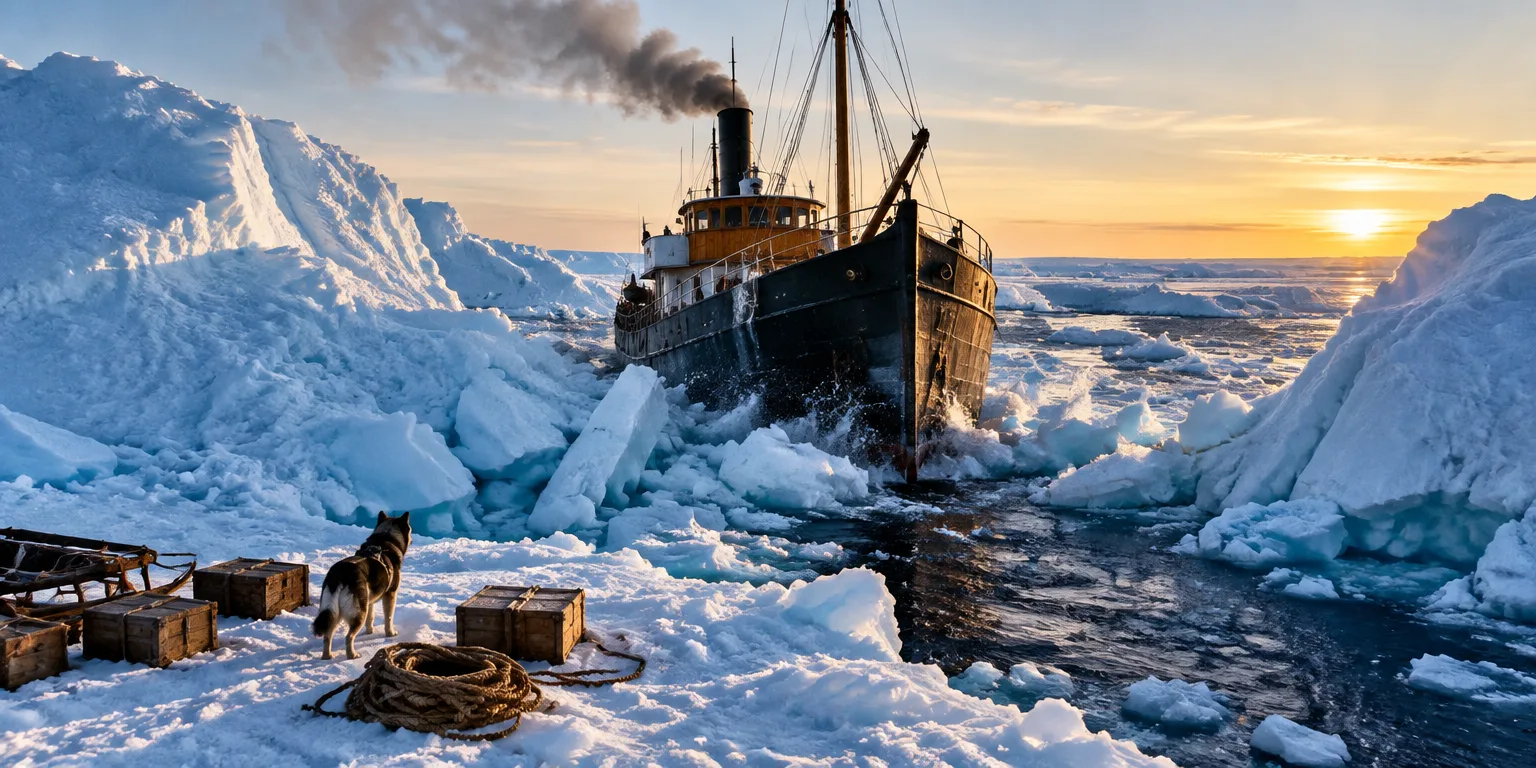
Just as Pike feared, the lane proved false. Huge floes closed around the ship, crashing together with shrieks and groans sailors called the Devil's Symphony. Pike sailed with a makeshift crew, including an engineer in his first such post and Pike's 21-year-old son, making his first Arctic trip as mate.
Through the night, Pike steered toward Cape Albert, about 25 miles north, using the ship's solid iron bow to batter the ice. His son, posted in the crow's nest, spotted a lead between two floes. By early morning, open water was in sight, only 400 yards away.
It was not enough. Ice kept streaming in from every direction, and by early afternoon the Proteus was fast, with seven-foot floes piled against her rails. The hull groaned as the decks heaved, and Pike ordered everyone into action. Garlington's party rushed to haul Greeley's supplies on deck, while Pike's crew struggled to release the 30-foot whale boats for escape.
Then ice pierced the starboard hull and water rushed into the hold. The deck planking buckled, Pike shouted to abandon ship, and panicked men threw whatever they could grab onto the floes, where some containers shattered and others slid into the sea. They even tossed the sled dogs overboard, injuring some, and most dogs that survived ran off.
Four hours later, all 37 men stood on the ice with two whale boats and three lifeboats. Almost all the food meant for Greeley was gone, along with lumber for a winter shelter and coal for heat. Pike watched the Proteus, which he had captained for nine years, slip beneath the water, while Garlington faced the fact that the rescue had failed and his own party might not get home alive.
Questions people ask
Who were the men waiting to be rescued?
Greeley led a U.S. Army scientific expedition that had been stationed since 1881 at Fort Conger on Ellesmere Island in the far north. By summer 1883, his 25 men were running short of food after two relief failures, and under sealed orders they would soon abandon the fort to retreat south by small boat.
What happened to Garlington and his crew after the ship sank?
All 37 men survived the sinking and reached Cape Sabine on the ice in overloaded boats with about 40 days of rations. Garlington left a small cache and a letter explaining the wreck for Greeley, then rowed south to seek another ship, leaving Greeley's party still unaware that no rescue was coming.
Why was an Army officer commanding a ship?
In the 1880s, Arctic exploration was often run by the Army's Signal Corps, which prized weather and science records, rather than by the Navy. That is why an infantry lieutenant could hold overall command while a civilian contract captain handled the ship, a split that made disputes over sailing decisions especially dangerous.