A Computer Can Find the Seasons Without Being Told About Them
It gets no answer key, only raw readings, and finds the natural clumps on its own.
 Google for Developers · What is Machine Learning?
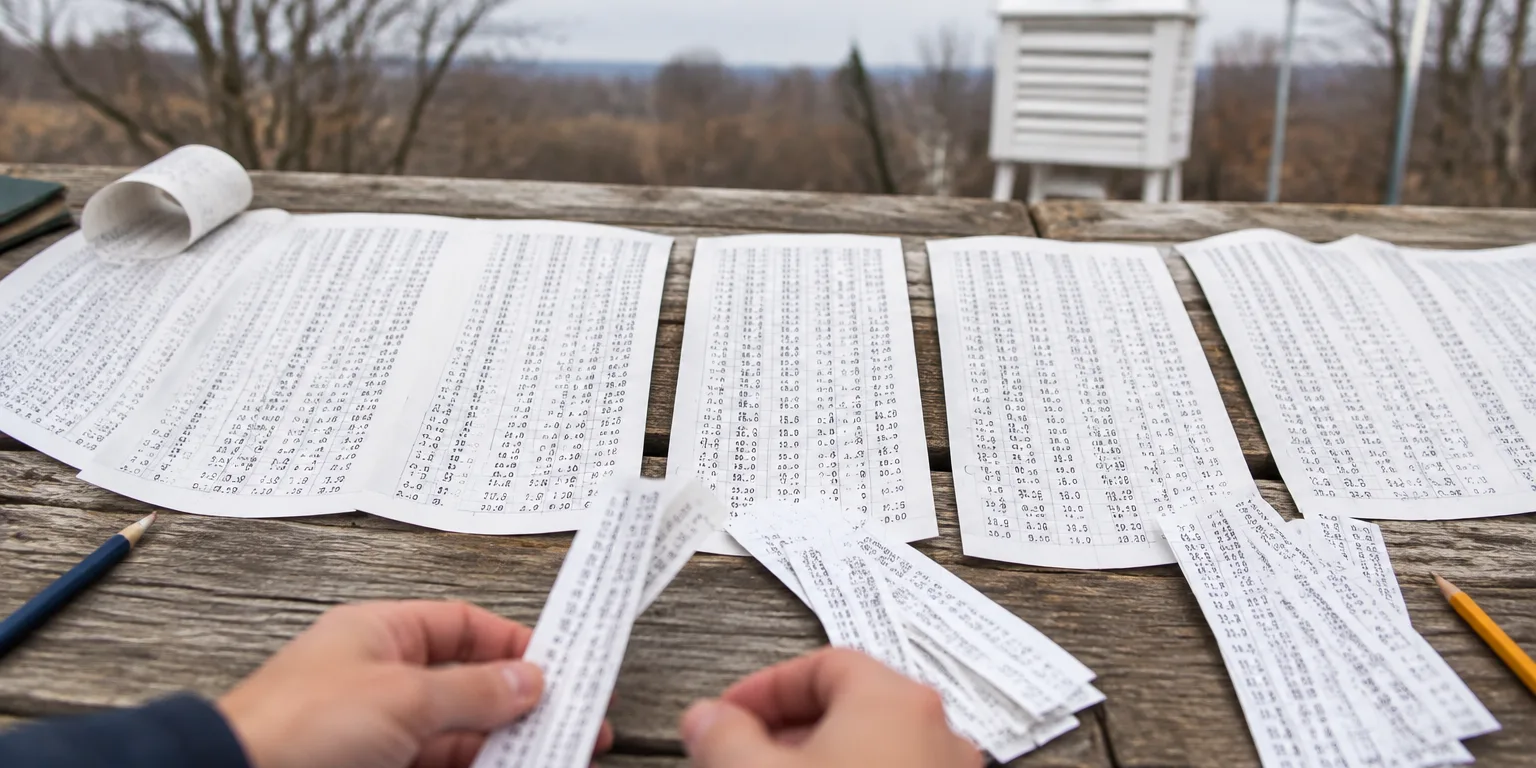
Give a computer a pile of temperature readings, with no calendar and no labels, and it could sort them into groups that look a lot like spring, summer, fall, and winter.
Supervised learning is one common type of artificial intelligence, and it works like a student preparing for a new test by studying old tests that already show the right answers. A person hands the system data that includes the known correct results, and its job is to learn the connection that produces the right answer.
Unsupervised learning gets no answer key. It gets raw records with no correct outcomes marked, and its goal is to find meaningful patterns on its own. It has to invent its own sorting logic.
One common way it does that is a technique called clustering. The system looks for data points that mark off natural groupings, places where many readings bunch together and then thin out before the next bunch begins. Clustering is different from the more familiar job of classification, where a person defines the categories in advance, such as spam or not spam, or rain, hail, snow, or sleet, and asks the computer to choose.
With weather data, the computer might cluster the readings by temperature. Cold days clump with cold days, hot days with hot days, and the in-between days form their own clumps. In the textbook example, those segments define the seasons. The machine does not know what a season is. It only knows where the clumps are, and a person can then name the groups afterward using ordinary knowledge of the weather.
Questions people ask
How does the computer decide where one cluster ends and another begins?
In simple clustering, the computer measures how similar readings are, often by distance, and groups together the ones that sit closest to one another. It picks central points for each group and assigns every reading to the nearest center, then shifts the centers until the groups are as tight as possible. The boundaries fall where readings are about equally far from two centers.
Does the computer know that one group means winter?
No. It only knows that certain temperature readings belong together mathematically. Meaning comes afterward, when a person who knows about cold winters and hot summers looks at the average temperature and range of each group and labels them. The same cluster could be named differently by someone studying crop growth or energy use.
What else is clustering used for besides weather?
It is widely used to find customer groups with similar buying habits, to group genes with similar activity, and to spot unusual transactions that might be fraud. In each case, the categories are not set in advance. Businesses and scientists use the groupings to decide what deserves closer attention.