A Computer Lab Built Things With No Use in Mind
In a quiet San Francisco lab, researchers avoided helpful products so they could explore new ways for computers to show ideas.
 motivenotes.ai · Against Usefulness
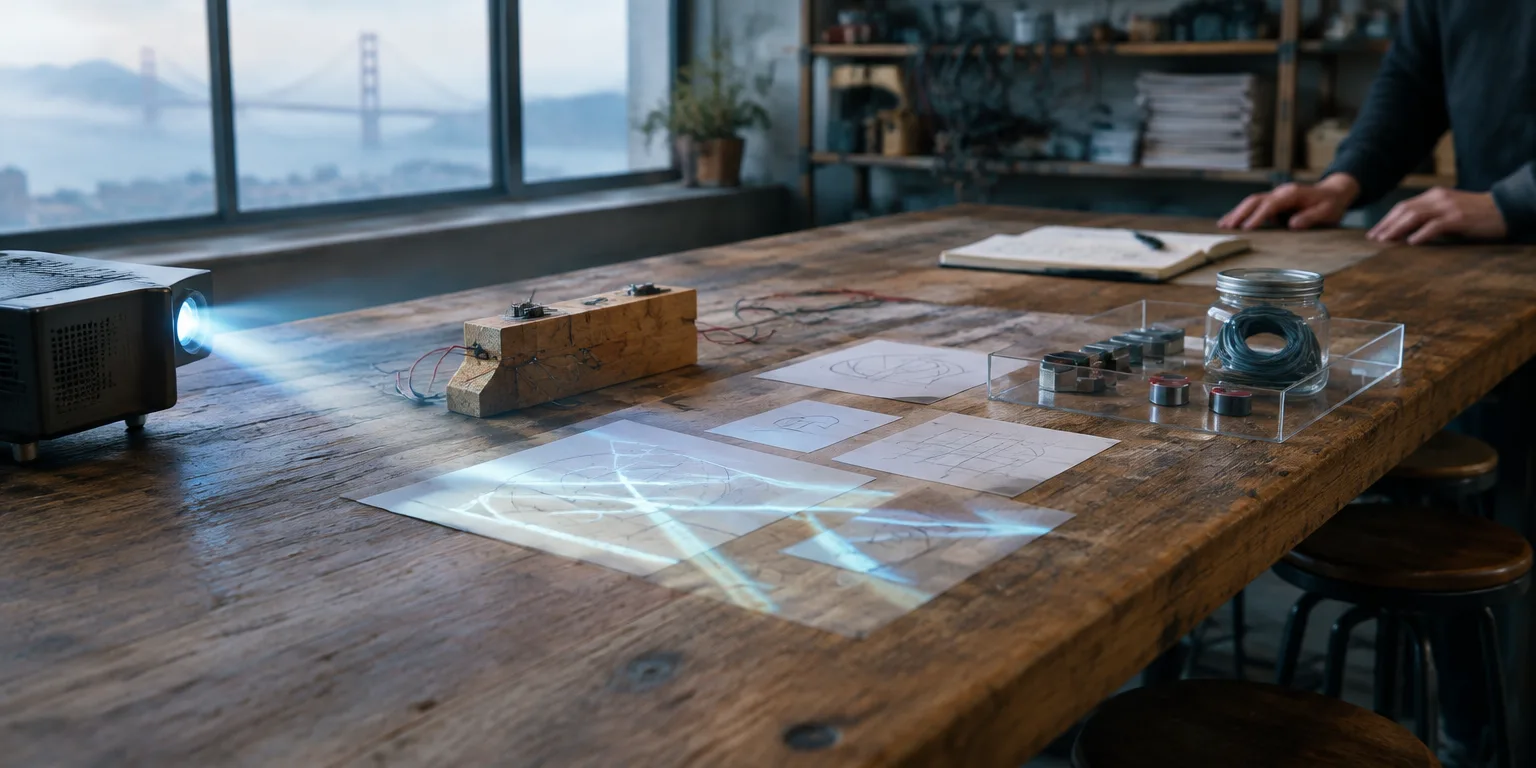
Inside a small San Francisco lab called CDG, mornings started without hellos and nights ended without goodbyes. The quiet reflected trust, a shared understanding to leave one another's long-term thinking alone, and the team described its prototypes as built against usefulness.
The lab was set up in 2013 by Alan Kay, the computer scientist who had led work in the 1970s at Xerox PARC on computers as tools for thinking rather than only machines for math. Kay spent later decades trying to recreate the setting behind PARC, with complete autonomy, timelines measured in years, and no pressure to ship a product. For the new lab, formally the Communications Design Group, he recruited as principal investigators Bret Victor, a software researcher known for talks about better tools for makers, Vi Hart, a mathematician and video maker, and Dan Ingalls, one of the original PARC researchers. The money came from SAP, and in particular from Vishal Sikka, then SAP's chief technology officer, who believed in Kay's vision.
They kept the lab invisible on purpose. They had seen what attention did to work like this, and they chose a name generic enough to be forgotten.
By building against usefulness, they meant that usefulness can become a trap. Once a prototype becomes handy, the people who made it end up serving current users, fixing and supporting, instead of pointing toward what could come next.
Victor described that choice as a matter of responsibility to makers. In his best-known talk, he said he sees an injustice when creators are constrained by their tools, adding, "Not opportunity, but responsibility."
Questions people ask
What did researchers at CDG actually build?
They made experimental interfaces and programming environments meant to show different ways computers could represent ideas. Most existed as demos and talks rather than products for sale. The point was to explore directions, not to support users.
Why would being useful hurt a research project?
A handy tool gains users who ask for fixes, features, and compatibility, and meeting those requests takes time. That support work can lock in an early design. Staying away from current needs leaves room to keep searching for a different approach.
Did CDG survive?
It did not last in that form. According to the source account, the lab lost its backer when Vishal Sikka left SAP in 2014. The researchers moved to HARC under Y Combinator Research, and when that ended, Victor's group became Dynamicland.