A Crane-Stacked Apartment Needs Only Four Hookups to Work
The units arrive finished by truck, settle into place with little labor, and connect from the hallway.
 TimTalks · TimTalks: Housing affordability through technology and funding innovation
Tim, an investor in CloudApartments.com, says the company's buildings go up differently. These are his claims about his own project, in which most of the building work moves to a factory and the construction site is mostly for assembly.
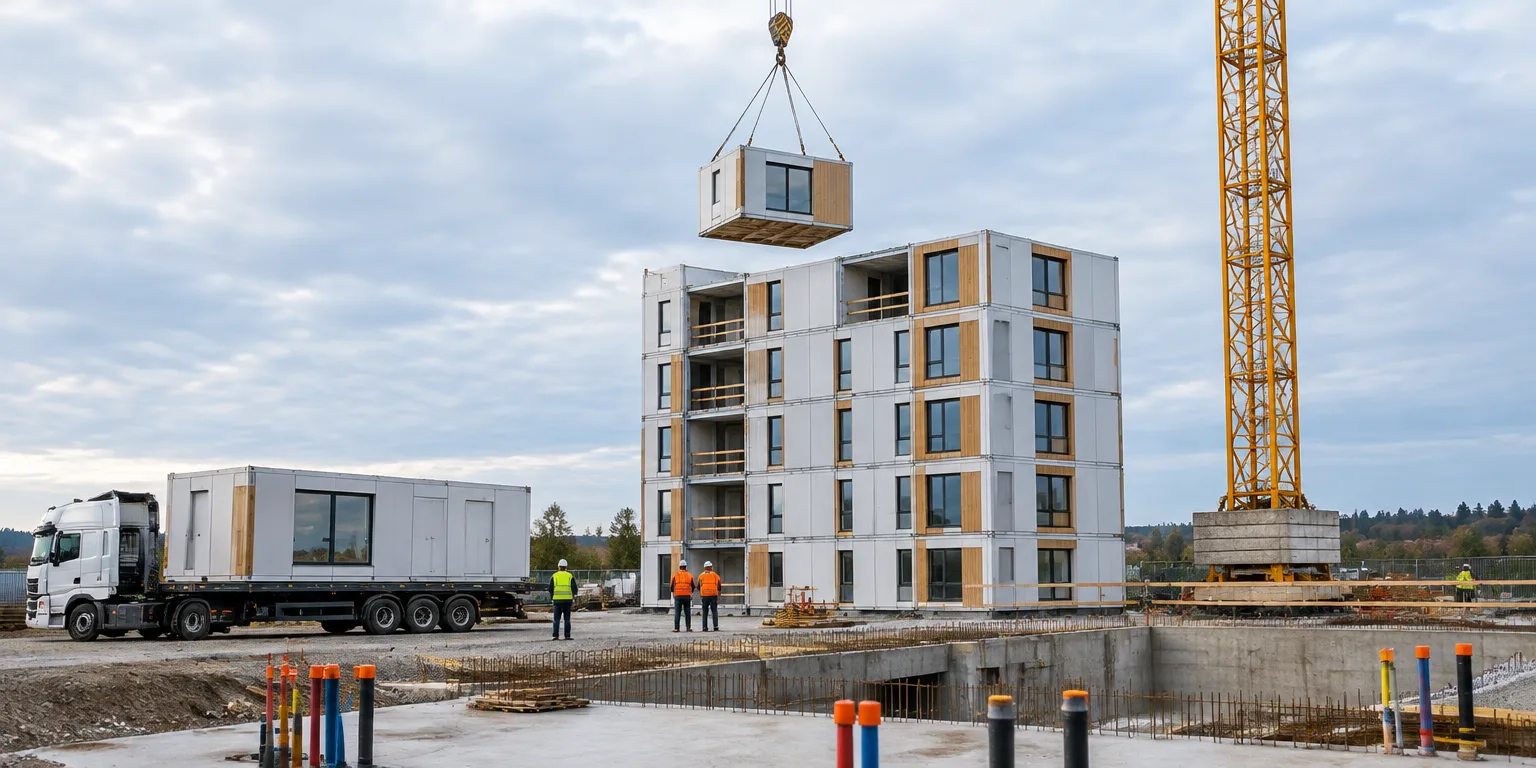
Workers on site prepare a concrete pad, and may add underground parking if the location calls for it, while a factory builds finished apartment modules and sends them to the site by truck.
A crane lifts each one and sets it on the stack. Tim says founder Curtis built in a self-aligning system, so the modules settle into place with very little labor on site. Tim describes one layout as about six stories with 200 apartments on an acre, offered as studios or a mix of one, two, and three bedroom units.
Once the stack is complete, a worker goes into the hallway, opens a door, and makes the hookups. There are only four per apartment: hot and cold supply lines, a wastewater line, and power. Then the unit is ready.
With less on-site labor, the same crew can cover more buildings. Tim says "that same team that can build one building can build five to ten buildings with the same amount of on-site labor." He also says the design can cut about $20 million from the cost of each building and bring it into use faster, but those cost and speed figures are his projections, not independently verified results.
Questions people ask
What has to be built on site before the modules arrive?
The foundation and site work still happen outdoors. That generally means grading, utility lines to the property, a concrete pad to set the modules on, and, where planned, an underground garage. The modules sit on top of that prepared base.
How do plumbing and electrical normally get connected in a regular apartment building?
In conventional construction, pipes and wires are installed piece by piece inside the walls and ceilings as the building goes up, then inspected in stages. That requires many separate visits by plumbers, electricians, and inspectors. The modular approach moves most of that work into the factory, so only the final links between the finished module and the building systems are made on site.
Can a factory-built apartment still be energy efficient?
Yes. Factories can build tight walls, install efficient windows and appliances, and check the work under controlled conditions. Independent green building ratings, such as LEED Platinum, certify that a design meets high standards for energy, water, and materials.