A Defense Factory Hires Nurses, Bus Drivers, and Shelf Packers and Trains Them in 30 Days
New hires get equity, the same health care as software engineers, and a path to six figures, and 5 to 10 percent switch to software engineering.
 The Way I Heard It with Mike Rowe · 502: Chris Power—The Other Hadrian's Wall
Owen was packing shells at Home Depot when he spotted a factory job ad with an unusual perk. It promised to pay for his forklift certification. He applied for that reason alone.
Today Owen is on the software engineering team at Hadrian, the defense manufacturing company built by Chris Power, who is from Melbourne and immigrated from Australia a few years ago.
Power points to Owen as an example of the training working. Hadrian makes parts for submarines, munitions, and space hardware. Power says the software makes workers four to 10 times as productive, depending on the task. These are the company's own figures.
Power attributes the training speed to that software. He says the software makes the task more accessible, so, in his words, "we can train them in 30 days." He says 100 percent of the company's manufacturing workforce had never worked in a factory before.
After veteran manufacturing experts and software and robotics engineers, the third group, which Power calls the most interesting, is technicians with no industrial background. They are recent high school graduates, shelf packers, bus drivers, nurses, and a former paralegal tired of desk work. They receive company equity and the same health care as the software engineers.
Hadrian is hiring about 50 new technicians a month. Power says 100 percent of shift managers were promoted from the technician ranks rather than hired from outside, and, in his words, "they're now on close to, if not six-figure salaries." Jacob, a factory lead now in his late 20s, arrived two years back and today oversees half the factory.
Five to 10 percent of technicians go further and become software engineers. Power says of those workers, "they're smart, they just didn't go to Stanford." They sit beside engineers, learn to write code to make their own jobs easier, and switch teams.
The floor now mixes teenagers and 25-year-olds with ex-military members, 50-year-olds, and workers in their 40s and 50s, including a nurse and a bus driver back at work. In Power's view, they know everything they produce has meaning, whether for human spaceflight, weapon systems, or nuclear submarines.
Questions people ask
What does the factory actually make?
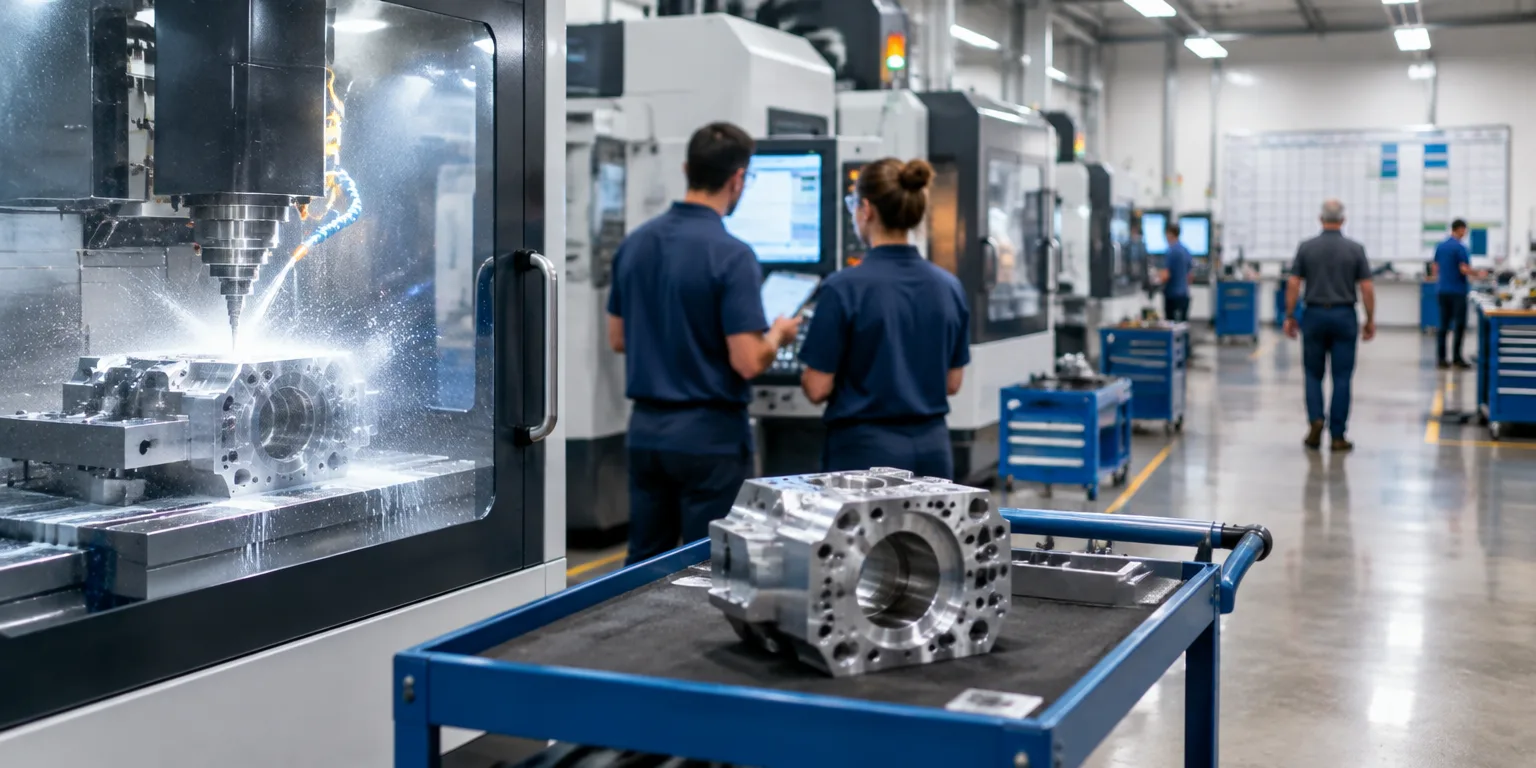
Hadrian makes high-precision metal parts for aerospace and defense customers, including parts for submarines, munitions, and space hardware. It does not design the weapons itself. It builds to other companies' designs, then operates the factories.
How can someone learn factory work in 30 days?
Hadrian uses its own software to program machine tools, check quality, and guide each job, so a worker acts more like an operator supervising automated equipment than a traditional machinist doing manual setups and calculations. That lowers the skill needed on day one. It is the reason the company says it can train beginners in 30 days.
What does it mean that factory workers get equity?
Yes, in the form of stock or stock options, which give employees a share of ownership that can grow in value if the company grows. Startups often use equity to attract workers when cash wages are limited. Power says every employee gets equity, including technicians.