A Fantasy Draft Can Take Two to Four Days and Let Everyone Sleep
Your phone tells you when you are up, you pick from anywhere, and the clock freezes while you sleep.
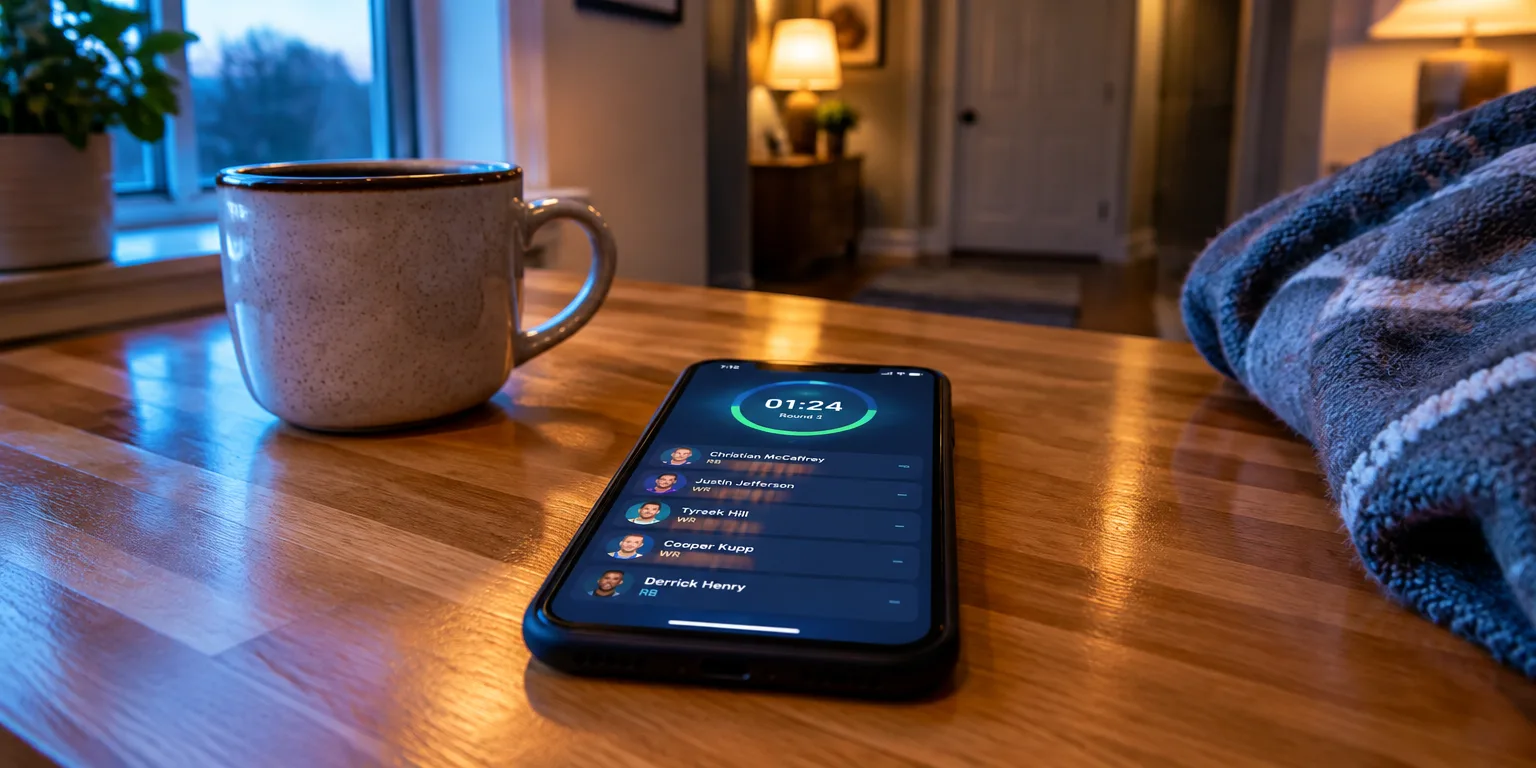
In fantasy football, where friends take turns picking real pro players to fill pretend teams, the draft does not have to happen in one frantic evening around a table or a computer screen.
In a slow draft, each turn lasts hours instead of about 90 seconds. The usual allowance is four to 12 hours, with eight hours common in well run leagues, and a full draft stretches over two to four days.
Managers never need to be logged in together. Your phone buzzes on your turn, you open the app from wherever you are, study which players are left, check an injury report or depth chart if you like, and make your pick. Then the clock starts for the next manager.
If you know you will be busy, you can set a queue, a short ranked list of players you want that the system will pick from if your time runs short. It works as a safety net, not as the normal way to draft.
The part that makes the system livable is the overnight pause. It halts the eight-hour countdown overnight, so picks advance only while people are awake to make them.
Without that pause, an eight-hour timer still ticking at 3 a.m. could cost you a pick only because you were asleep. With it, no one has to set an alarm to protect a hobby.
Questions people ask
Do you lose the banter of a live draft night?
Not necessarily. The best leagues pair the slow draft with livestream coverage and an active Discord that runs all week. LordSkunk still livestreams certain drafts as events, so the jokes and second guessing move from one fast night to a slower conversation.
What happens if my eight hours run out?
Usually the system makes the pick automatically from your queue, or from default rankings if you set no queue. In a slow draft that is rare, because eight hours gives almost everyone time to check in for a minute.
How does the overnight pause actually work?
The commissioner sets start and stop hours for the pause, often something like midnight to 8 a.m. Eastern. During those hours every clock is frozen, so a manager who is on the clock overnight starts the morning with the same time left.