A Fat Your Body Cannot Digest Still Tastes Like Fat
Its fatty chains are locked in place, so the enzyme that normally frees calories cannot get a grip.
 David Senra · Building One of the Fastest Growing CPG Company in History | Peter Rahal of David Protein, Medici Brands & RXBAR
The richest tasting part of a protein bar can be the part your body never uses.
That is the trick behind EPG, a patented ingredient made by a company called Apogee and used in the David protein bar. Peter Rahal, the food entrepreneur behind David, describes it as a modified triglyceride, a rewired version of ordinary fat.
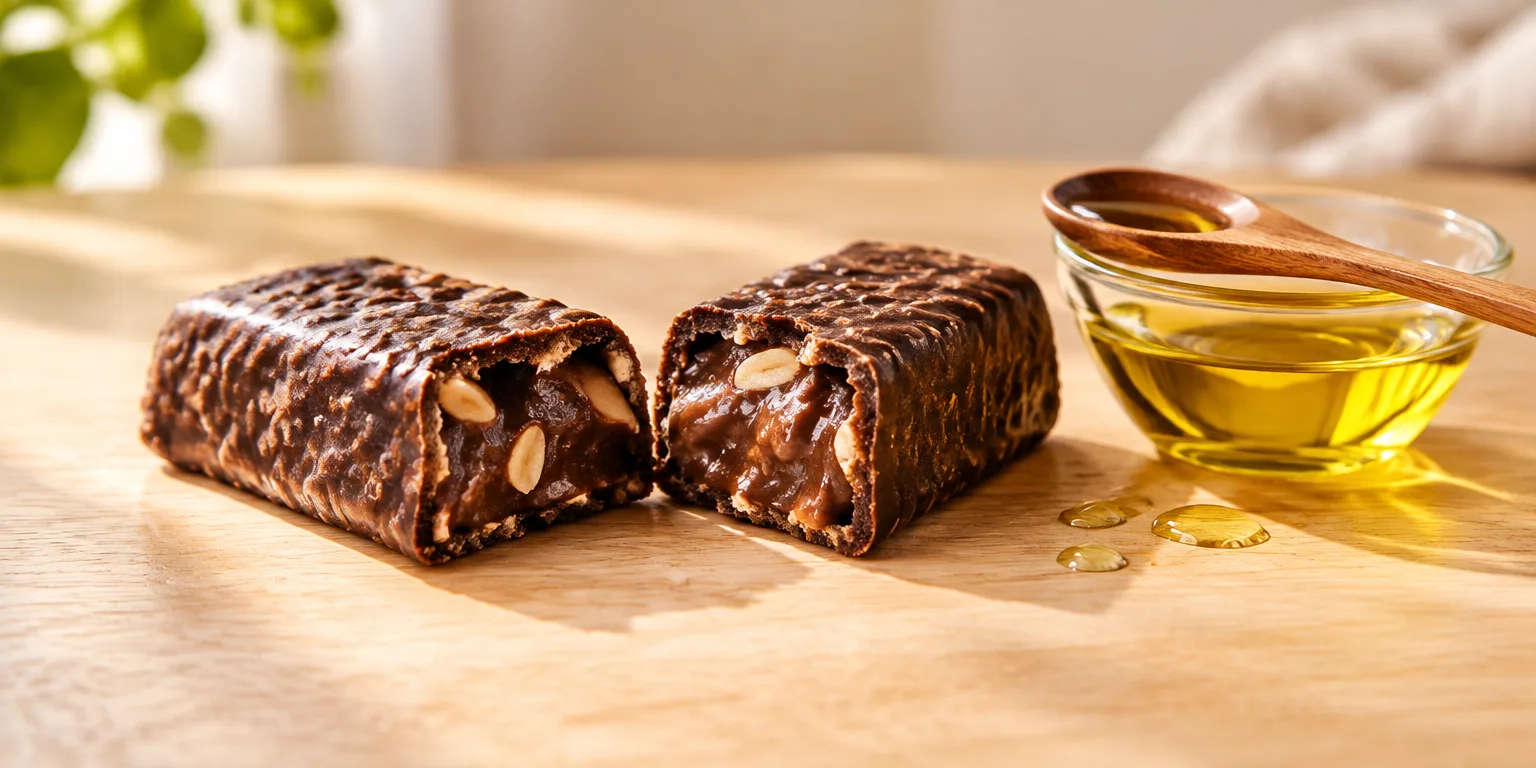
To see how it works, start with ordinary fat. Olive oil, for example, is a triglyceride. Picture a small backbone, called glycerol, with three fatty chains hanging off it. Your gut cannot absorb that whole structure. A digestive enzyme called lipase, a chemical scissor in the intestines, has to clip the chains free first. Only then do the calories enter the body.
EPG keeps the same rich architecture, and so it cooks, melts, and coats the mouth like fat. The difference is that its fatty chains are locked in place. When lipase arrives to do its usual clipping, it cannot get a grip. Since the chains stay attached, most of the fat moves through without delivering its usual calories.
That matters because fat is the densest fuel in food. Gram for gram, Rahal notes, fat carries about twice the calories of protein or carbohydrate, and much of the calories in packaged food come from fat. Remove those calories while keeping the taste and texture, and a low calorie bar can still eat like a candy bar.
Rahal compares the breakthrough to stevia and monk fruit, the intense sweeteners that give soda sweetness without sugar. EPG, whose full name is esterified propoxylated glycerol, aims to do for fat what those did for sugar: keep the pleasure, lose the metabolic cost.
Questions people ask
If my body can't break it down, where does it go?
Largely, yes. Because lipase cannot clip its fatty chains free, EPG is poorly absorbed in the small intestine and much of it continues through the gut. That is why it contributes far fewer usable calories than the same amount of oil or butter.
Why compare a fat to stevia?
They solve opposite problems. High intensity sweeteners like stevia and monk fruit trigger sweet taste receptors without sugar, so they replace sugar. EPG triggers the creamy mouthfeel of fat without digestible fat, so it replaces oil.
Why does fat have twice the calories of protein and carbs?
Gram for gram, fat packs about nine calories compared with about four each for protein and carbohydrate. That is due to basic chemistry: fat molecules carry more carbon hydrogen bonds that the body can burn for energy.