A father took his 7-year-old surfing under a full moon and the moon was blacked out
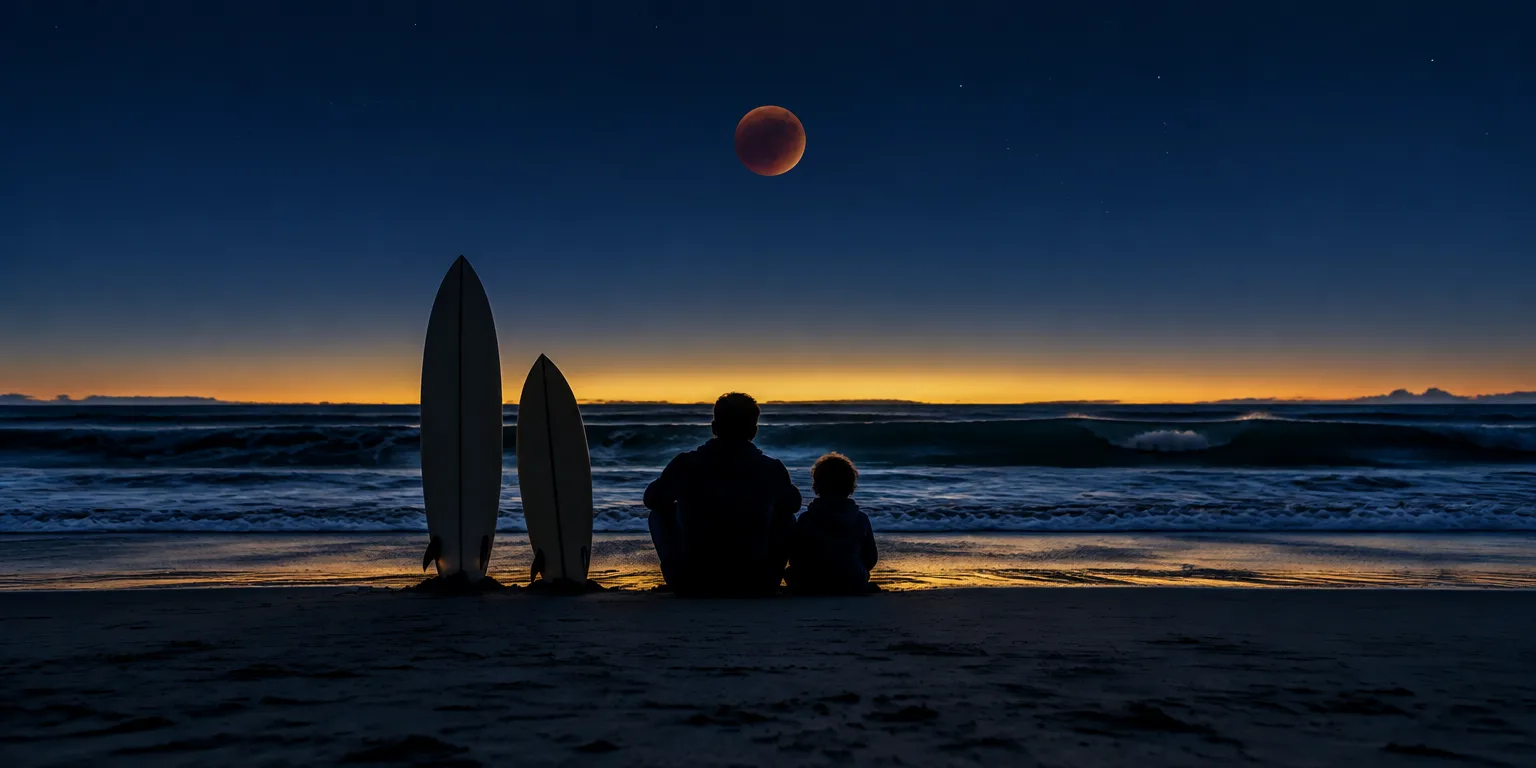
They had arrived at the exact moment of totality, so they paddled out in unusual darkness, then came back in and sat on the beach until sunrise.
 We Study Billionaires - The Investor’s Podcast Network · RWH070: Hunting For Hidden Treasures w/ Christopher Begg
Chris Begg reached the beach at about 4:30 in the morning with his 7-year-old son River, looked up for the full moon, and found the sky darker than he had expected.
Begg plans his family's monthly calendar around surfing the full moon. He likes to get out about 45 minutes before the sun comes up, for the stretch when the ocean surface feels like silk. The draw is the overlap, the moonlight dropping into the water just as the daylight starts to lift, so surfers get both lights at once.
For River, it was a first on two counts. It was his first time joining that moonlight outing. And it was his first time paddling past the break to catch real waves, after learning in the foamy white water near shore at age seven. He had finally made the move from shore break to the open lineup.
On the sand, Begg wondered whether he had miscalculated the timing. As Begg later told it: "this is supposed to be a full moon."
Then he understood. They had walked onto the beach at the very moment of totality, when the moon was completely blocked out. Begg said it felt like the universe was "laughing at us in a beautiful way."
They paddled out anyway. Without the moon, the water was much darker than it would have been on a normal full moon morning. They surfed in that darkness.
Then they came back in and sat together on the beach until the sun rose. Asked later whether River would remember sitting with his father on that beach at dawn for years to come, Begg answered simply that he knew he would.
Questions people ask
What makes the moon disappear during a total lunar eclipse?
The Earth moves directly between the sun and the moon, and its shadow falls across the lunar surface. In totality, the whole face of the moon is inside the darkest part of that shadow, so it can look dim, reddish, or nearly gone. It is the nighttime counterpart to a solar eclipse, and it is safe to watch with the naked eye.
What is the difference between surfing white water and going out the back?
White water is the foamy, broken part of a wave close to shore, where beginners learn to stand and balance. Out the back means paddling beyond where the waves break to catch green, unbroken waves that are bigger and faster. For a 7-year-old, the move marks the shift from practicing to truly surfing.
Is surfing before dawn in the dark dangerous?
It adds risk, because depth, currents, other surfers, and boards are harder to see. Experienced dawn surfers reduce the risk by using familiar beaches, staying close together, and entering in small, gentle surf. Moonlight helps, which is why a full moon surf is prized and why this eclipse made the water unusually dark.