A floating soap accident became a national brand because railroads and steel came first
Cheap steel, coal power, and rail shipping turned a factory mistake into millions of identical bars, and then helped invent the department store.
 Founders · #437 The Tycoons: Carnegie, Rockefeller, Gould & Morgan
In 1879, a worker at the soap maker Procter & Gamble left the mixing vat running too long. The machine that stirred the soap whipped in extra air and produced a bar that floated, which the company named Ivory.
After risking $11,000 on advertising, a large bet at the time, Procter & Gamble turned that accident into one of America's first national brands. Within a decade, the company sold more than 30 brands of soap, sales grew fourfold, and it was competing with Colgate and Palmolive for American customers.
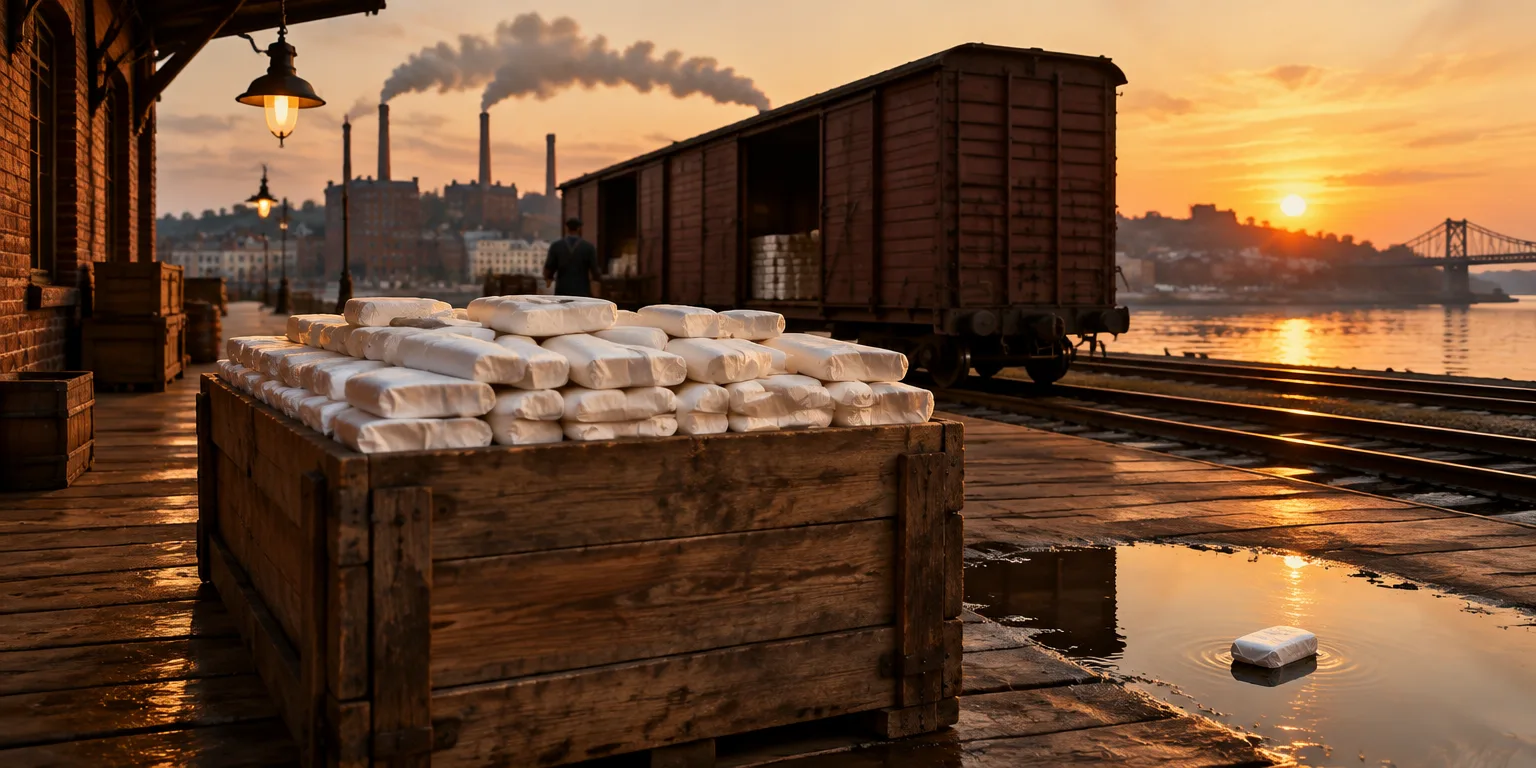
That national scale was possible only because an industrial platform was already in place. Ivory did not use animal tallow, the rendered animal fat that soap makers traditionally boiled into soap, but tree resin to supply the fats that make soap. Turning resin into millions of identical, wrapped, scented bars required extensive timber harvesting, lumber preparation and hauling, steel-built equipment to make the soap, coal-burning boilers and heat systems, and mechanized systems for chilling, slicing, packaging, warehousing, and delivery.
None of that had existed before the Civil War. In the decades after the war, railroad builders, steel makers, oil refiners, and bankers, including steel maker Andrew Carnegie, oil refiner John D. Rockefeller, railroad empire builder Jay Gould, and banker J.P. Morgan, had poured billions of dollars into railroads, telegraphs, steel mills, iron mines, and coal mines. They never thought about selling soap, but soap on that scale was what the infrastructure was for.
Success then compounded. Cheap, uniform consumer goods created demand for a new kind of business that had never existed before, the department store. John Wanamaker, the Philadelphia retailer behind Wanamaker's, promised low prices, greater variety, consistent quality, and a pleasant place to shop, all of which worked only at large scale, and large stores demanded still larger scale upstream through the supply chain.
Those stores looked inexpensive to start. Their main costs were property and stock, which could be covered with ordinary mortgages and bank loans. They were too small to draw much attention from giant financiers like Morgan. They could operate that way because they did not pay the full cost of the rail and shipping lines they depended on, which others had already built.
Questions people ask
Why did floating make Ivory soap special?
Most soap sinks when dropped in a basin or tub, so a bar that bobbed to the surface was easy to find and easy to demonstrate. Procter & Gamble leaned into that novelty in advertising, selling Ivory as pure, light, and modern. The floating was not better cleaning, but it was memorable.
Why did Ivory use tree resin instead of animal fat?
Traditional soap boiled animal tallow with lye, which tied soap makers to slaughterhouses and variable fat supplies. Resin from pine trees supplied abundant fatty material that could be harvested, shipped, and processed at industrial volume. That switch linked soap directly to logging, rail transport, and factory machinery.
What made a department store different from earlier shops?
Earlier shops were small, specialized, and often bargained over price for each sale. Department stores gathered many kinds of goods under one large roof at fixed, marked prices, with clerks, bookkeepers, and advertising to move volume. They needed reliable rail shipments and mass-produced goods to keep shelves full and prices low.