A Four-Foot Worm With No Mouth Farms Bacteria Inside Itself
Its microbes use hydrogen sulfide, a gas more toxic than cyanide, as fuel to make sugar.
 Ologies with Alie Ward · Deep Sea Microbiology (UNSEEN OCEAN CRITTERS) with Peter Girguis
It starts life as an ordinary baby worm, swimming in the dark deep sea and eating food the normal way.
Then it meets the microbe that will change it forever. Peter Girguis, who studies life at hydrothermal vents and wrote his doctorate on this animal, says the young worm either swallows the microbe or picks it up through its skin. After that hello, the animal seals itself up and rebuilds itself into something strange.
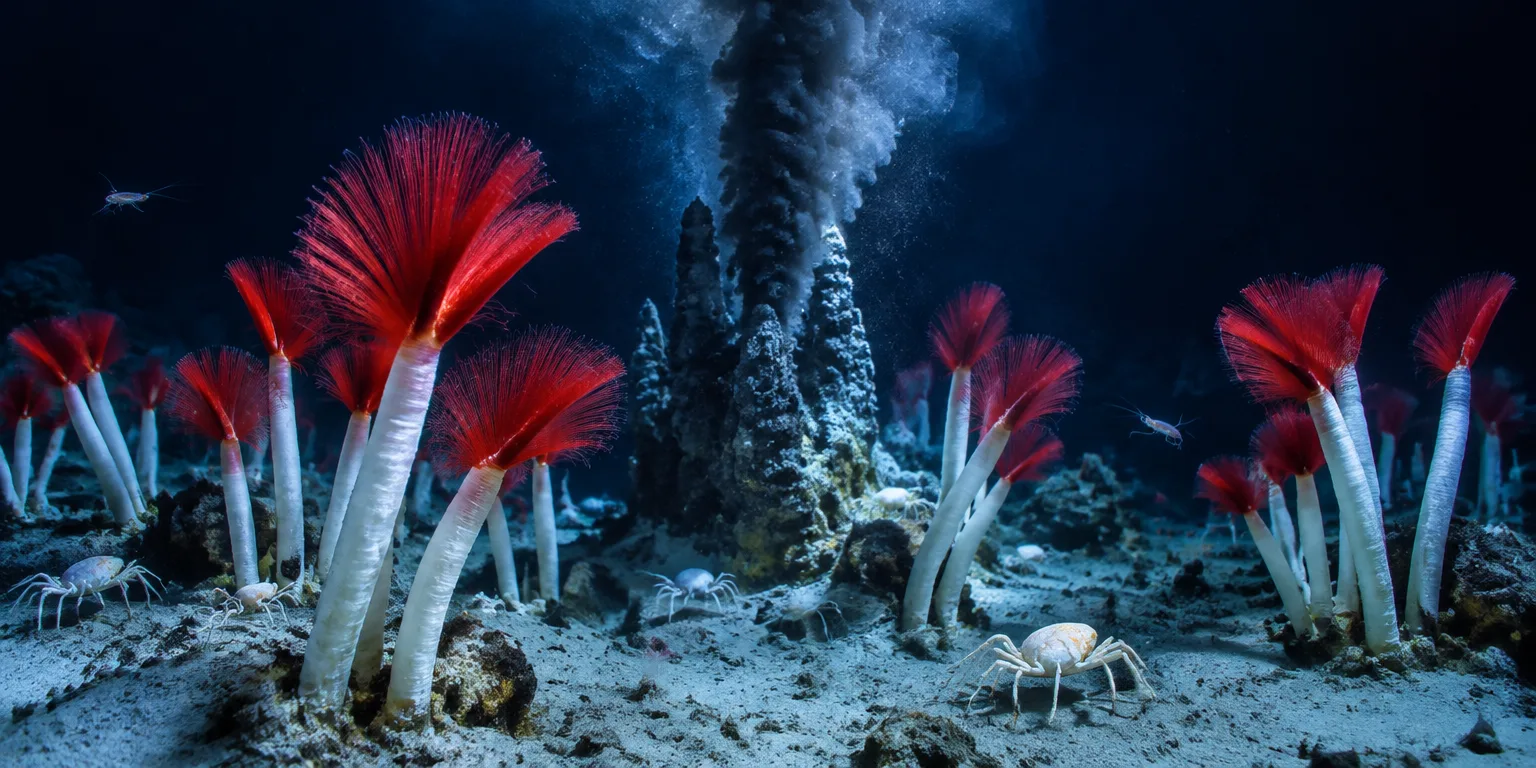
The adult, called Riftia, grows about four feet long and has no mouth, no gut, no stomach, and no anus. Inside its body it holds 10 billion to 100 billion copies of that one kind of microbe, like a giant, living yogurt culture.
The worm stays alive by feeding its farm. It sits beside a hydrothermal vent, a kind of undersea hot spring, and sucks up hydrogen sulfide from the vent water. That is the rotten egg gas, which Girguis notes is more poisonous than cyanide. It also takes in oxygen from the cold water around it and delivers both chemicals to the microbes tucked inside.
The microbes run on that poison. They combine sulfide and oxygen for energy, then use that chemical energy to make sugars from carbon dioxide. Plants do the same job of making sugar from carbon dioxide, using sunlight for energy instead. Those sugars feed the microbes, and they feed the worm.
Girguis likes to translate it into human terms. Imagine being breastfed as a baby, then meeting your microbe, having your mouth and rear end seal shut, and growing bacteria inside yourself while your mother soaks you in poison soup. That is everyday life for a tube of yogurt the size of a person.
Questions people ask
Where does this worm live?
Riftia pachyptila lives clustered around hydrothermal vents in the deep Pacific Ocean, often more than a mile down. It anchors in a white tube on the seafloor near the vent flow and waves a feathery red plume to absorb gases. Entire groves of them can crowd a single vent field.
How does the worm handle poison without dying?
The worm has a special blood with hemoglobins that grab sulfide and oxygen separately and carry them safely to the microbes. Housing the microbes in a dedicated organ, called the trophosome, keeps the chemistry contained. In effect, it delivers fuel in sealed packages rather than letting poison roam free.
What do the microbes get out of the deal?
They get a safe home and a steady delivery of fuel and oxygen. Free living sulfide-eating microbes have to chase shifting vent flows, which can change in days. Inside the worm, they get room service.