A Free Taxi License Became an $80,000-a-Year Payout for Owners, Kalanick Says
Uber founder Travis Kalanick calls it a government approved cartel, and the opposite of capitalism.
 David Senra · Travis Kalanick, Founder of Uber & Atoms
A free New York taxi license became, through lobbying, an $80,000-a-year payout for owners, according to Uber founder Travis Kalanick.
In Kalanick's account, anyone could get a taxi license in the early 1900s for free after a basic check, and the number grew to about 13,000. Then, in the 1920s and 1930s, he says, those holders lobbied City Hall to issue no more licenses, and, in his telling, the city stopped issuing them. With demand for rides growing and supply fixed, the once free permission gained value because others could not compete.
Owners then won a second change, Kalanick says: the right to sell the license to someone else. That transferable permission became the medallion, and he calls its value artificial scarcity. A third change allowed owners to lease the license and car by the day or week, creating the modern rental business.
By the time Uber arrived, Kalanick says, each car ran two 12-hour shifts and each driver paid about $40,000 a year for one shift. The owner, whose grandfather may have gotten the license free, collected about $80,000 a year for renting out the same car, an arrangement Kalanick describes as leaving the driver impoverished.
Kalanick calls that system a government approved cartel. He defines capitalism as the right to start a legal business and the right of customers to choose among suppliers. In his view of the law, being anticompetitive is illegal in America unless a government official does it for you. Under his definition of capitalism, he says taxis are not capitalism.
He extends the same argument to ride hail today. Kalanick says New York later capped the number of Uber drivers and, in his words, turned ride hail "into a medallion system that cannot be traded." He adds that he believes the supply is now fixed or shrinking, while acknowledging he may have that wrong, and he blames that limit for higher prices and less reliable service.
Questions people ask
What happened to medallion prices after Uber arrived?
Yes. New York medallions traded for more than $1 million in 2013 and 2014, often bought with borrowed money. After Uber and Lyft expanded, prices collapsed to roughly $100,000 to $200,000, and many owners faced bankruptcy before the city created a debt relief program.
Did New York really limit the number of Uber drivers?
New York City did. In 2018 it imposed a cap on for-hire vehicle licenses and later set minimum pay rules for app drivers. The city said the policy would reduce congestion and protect driver income, while critics said it restricted supply and raised prices.
What makes a medallion taxi different from an Uber car?
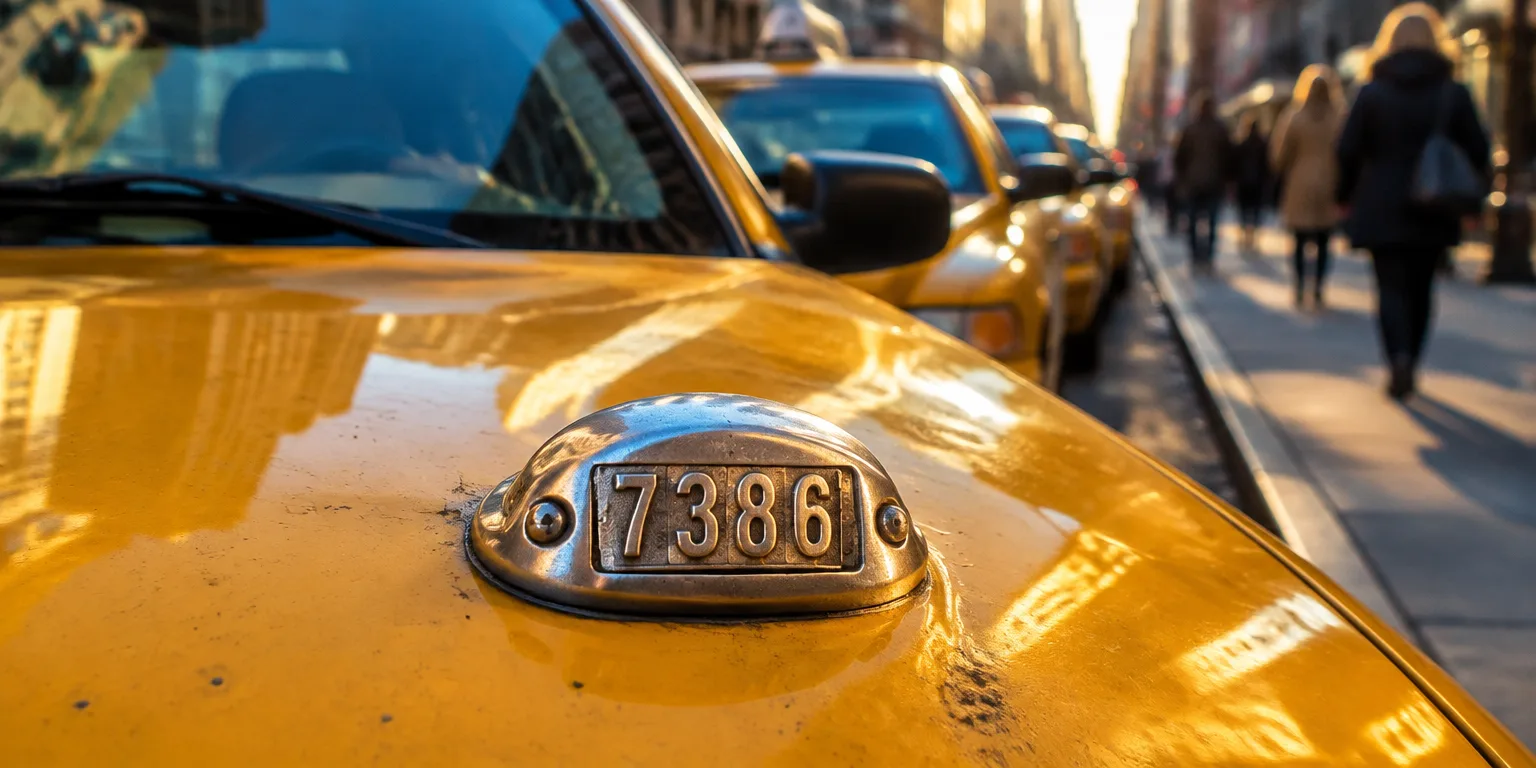
The medallion itself is a small metal plate fixed to the hood, but its real meaning is legal permission to pick up street hails. Only medallion taxis can accept a passenger who raises a hand on the street, while app-based cars must be booked in advance through a phone or app.