A general invited rivals through the Great Wall, then a sandstorm decided who ruled China
A Ming general invited the Qing in to save Beijing from rebels, and the guests stayed until 1912.
 Dan Snow's History Hit · The Rise and Fall of the Ming Dynasty
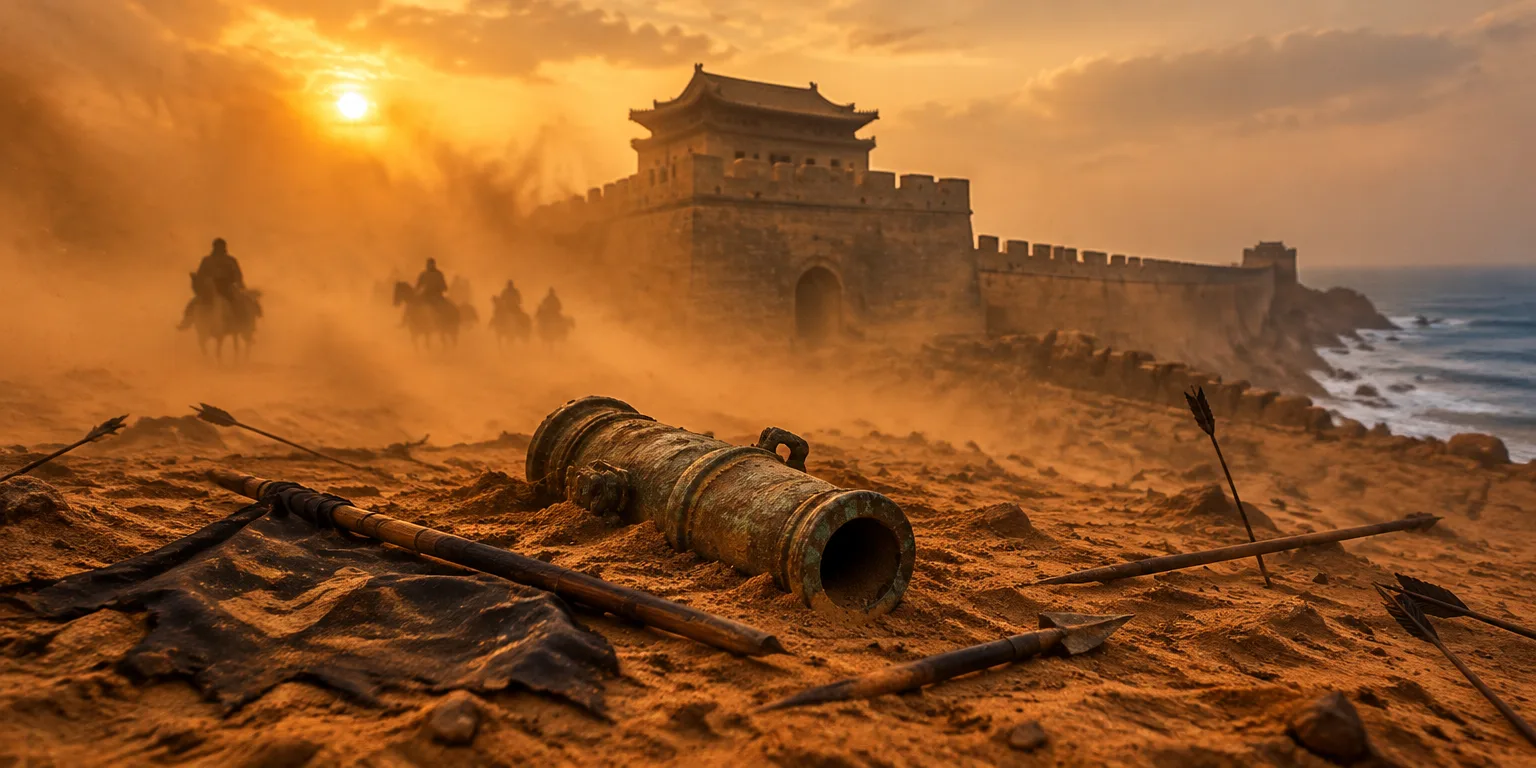
Late on the day of battle, sand filled the air near Shanhaiguan, the fortress where the Great Wall meets the sea. Men swung swords and spears and fired crude cannon, then could barely see. When the rebels rubbed the grit from their eyes, a fresh army was riding at them, its soldiers with the fronts of their heads shaved and their hair braided long behind.
Those horsemen were the Qing, the Manchu led force from beyond the Wall. Their commanders had held their troops back from the early fighting, and they unleashed them when the storm hit.
The battle was the climax of a collapse. Rebel leader Li Zicheng had taken Beijing and ended Ming control of the capital, then proclaimed his own short lived Shun dynasty. Up on the frontier, Wu Sangui, the last strong general of the Ming and the man assigned to keep the Manchus out, faced an impossible choice. The capital needed him, but according to some accounts the rebels were holding his father and possibly his girlfriend hostage.
Tradition holds that Wu chose to ask his enemies for help. He went across the frontier to the Qing and asked the seven year old Qing emperor, Shunzhi, to help save Beijing from the rebels. The boy emperor's uncles, Dorgon, Jirgalang, and Dodo, commanded the Qing armies in the field. They had waited years for an invitation to march through the pass Wu had guarded, and they accepted.
So Wu's Chinese troops and Li's rebels marched east to meet at Shanhaiguan in 1644. At first, the fighting was largely Chinese against Chinese, Wu's men against Li's. Dorgon and Dodo held their Qing troops back a little and let the two sides wear each other out.
Then, according to legend, a sandstorm enveloped the field, blinding the combatants. Anyone who knows North China would find that plausible. Exhausted and blinded, Li's men were suddenly hit by the full Qing force. It was not Manchus alone, but Mongol cavalry, Manchu bowmen, and Han Chinese foot soldiers who had already changed sides.
Li's army broke and the road to Beijing lay open. On the city walls, residents saw Wu's standard approaching and thought they were saved. Then they noticed something else. Wu himself had adopted the Qing hairstyle, shaved in front. Dorgon rode in beside him on what amounted to a peacekeeping mission to restore order, and the peacekeepers stayed, ruling China from Beijing until 1912.
Questions people ask
What happened to Wu Sangui after he let the Qing through?
Wu Sangui was the Ming commander responsible for the eastern section of the Great Wall, the barrier meant to keep the Manchus out of China proper. After 1644 he served the Qing and helped hunt down rival claimants to the Ming throne, but later rebelled against them in the 1670s and died before that revolt failed.
Who were the Manchus?
The Qing were led by the Manchus, a people from the forests and plains northeast of the Great Wall in what is now northeast China. They had organized their own state, allied with Mongols and defecting Chinese troops, and took the name Qing for the dynasty they established after taking Beijing.
Who was Li Zicheng?
Li Zicheng had been a postal worker who became the leader of a peasant rebellion during famines in the 1630s and 1640s. After his defeat at Shanhaiguan his Shun dynasty collapsed, and he was killed within about a year while fleeing through central China.